If you need help, learn more about our Car Accident.
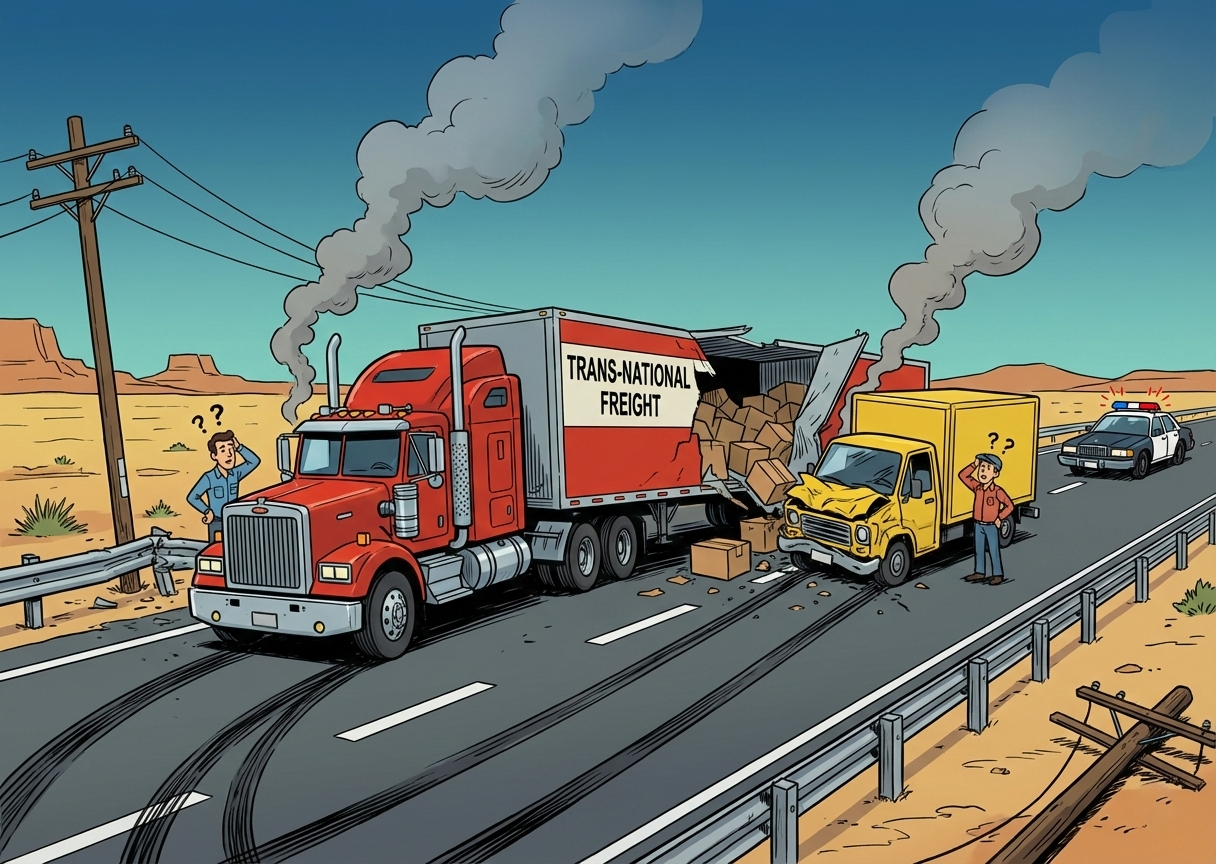
After a commercial truck accident, identifying who is at fault is just one piece of the puzzle.
The harder - and often more valuable - question is: who can actually be made to pay for the damage done?
In many trucking collisions, the driver is clearly negligent - maybe running too many hours without rest, parking illegally, or mishandling cargo. But lawsuit recoveries aren’t limited to the person behind the wheel. If that driver was working for a trucking company, the law may allow you to hold the employer responsible for paying damages. This is called vicarious liability.
Why does this matter?
- Trucking companies have deeper pockets, larger insurance policies, and more incentive to settle quickly.
- Proving vicarious liability can unlock compensation far beyond what an individual driver could pay.
- It shifts the fight from one person’s insurance to a corporate entity - increasing the odds you recover full damages for medical care, lost wages, and lifelong impacts.
This guide explains what vicarious liability means in commercial truck accident cases, how it works under the legal doctrine of respondeat superior, and exactly what evidence you need to prove it - even when companies try to hide behind “independent contractor” labels. Learn more about holding bullies accountable.
What is Vicarious Liability in Commercial Truck Accidents?
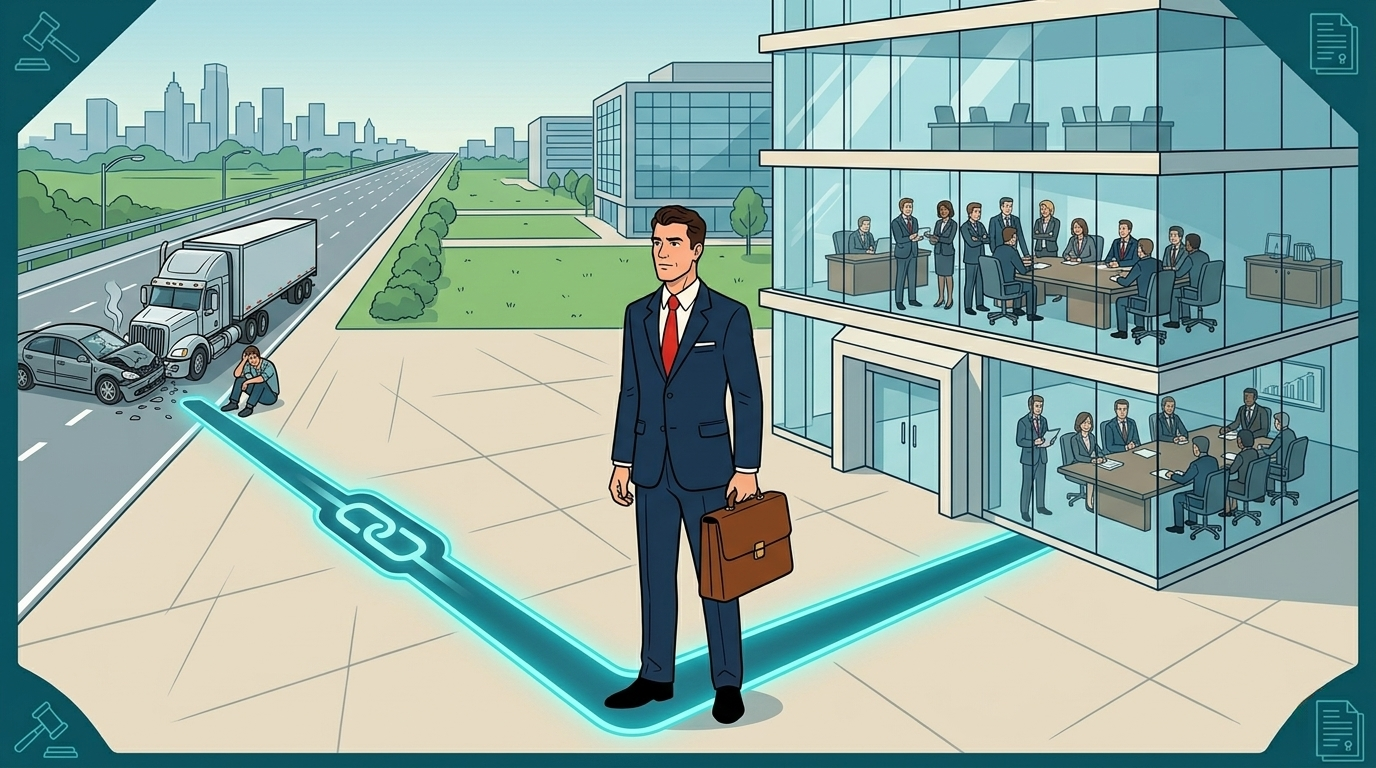
In plain language, vicarious liability means one party can be held legally responsible for the actions of another.
In the context of commercial truck accident liability:
- It often applies when a trucking company is held responsible for its driver’s negligence - if that negligence happened while the driver was working within their job duties.
- It’s not about punishing innocent companies; it’s about ensuring victims can recover from the party who controls the work, sets the rules, and benefits financially from the driver’s labor.
Example:
If a truck driver crashes into your vehicle while en route to deliver goods for their employer, and they were performing job duties at the time, the employer can be sued under vicarious liability - even if the company didn’t directly cause the collision.
Why This Matters in Truck Accident Cases
- Many truck drivers don’t have personal insurance limits high enough to cover catastrophic injury claims.
- Trucking companies often carry multi‑million‑dollar policies, making recovery more feasible.
- Employer responsibility can lead to settlements or verdicts that reflect the true lifetime cost of an injury.
Key Difference Between Fault and Responsibility
- Fault: Who physically caused the crash.
- Responsibility: Who is legally obligated to pay for the harm.
Vicarious liability bridges the two - letting you hold the responsible party accountable for the fault of someone they employ or direct.
Free consultation
Been in a truck accident?
Our truck accident attorneys fight for maximum compensation. Free consultation.
The Legal Foundation: Respondeat Superior Doctrine
The doctrine respondeat superior - Latin for “let the master answer” - is the legal backbone of vicarious liability in truck accident cases.
Core Requirements
For vicarious liability to apply under respondeat superior, two main elements must be proven:
- Employment Relationship Exists
- The driver must be an employee of the company, or functioning as one (in some cases, even if classified as an independent contractor).
- Courts look beyond paperwork - they examine control factors like who sets schedules, provides equipment, enforces rules, and controls the route.
- Act Within Scope of Employment
- The negligent act occurred while the driver was performing job duties, not on personal time.
- Examples:
- Delivering assigned cargo.
- Driving between drop‑off points.
- Operating the truck as directed by the dispatcher.
- Not included:
- Personal errands outside work hours.
- Unauthorized trips unrelated to company business.
Why Scope of Employment Is Critical
Proving the act was “within the scope” builds the legal link between the driver’s conduct and the company’s responsibility. Without it:
- The company can claim it has no connection to your harm.
- Liability may fall solely on the driver - reducing recovery.
How It Plays Out in Truck Accident Cases
- On‑Duty Crash: Driver speeding during assigned delivery → vicarious liability applies.
- Off‑Duty Crash: Driver causing accident while using truck for personal errands → vicarious liability unlikely.
- Illegally Parked Commercial Truck Accident: If driver parked in a prohibited area while waiting for scheduled delivery, and company policy allowed or encouraged the practice → vicarious liability can apply.
Real‑World Examples of Proven Vicarious Liability
Example 1 - Fatigue-Related Collision: Driver exceeded FMCSA hours due to company-imposed deadlines. ELD data matched load delivery times → employer liable.
Example 2 - Illegal Parking Accident: Driver parked in a restricted area awaiting delivery. Company policy encouraged early arrival without designated parking access → employer partially liable.
Example 3 - Hazmat Spill: Driver mishandled pressurized tank during delivery, causing environmental harm → employer liable due to control over task and training requirements.
Bennett Legal Insight:
Trucking companies often argue drivers were “off duty” to escape liability. We counter by tracing job assignments, dispatch records, and GPS data to show the driver was working for company benefit at the time - locking in vicarious liability.
Responsibility in Commercial Truck Accidents; When It Applies
Proving responsibility in a commercial truck accident means showing the driver’s actions were legally tied to their employer at the time of the crash.
Here’s where vicarious liability most often applies - and the fine points that decide whether the company pays.
1. Driver Was Actively On Duty
- Completing a scheduled delivery or pickup.
- Driving between company‑assigned stops.
- Returning to the terminal after finishing a route.
- Following dispatch instructions for re‑routing due to traffic or closures.
2. Company Exerted Control Over Driver’s Work
Courts look for control factors, such as:
- Who set the route and schedule.
- Who provided the truck.
- Whether the driver wore a company uniform or branding.
- If the driver was required to check in with supervisors or dispatch.
Even independent contractors can trigger vicarious liability if the company maintains control over the work.
3. Within Scope of Employment
The driver’s actions served the company’s business purpose.
Examples:
- Speeding to meet a delivery deadline the company imposed.
- Parking in a restricted zone near the delivery location, per company policy (critical in illegally parked commercial truck accidents).
- Operating in areas specifically requested by the employer, even if not part of the driver’s usual route.
4. Working Under Company Dispatch
If a dispatcher’s real‑time instructions direct the driver’s movements, vicarious liability is easier to prove - because it shows ongoing employer control right up to the accident.
Bennett Legal Tip
One overlooked element is company response time after a crash. If management sends resources (like lawyers, PR staff, or claims adjusters) to the scene ASAP, it can be strong circumstantial evidence they recognize the driver was acting in their capacity.
When Vicarious Liability Does NOT Apply
Knowing when it doesn’t apply is equally important - insurers and defense lawyers will exploit these gaps.
1. Off‑Duty, Personal Errands
- Driver is using the truck for non‑work purposes without employer approval.
- Example: The driver leaves a delivery site and detours 20 miles to visit a friend - accident occurs during a detour.
2. Clear Violation of Company Instructions
If the driver was warned not to do something, and the accident happened during that prohibited activity, it can undermine vicarious liability.
- Example: Company policy forbids transporting unauthorized passengers; driver causes a crash while out with a friend.
3. Scope of Employment Breaks
If the driver substantially deviated from the work purpose (known as “frolic” in legal terms) - e.g., taking the truck out of service for personal gain - the link between employer and responsibility can break.
4. Employer Had No Control
In rare cases, truly independent owner‑operators make all decisions about routes, schedules, and maintenance - limiting employer liability.
Bennett Legal Warning 🚨
Carriers often reframe facts to argue they weren’t in control. That’s why it’s vital to secure:
- Dispatch communications showing work direction.
- GPS logs proving the route matched an assigned task.
- Delivery receipts confirming company purpose.
State‑by‑State Variations in Vicarious Liability
Vicarious liability isn’t applied identically in every state - understanding the local rules can make or break your claim.
Broad Application States
- California, New York: Liberal interpretation of “scope of employment” - even minor detours may still be covered if the primary activity serves the employer.
- These states often consider branding, uniforms, and truck ownership as strong evidence of control.
Narrow Application States
- Texas, Florida: Stricter approach - plaintiff must clearly prove the driver was doing a work‑related act at the time.
- Independent contractor defenses are more accepted here unless control is overwhelming.
Comparative Negligence States
- Fault is split among everyone involved.
- If the victim is partly at fault (e.g., colliding with a truck in a tricky merge), damages can be reduced proportionally - even when vicarious liability applies.
Pure Contributory Negligence States
- Maryland, Virginia, North Carolina, Alabama, DC: Any degree of victim fault can bar recovery entirely, making vicarious liability irrelevant unless you’re blameless.
Special Statutes
- Some states have special laws for hazmat carriers or public transport trucks that impose automatic liability on employers for on‑duty accidents.
Bennett Legal Insight
Matching evidence to your state’s standard is key. In a narrow‑application state, we focus heavily on proving exact work status - dispatch logs, assignment sheets, and witness statements. In broad states, the emphasis shifts to proving any reasonable employer benefits from the driver’s actions.
State‑by‑State Variations in Vicarious Liability - Commercial Truck Accident Context
| State | Liability Approach | Negligence Rule | Key Notes / Quirks for Truck Accident Cases |
| Alabama | Narrow | Pure contributory negligence | Any victim fault bars recovery; must clearly prove driver in scope of employment. |
| Alaska | Broad | Pure comparative negligence | Employer control is often inferred if truck is branded or company-owned. |
| Arizona | Broad | Pure comparative negligence | “Scope” broadly defined; branding and dispatch control carry weight. |
| Arkansas | Moderate | Modified comparative (50% bar) | Contractor defenses common; delivery documents critical evidence. |
| California | Broad | Pure comparative negligence | Even minor detours may fall under scope if employer benefited; strong anti-misclassification rules. |
| Colorado | Moderate | Modified comparative (50% bar) | Courts weigh control factors heavily; branding not always decisive. |
| Connecticut | Broad | Modified comparative (51% bar) | Employer policies can extend liability beyond normal duties if related to work goals. |
| Delaware | Broad | Modified comparative (50% bar) | Tends to hold employers liable when driver using employer equipment. |
| District of Columbia | Narrow | Pure contributory negligence | Exceptions for hazmat carriers; high burden to prove scope. |
| Florida | Narrow | Pure comparative negligence | Independent contractor defense strong; must show company exerted daily control. |
| Georgia | Moderate | Modified comparative (50% bar) | Clear contract terms can cut liability; GPS and dispatch logs essential. |
| Hawaii | Broad | Modified comparative (51% bar) | Scope interpreted liberally; detours often still covered. |
| Idaho | Moderate | Modified comparative (50% bar) | Employer liability limited without strong control evidence. |
| Illinois | Broad | Modified comparative (51% bar) | Recognizes implied scope if driver furthering company interests. |
| Indiana | Moderate | Modified comparative (51% bar) | “Coming and going” rule limits liability outside direct work errands. |
| Iowa | Moderate | Modified comparative (51% bar) | Courts focus on nature of trip and cargo link to work. |
| Kansas | Moderate | Modified comparative (50% bar) | Often requires written evidence of driver’s assignment at time. |
| Kentucky | Broad | Pure comparative negligence | Employer benefit test applied even for extended detours. |
| Louisiana | Broad | Pure comparative negligence | Civil law tradition favors scope findings under employer benefit rule. |
| Maine | Moderate | Modified comparative (50% bar) | Narrow view unless employer can be shown to direct or control actions. |
| Maryland | Narrow | Pure contributory negligence | High burden; branding alone insufficient to prove scope. |
| Massachusetts | Moderate | Modified comparative (51% bar) | Requires clear operational control; delivery instructions strong evidence. |
| Michigan | Moderate | Modified comparative (51% bar) | “Frolic” defense recognized; detours can cut liability sharply. |
| Minnesota | Broad | Modified comparative (51% bar) | Liberal interpretation of scope, even with incidental personal stops. |
| Mississippi | Moderate | Pure comparative negligence | Control factors key; branding and employer dispatch control often persuasive. |
| Missouri | Broad | Pure comparative negligence | Courts resistant to contractor misclassification; frequent pro-plaintiff rulings. |
| Montana | Broad | Modified comparative (51% bar) | Any employer benefit during trip can attach liability. |
| Nebraska | Moderate | Modified comparative (50% bar) | Employer control must be specific and ongoing. |
| Nevada | Broad | Modified comparative (51% bar) | Branding and company truck use often decisive; favors liberal scope interpretation. |
| New Hampshire | Moderate | Modified comparative (51% bar) | Independent contractors harder to attach liability unless control strong. |
| New Jersey | Broad | Modified comparative (50% bar) | Company branding and routing instructions carry heavy weight. |
| New Mexico | Broad | Pure comparative negligence | Courts often infer control from work logs and cargo assignments. |
| New York | Broad | Pure comparative negligence | Even off-duty but on-assignment travel often covered; strong vicarious liability jurisprudence. |
| North Carolina | Narrow | Pure contributory negligence | Must be within clear work assignment; branding and company truck not enough alone. |
| North Dakota | Moderate | Modified comparative (50% bar) | Detailed evidence needed; dispatch logs crucial. |
| Ohio | Moderate | Modified comparative (50% bar) | Recognizes implied benefit scope; careful analysis of dispatch authority. |
| Oklahoma | Moderate | Modified comparative (50% bar) | Scope proven via employer routing and cargo control. |
| Oregon | Broad | Modified comparative (51% bar) | Courts focus on furtherance of employer interest; liberal approach. |
| Pennsylvania | Moderate | Modified comparative (51% bar) | Frolic defense recognized; detours must still serve employer to retain liability. |
| Rhode Island | Broad | Pure comparative negligence | Wide employer scope interpretation; branding heavy evidence. |
| South Carolina | Moderate | Modified comparative (51% bar) | Clear employer assignment records improve chances; narrow absent such. |
| South Dakota | Moderate | Modified comparative (50% bar) | Frolic defense significant; control evidence critical. |
| Tennessee | Moderate | Modified comparative (50% bar) | Independent contractor defense often holds; must prove control over work. |
| Texas | Narrow | Modified comparative (51% bar) | Requires explicit proof of work-related act at time; contractor defense strong. |
| Utah | Moderate | Modified comparative (50% bar) | Benefit-to-employer test applied narrowly. |
| Vermont | Moderate | Modified comparative (51% bar) | Employer liability favored with route and timeline evidence. |
| Virginia | Narrow | Pure contributory negligence | Very high burden; company benefit test applied sparingly. |
| Washington | Broad | Pure comparative negligence | Liberal view of scope; branding and dispatch control strong evidence. |
| West Virginia | Broad | Modified comparative (50% bar) | Courts focus heavily on dispatch authority and employer benefit. |
| Wisconsin | Moderate | Modified comparative (51% bar) | Frolic defense recognized; employer liability tied to direct work control. |
| Wyoming | Moderate | Modified comparative (50% bar) | Scope proven via work orders and trip assignments. |
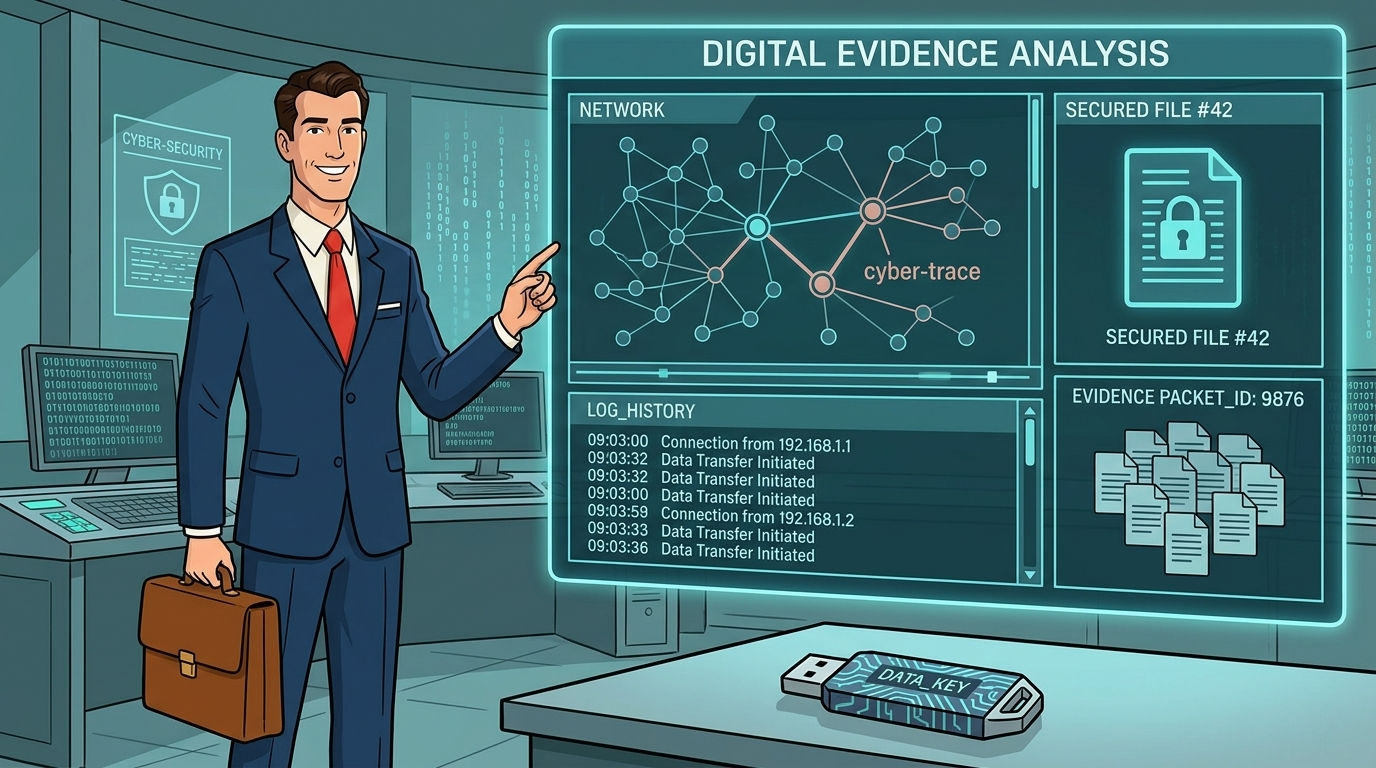
Evidence Needed to Prove Vicarious Liability
Proving that a trucking company is vicariously liable involves gathering specific, hard-to-dispute documentation and testimony. The burden lies on you - and your legal team - to show the driver was working within their employment scope at the time of the accident.
Core Evidence Categories
- Employment Records
- Hiring documents, payroll info, HR personnel files.
- Job descriptions showing duties at the time of crash.
- Training certificates indicating employer oversight.
- Dispatch Logs and Route Assignments
- Records indicating exactly where and when the driver was instructed to operate.
- Communications showing instructions leading directly to the incident location.
- ELD (Electronic Logging Device) Data
- Confirms driver’s on-duty status.
- Matches company-assigned route with actual GPS positioning.
- Company Policy Manuals
- Safety rules, delivery schedules, parking protocols - useful for proving company benefit from driver actions.
- Witness Testimony
- Passengers, other drivers, or bystanders who can confirm driver was engaged in work-related tasks.
- Cargo Documentation
- Bills of lading, shipping manifests, hazmat transport orders.
Bennett Legal Tip:
A common overlooked piece of evidence is accident scene response records from the company (emails/calls to insurance, legal teams deployed to the scene). This often confirms the company knew it was a work-related incident.
Overcoming Independent Contractor Defenses
Trucking companies frequently claim drivers are “independent contractors” to avoid liability.
How Courts Test These Claims
- Control Test: Who decides the how, when, and where of the work?
- Integration Test: Is the driver’s work integral to the company’s core business?
- Equipment Ownership: Does the company own/provide the truck?
- Branding Present: Logos, uniforms, branded paperwork suggest company representation.
Evidence That Defeats the Defense
- Contracts showing strict schedules and route assignments.
- Proof driver’s only income source is the company.
- Employer-issued tools, fuel cards, credit for tolls.
Finer Detail
Even if a driver truly owns the truck, if the company dictates loads, routes, and customer interaction policies, courts often find vicarious liability applies.
Special Situations in Commercial Trucking
1. Joint Employment
Two companies share control - common in logistics partnerships or subcontracted deliveries. Both can be liable.
2. Leased Vehicles
Under certain leases, responsibility may fall to lessee or owner depending on control and maintenance.
3. Owner‑Operators
Specialized contractors running branded trucks long-term can be treated as employees for liability purposes.
4. Hazmat Carriers
Federal law often tightens liability rules for hazardous cargo operators - including mandatory insurance minimums and stricter scope interpretations.
Practical Steps to Prove Vicarious Liability
- Identify Employer Early: Get truck registration, DOT number, and insurance policy at the scene if possible.
- Preserve Evidence Immediately: Send preservation letters for ELD logs, dispatch records, and GPS data.
- Request Employment Verification: Even if a contractor demands written proof of operational control.
- Link Act to Company Benefit: Show that the driver’s activity was tied directly to fulfilling a company’s purpose.
- Engage Expert Testimony: Vocational experts, industry standards analysts to prove scope of employment.
Bennett Legal Holds Companies Accountable
In commercial truck accident cases, proving vicarious liability can be the difference between a small recovery and financial security for life.
Trucking companies have teams of lawyers ready to deny responsibility, but Bennett Legal knows where to look, what evidence survives deletion, and how to dismantle defenses like “independent contractor” status.
We:
- Trace every operational decision from dispatch instructions to on-road actions.
- Secure critical documentation within days - before companies “lose” it.
- Match legal doctrine to your state’s rules for maximum claim strength.
- Uncover hidden control factors the defense hopes no one notices.
📞 Contact Bennett Legal today for a free case evaluation.
When your future depends on the trucking company taking responsibility, we make sure the law forces them to - and pays what you’re truly owed.
FAQs
Q: What does vicarious liability mean in a truck accident?
A: It allows you to hold an employer legally responsible for an employee’s negligence during work duties.
Q: Can an employer be liable if the driver is an independent contractor?
A: Yes, if evidence shows they exerted significant control over the driver’s work.
Q: Does proving vicarious liability increase compensation?
A: Typically - employers carry higher insurance limits than individual drivers.
Related Reading
Free consultation
Been in a truck accident?
Our truck accident attorneys fight for maximum compensation. Free consultation.