This article is general information, not legal advice. Wrongful death laws and evidence rules vary by state. Please speak with a qualified wrongful death attorney about your specific situation.
Hey folks, Tall Chuck here.
When a family comes to me after a tragedy, they are almost always overwhelmed. They know what happened was wrong. They know someone is responsible. But they don't know how to prove it in a way that holds up in a courtroom. They think it's their word against a corporation, an insurance company, or a reckless driver with deep pockets.
From up here, I can tell you this: a wrongful death case isn't won by just telling the truth. It's won by surrounding that truth with an iron wall of evidence. In a courtroom, facts don't speak for themselves — evidence does.
And evidence disappears fast. The clock starts the moment tragedy strikes.
💬 Don't wait to protect your family's case. Contact Bennett Legal for a free, confidential consultation →
The 7 Essential Types of Evidence
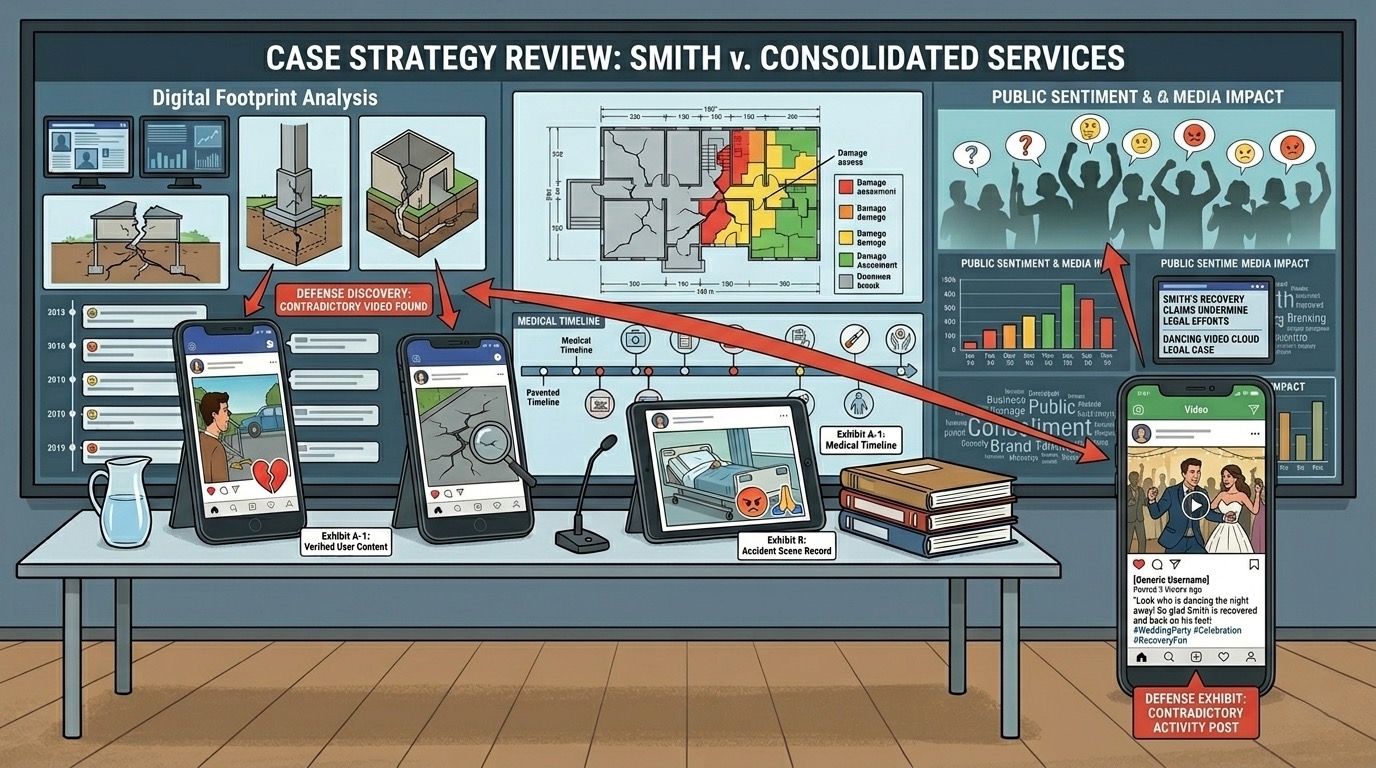
1. The Digital Footprint — The Evidence That Never Lies
We live in a digital world. That's a powerful advantage for families seeking justice.
- Dashcam and Surveillance Video — We canvass the scene immediately for doorbell cameras, business security systems, traffic cameras, and any other footage that captured what happened. Video evidence is often the most decisive evidence in the case — and it's often overwritten within 24–72 hours.
- Social Media — Defendants sometimes post incriminating content immediately after an incident. We preserve it before it gets deleted.
- The Black Box — Modern cars and commercial trucks carry "event data recorders" that capture speed, braking, and steering inputs in the seconds before impact. This data doesn't lie — and we fight to preserve it before the vehicle gets repaired or destroyed.
For a deeper look at preserving digital evidence specifically, read our guide: Digital Evidence in Wrongful Death Cases: What You Need to Save Right Now.
2. Forensic and Scientific Experts
Your case needs voices the jury will trust — and jurors trust experts with data.
- Accident Reconstructionists — These specialists use physics, engineering, and digital modeling to recreate exactly what happened at the scene. When the defendant claims it was "just an accident," reconstruction experts show exactly why it wasn't.
- Medical Experts — They review hospital records, autopsy reports, and treatment history to establish the direct causal link between the negligence and the death. Without this link, there is no case.
- Life-Care Planners and Economists — They calculate the true financial loss to your family over decades — lost wages, lost benefits, lost retirement contributions — so the jury understands the full scope of what was taken.
3. Witness Testimony — The Human Element
A jury needs to hear from real people who saw what happened. We work to track down witnesses quickly — before their memories fade, before contact information becomes impossible to find, and before the other side has a chance to shape their recollection.
Eyewitness testimony doesn't just confirm facts. It puts a human face on what happened.
💬 Time matters. Witnesses move on. Evidence disappears. Talk to Bennett Legal today — it's free →
4. Employment and Maintenance Records
This is where corporate negligence often hides.
Did the company hire a driver with a history of reckless driving? Did they skip scheduled maintenance on a machine that failed and killed someone? Did they receive safety complaints and ignore them?
These records exist. Companies will not hand them over voluntarily — they bury them. A lawyer's discovery tools force them into the open. Deposition subpoenas, document requests, and court orders are the only way to get them, and you need an attorney to wield them.
5. Proving the "Human Cost" — Non-Economic Damages
Juries can calculate lost wages from a spreadsheet. What moves them — what drives verdicts into the millions — is understanding who your loved one was.
- Family Photos and Videos — We use these to show the jury the relationship that was stolen. The birthdays. The little league games. The Sunday dinners.
- Testimony from Friends, Coworkers, and Community Members — They build a portrait of who your loved one was and the depth of the hole their absence has left. This testimony is what separates a fair verdict from a life-changing one.
6. The Official Paper Trail
Police reports, autopsy results, OSHA investigation files, and coroner's findings provide the official framework courts rely on. But these documents are not always complete — and they are not always correct.
We know how to read between the lines. Errors in police reports get challenged with accident reconstruction. OSHA citations become evidence of known safety violations. Autopsy reports get reviewed by independent medical experts when the cause of death is in dispute.
Official documents open doors. Expert analysis walks through them.
7. Spoliation Letters — Protecting the Truth Before It Disappears
This is the single most urgent step in any wrongful death case — and most families don't know it exists.
A spoliation letter is a formal legal notice sent to the defendant and any other relevant party immediately after the incident. It legally demands they preserve all evidence: surveillance footage, vehicle black boxes, maintenance logs, emails, text messages, and any other records related to the incident.
If they destroy evidence after receiving a spoliation letter, a judge can instruct the jury to assume the destroyed evidence was damaging to the defendant. That instruction alone can change the outcome of a case.
This is why the first 72 hours matter so much. We act immediately.
⚠️ You Need a Lawyer Working Your Case From Day One
Spoliation letters, forensic preservation, expert retention, discovery subpoenas — none of this is something a family can handle alone while also grieving. An experienced wrongful death attorney deploys all of this in the first days after you make contact.
The other side has lawyers working immediately. Your family should too.
Our $32 Million Verdict — Built on Expert Evidence
💬 Case Result: $32,000,000 Jury Award — Dallas County, October 2025
When Bennett Legal walked into the courtroom for the Amiri family, we didn't walk in with a story. We walked in with an iron wall of evidence.
Behind every major verdict is a team of top-tier specialists — accident reconstructionists, forensic analysts, digital evidence experts, medical professionals, and financial economists — each one the best in their field. At Bennett Legal, we don't cut corners on who we bring to the table. We retain experts who can withstand cross-examination and make the evidence impossible to ignore.
- Digital patterns showing the corporation had notice of dangerous conditions for years
- A spoliation strategy that prevented critical evidence from disappearing
Our $32 million Dallas verdict reflects that commitment to excellence at every level of the case.
Past results do not guarantee a similar outcome. Case results depend on the unique facts and legal issues involved.
State-by-State Evidence and Filing Rules (2026)
| State | Statute of Limitations | Evidence "Trap" to Watch For | Key Lever for Families |
|---|---|---|---|
| Texas | 2 Years | Comparative Fault: They'll use any evidence to argue your loved one was 51%+ at fault — which bars recovery entirely. | The DTPA: If they lied about safety, consumer protection law becomes a powerful additional weapon. |
| Florida | 2 Years | Stricter evidence standards for medical malpractice cases. | No damage caps since the Florida Supreme Court struck them down. |
| California | 2 Years | Government Claims: If a government entity is at fault, you may have only 6 months to file a notice of claim. | Strict product liability — manufacturers can be held liable without proving negligence. |
| New York | 2 Years | The Economic Rule: NY courts require hard financial documentation for "pecuniary loss." Non-economic damages are harder to recover. | Ongoing legislative efforts to allow juries to compensate grief. |
| Tennessee | 1 Year | The shortest statute of limitations in the country — almost no time to gather forensic evidence. | Damage caps can increase when evidence establishes permanent loss. |
| New Jersey | 2 Years | Charitable Immunity: Some hospitals have a liability cap. | Very strong Consumer Fraud Act for cases involving corporate misconduct. |
| Illinois | 2 Years | Strict chain-of-custody rules for physical evidence. | No legislative cap — courts have struck down all damage caps as unconstitutional. |
| Missouri | 3 Years | Medical malpractice cases require an expert affidavit before you can file. | One of the few states giving families a full three years. |
| Virginia | 2 Years | Hard cap on medical malpractice damages (~$2.6M regardless of evidence). | "Rocket Docket" courts — your evidence reaches a jury faster than almost anywhere else in the country. |
Deadlines are absolute. Missing the statute of limitations permanently bars your family's claim. If you're unsure of your deadline, consult an attorney immediately.
We Don't Just Collect Evidence. We Build a Wall of Truth.
At Bennett Legal, we treat every case like it's going to trial — because the moment the other side believes we're ready, the negotiations change. We deploy immediately: private investigators, spoliation demands, forensic experts, and legal discovery tools that force the truth into the open.
Contact Bennett Legal today for a free, confidential case evaluation. No pressure. No fees unless we win. Start your free case review →
Frequently Asked Questions
What is a spoliation of evidence letter?
A formal legal notice demanding the defendant preserve all evidence related to the incident. If they destroy evidence after receiving it, a judge can instruct the jury to assume the destroyed evidence was damaging to the defendant — a powerful consequence that can shift the entire case.
Can text messages and social media be used as evidence?
Yes. Text messages, emails, DMs, and social media posts can be critical evidence of negligence, prior knowledge of dangerous conditions, or admissions after the fact. We preserve this content immediately before it's deleted.
What if the police report has errors?
Don't panic — a police report is one piece of the puzzle, not the whole picture. We use accident reconstruction experts and forensic specialists to challenge incorrect findings with hard science. Police reports have been successfully challenged in many of our cases.
How quickly does Bennett Legal act after a family contacts us?
Immediately. Within the first 24–48 hours we can have spoliation demands in the defendant's hands, investigators at the scene, and preservation requests to any relevant third parties. Evidence doesn't wait, and neither do we.
How do I know if I have enough evidence for a case?
You don't need to figure that out alone — that's what the free consultation is for. Read 8 Signs You May Have a Wrongful Death Claim to get oriented, then call us. We'll assess what evidence exists and what we can build.
Related Reading
- Digital Evidence in Wrongful Death Cases: What You Need to Save Right Now
- How to Prove a Wrongful Death Claim: 8-Step Guide
- 8 Signs You May Have a Wrongful Death Claim (Before Talking to a Lawyer)
- How Social Media Can Influence Wrongful Death Cases
- Mediation vs. Trial in Wrongful Death Cases: Which Path Is Right for Your Family?
- What Qualifies as Wrongful Death? How to Know if You Have a Case
Prior results do not guarantee a similar outcome. The $32 million figure represents the jury verdict in a Dallas County wrongful death case, October 2025. Case results depend on unique facts and legal issues. Charles Bennett Law, PLLC d/b/a Bennett Legal is licensed to practice law in the State of Texas.
Free consultation
Lost a loved one due to negligence?
We're here to help your family seek justice. Free, compassionate consultation.