If you need help, learn more about our Car Accident.
When someone you love dies suddenly, your world goes silent - and the internet goes loud.
Your phone lights up with “RIP” posts, old photos, memories, and angry comments. Friends post tributes. Strangers argue about what “really happened.” You’re trying to breathe, and meanwhile there’s a digital circus around the worst day of your life.
Here’s the part nobody prepares you for: All of that - the posts, the comments, the DMs, the photos, the “I’m so sorry, I should have…” messages - can turn into social media wrongful death evidence.
Sometimes that evidence helps you uncover the truth and hold people accountable. Sometimes, if you’re not careful, it’s used against you to downplay your loss or attack your credibility. Learn more about the difficulty of diagnosing traumatic brain injury.
My job - as “Tall Chuck” at Bennett Legal - is to walk you through this minefield in plain English. Let’s talk about how social media really works in wrongful death cases, and what you should (and should not) do when the internet starts talking about your tragedy.
Why Social Media Matters So Much in Wrongful Death Cases
If you’re thinking, “How could Facebook or TikTok possibly matter in a wrongful death lawsuit?” you’re not alone. But in today’s world, social media is often online proof in a wrongful death case - both for the family and for the defense.
Here’s why it matters so much:
People talk freely online before they “lawyer up.”
- Before anyone has spoken to a lawyer, they post. They vent. They brag. They try to explain. Those raw, unfiltered posts can show what someone was thinking or doing before the incident.
Posts are timestamped.
- Social media automatically records when something was posted and often where. That can show:
- Who knew about a problem
- When they first knew about it
- What they did (or didn’t do) afterward
Photos and videos show reality, not spin.
- Images can show:
- Dangerous road or workplace conditions
- A driver drinking before getting behind the wheel
- A machine missing guards
- A hospital or nursing home that’s understaffed and chaotic
Patterns of behavior are easier to prove.
- Maybe the at‑fault driver regularly posts about speeding. Maybe employees have been complaining for months about broken equipment. That history can show a pattern of negligence.
In other words, social media is one slice of digital evidence in wrongful death cases. Digital evidence can include:
- Social media posts and messages
- Texts and emails
- Security camera footage
- Bodycam or dashcam videos
- Phone location data, GPS, and more
Social media is just one piece, but it’s often the first piece that families see - and the first piece that can disappear if no one moves quickly.
What’s at stake?
- Truth – what really happened and who’s responsible
- Accountability – holding individuals and companies to account
- Financial security – for the spouse, kids, parents left behind
- Future safety – making sure the same thing doesn’t happen to another family
That’s why we treat social media like evidence, not entertainment.
Types of Social Media Evidence That Can Help a Wrongful Death Case
Not all posts are created equal. Some are noise; some are gold. Here’s how social media wrongful death evidence might show up.
Posts and Status Updates (Facebook, X/Twitter, Instagram, TikTok)
Public posts and status updates are often the most obvious Facebook/Twitter wrongful death case evidence.
Examples that can help a case:
- Bragging about dangerous behavior
- “Hit 100 mph on the way home. Love this car!”
- “Three shots in, still driving home lol.”
Those kinds of posts can make it easier to prove reckless driving.
- Employees calling out unsafe working conditions
- “Another 16‑hour shift, still no safety gear.”
- “We’ve been telling management this machine is broken for months.”
These posts can show the company knew about a danger and didn’t fix it.
- Posts about fatigue or distraction
- “So tired, can’t keep my eyes open, but gotta make this deadline.”
- “On my phone all day, even in the car, don’t @ me.”
That’s powerful evidence in a distracted driving or fatigue‑related crash.
These posts can help prove:
- Negligence (careless behavior)
- Knowledge (they knew about the risk)
- Patterns (this wasn’t a one‑time mistake)
Photos and Videos
Photos and videos can fill in details that words leave out:
- Pictures of the scene or hazardous conditions: A wet floor with no warning sign. Exposed wires. A broken guardrail. Overcrowded nursing home hallways. That’s visual proof of risk.
- Clips of vehicles, equipment, or injuries: A truck with bald tires. Machinery without guards. Bruises or bedsores. These can help your experts reconstruct what happened.
- Live streams or Stories posted around the time of the incident: Maybe someone streamed a party where the driver drank heavily. Maybe an employee posted an Instagram Story from a chaotic hospital floor.
- Timestamps and geotags: When and where a photo or video was taken can support a timeline - who was where, doing what, and when.
Comments, DMs, and Group Chats
A lot of key social media wrongful death evidence never appears on a public timeline. It lives in:
Comments on posts
- Friends and coworkers may reveal details in comments:
- “We told you that forklift was unsafe.”
- “You always drive too fast on that road.”
Direct messages (DMs)
- In private messages, people may:
- Apologize (“I shouldn’t have let them drive, I’m so sorry.”)
- Admit knowledge (“We knew that machine was messed up.”)
- Share warnings (“I told them to fix that railing weeks ago.”)
Group chats (Messenger, WhatsApp, Discord, Slack, etc.)
- Groups of employees, friends, or family might discuss:
- Hazards they complained about
- Pressure from management to cut corners
- What really happened before the incident
Screenshots of these conversations can become critical online proof in a wrongful death case - if preserved correctly and authenticated.
Posts by the Company or Facility
Don’t just look at individuals. Company and facility accounts can provide:
- Public relations statements: “We always put safety first.”If employees have been complaining online about the opposite, that contrast matters.
- Marketing posts that conflict with reality: Nursing homes claiming “24/7 attentive care” while residents and families post about neglect. Construction companies touting their safety record while workers share injury photos.
- Deleted or edited posts after the tragedy: If a business quietly deletes posts about safety procedures or rewrites statements, that can raise questions:
- What changed?
- Why now?
- What are they trying to hide?
Your attorney may use this to argue that the company is trying to clean up its image instead of fixing the underlying problem.
Free consultation
Lost a loved one to negligence?
We help families seek justice. Compassionate, experienced representation.
How Social Media Can Hurt a Wrongful Death Case
Social media isn’t just a goldmine for evidence. It’s also a minefield for grieving families. The same platforms that can help your case can also be used against you.
Family Posts Being Twisted Against You
In the early days, you’re grieving and angry - and you may post things you later regret. Defense lawyers may search for:
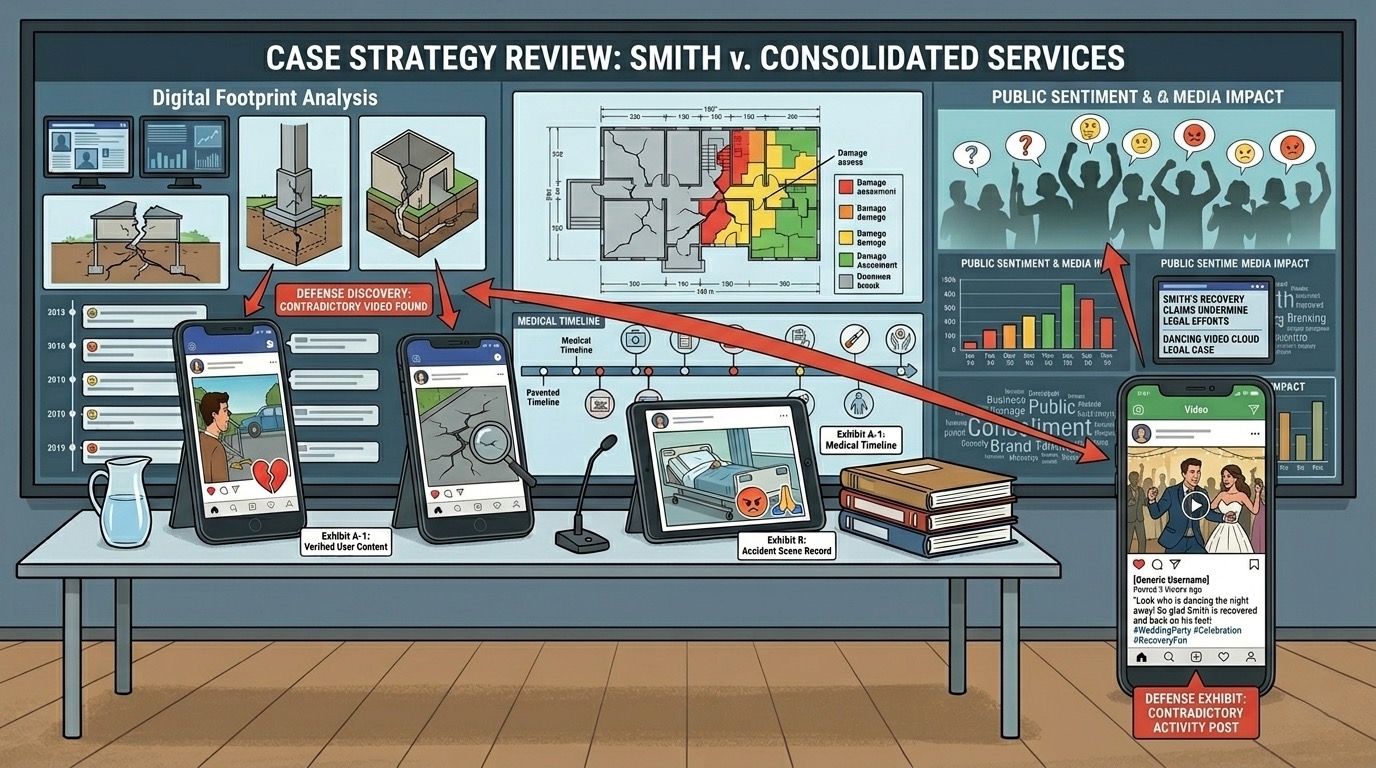
- Inconsistent details: If your first Facebook post says one thing and your later statement says another, they may try to argue you’re not credible.
- Speculation about what happened: Guessing about fault (“I know it was the truck driver’s fault!”) can come back to haunt you if the facts turn out to be more complicated.
- Posts about settlement discussions or private communications: Talking about offers, negotiations, or what your lawyer said is almost never helpful - and can be damaging.
“Cleaning Up” or Deleting Posts
It’s natural to want to scrub the internet after a tragedy. But:
- Deleting posts can look like hiding evidence: If a court thinks you intentionally destroyed online proof in a wrongful death case, you may face serious consequences (called “spoliation”). That can hurt your case far more than the post itself.
- Even well‑meant clean‑ups can cause problems: Removing old photos or posts about your loved one’s health, hobbies, or job might erase context your lawyer needs.
The bottom line: do not mass‑delete anything related to the incident without talking to an attorney first.
Oversharing Photos and Videos
Posting graphic images or videos of your loved one or the scene can have side effects:
- It can inflame social media and attract trolls.
- Defense lawyers may argue you’re trying to “profit” off the tragedy or manipulate public opinion.
- It can create a permanent online record your kids or other family members have to live with.
You have every right to tell your story - but be strategic about when, where, and how you do it.
What Families Should Do (and Not Do) With Social Media After a Wrongful Death
Here’s the practical, checklist version.
Do: Quietly Preserve Potential Evidence
Think “save first, decide later.”
- Take screenshots of:
- Posts, comments, and replies
- DMs and group chats
- Company statements and edits
- Make sure the screenshots show:
- Username or handle
- Date and time
- Full context (not just one line)
Do: Download or record videos and Stories
Stories disappear quickly. Use your phone’s screen recording or a download tool if you know how. Save copies in at least two safe places
- Cloud storage (Google Drive, iCloud, Dropbox, etc.)
- External hard drive or secure USB
Then: give it all to your attorney. Let them decide what’s relevant.
Do: Lock Down Privacy Settings (But Don’t Delete)
A smart middle ground:
- Tighten privacy settings on family accounts. Limit posts to friends or close friends.
- Stop accepting random friend requests: Some of those “friends” may be insurance investigators or people fishing for information.
- Make new posts thoughtful and limited: Memorial posts and grief are understandable, but avoid posts about the case itself.
Don’t wipe accounts without legal advice: Again, mass deletion can look like destruction of evidence, especially if litigation has started or is reasonably expected.
Don’t: Argue the Case on Facebook, X/Twitter, or TikTok
You don’t have to win the internet. You need to win your case. Anything you say publicly can be screenshot, even if you delete it later.
Avoid:
- Public debates with witnesses, company reps, or strangers
- Long posts laying out your theory of what happened
- Fighting with trolls - they’re not worth your time or risk
Don’t: Give Insurance or Companies Your Logins
If an insurance adjuster or company representative asks:
- “Can we have your social media login?”
- “Will you sign this broad release so we can access all your accounts?”
Pause. Broad access is dangerous. They’re not just looking at posts about the incident. They might dig through years of your life, health, and relationships.
Never sign away social media access without a lawyer reviewing it. Your attorney can negotiate narrow, reasonable boundaries - or fight inappropriate requests altogether.
How Lawyers Use Social Media in Wrongful Death Cases
A good wrongful death attorney doesn’t treat social media like gossip. They treat it like evidence - and they follow the rules. Here’s what that looks like:
- Investigating social media wrongful death evidence from all sides
- Your lawyer may review:
- The at‑fault party’s public posts
- Company and facility accounts
- Witness posts and comments
- Relevant hashtags or local groups
- Your lawyer may review:
- Sending preservation letters: Attorneys can send letters to individuals and companies instructing them to preserve relevant posts, videos, and digital records - to stop “clean‑ups” that destroy potential evidence.
- Subpoenaing social media platforms (when appropriate): In some cases, a court may order platforms (like Facebook, X/Twitter, or Instagram) to produce data, subject to their policies and the law.
- Working with digital forensics experts: Experts can help:
- Recover deleted or hidden data (when possible and lawful)
- Verify that screenshots and messages are authentic
- Analyze metadata (timestamps, locations, edit history)
Handled correctly, using digital and online proof in wrongful death cases is about one thing: getting to the truth. It’s not about spying for sport. It’s about making sure the full story is told - not just the version that’s convenient for the insurance company or corporation.
4 Common Myths About Social Media and Wrongful Death That I Will Break Now
Let’s bust a few myths.
Myth 1: “If I delete it fast, no one will ever find it.”
Reality: Deleting posts can backfire badly. Screenshots may already exist, and deleting evidence after a tragedy can look like you’re hiding something. Courts can punish that.
Myth 2: “My posts are private, so they’re safe from court.”
Reality: “Private” on social media doesn’t mean “immune from subpoenas.” Under certain circumstances, private posts and messages can be requested and examined in a lawsuit.
Myth 3: “If it’s not ‘official,’ it can’t be real evidence.”
Reality: Informal posts, DMs, group chats, emojis - they can all be part of digital evidence in a wrongful death case if they’re relevant and can be authenticated.
Myth 4: “Only what’s on Facebook matters; other platforms don’t count.”
Reality: Evidence is evidence. TikTok, Instagram, X/Twitter, Snapchat, Reddit, Discord, WhatsApp, Slack - it all matters if it relates to the incident, the people involved, or the conditions that led to the death.
Short Story: One Post That Changed a Case
Let me give you a simple story that captures how big this can be.
A delivery driver falls asleep at the wheel, crosses the center line, and hits another car head‑on. A parent is killed. The company says, “We train our drivers to rest. We didn’t know he was tired. This was just a tragic accident.”
While we’re investigating, a family member shows us something she saw on social media.
The night before the crash, the driver had posted on X/Twitter:
“Almost fell asleep at the wheel today but the deadlines don’t stop. Gotta keep grinding.”
He tagged the company and joked about the number of deliveries he had to hit.
On its own, that one post is sad and infuriating. But when we dug deeper, we found:
- Other drivers had posted about impossible schedules.
- Some had complained about being pressured to skip breaks.
- A supervisor had “liked” or commented on these posts.
That single piece of social media wrongful death evidence changed the entire case:
- The company could no longer claim they didn’t know about fatigue.
- We could show a pattern of pushing drivers beyond safe limits.
- The settlement reflected not just one driver’s mistake, but systemic pressure from above.
That’s the power - and the danger - of digital evidence in a wrongful death case. One post, one comment, one DM can be the key that unlocks the truth.
When to Talk to a Lawyer About Social Media in a Wrongful Death Case
If you’re dealing with loss and the internet is buzzing, timing matters. You should talk to a wrongful death lawyer as soon as possible if:
You see posts or comments that seem important: Don’t assume someone else is saving them. Take screenshots and contact an attorney.
Insurance companies or the at‑fault party start asking about your social media: If they’re asking, they’re looking for something - and you need someone in your corner.
You’re not sure what to do with your own posts and accounts: Even simple questions like “Can I post a memorial video?” or “Is it okay to delete old photos?” are worth running by an attorney in this context.
Remember: posts get deleted, accounts get closed, people “clean up” their feeds. Early legal help can protect online proof in a wrongful death case before it disappears - and protect you from accidentally hurting your own case.
How Bennett Legal Can Help You
If you’re reading this because you lost someone, I’m sorry you’re here. You shouldn’t have to learn about subpoenas and screenshots on top of grief - but here we are, together.
At Bennett Legal, here’s what we do when social media is involved in a wrongful death case:
- Review potential social media wrongful death evidence: We look at what you’ve found, what’s public, and what else might be out there.
- Send preservation letters and pursue deleted or hidden posts: We move quickly to tell individuals and companies: “Save everything. Don’t destroy digital evidence.” Then we use legal tools to get what the law allows.
- Protect your family from overreach by insurance and defense lawyers: We push back on overly broad requests for your social media and fight to keep your private life private.
- Talk in plain English about what to save, what to stop posting, and what happens next: No jargon, no scare tactics - just clear steps so you can focus on your family while we focus on the legal battle.
I can’t promise you an easy road. I can’t rewind time.
What I can promise is this: We’ll stand tall with you. We’ll fight to make sure the truth isn’t buried under deleted posts, corporate spin, or carefully crafted PR statements. We’ll treat your loved one’s story with the respect it deserves - online and in the courtroom.
If you’re facing a wrongful death and social media is part of the picture, reach out. Let’s talk about what you’ve seen, what you’re worried about, and how to protect your case and your family.
_DISCLAIMER: Wrongful death laws vary by state. Who can file, deadlines (statutes of limitation), and what damages are available are all different from one state to another. Social media issues are especially tricky and time‑sensitive. Posts get deleted, accounts are locked, and platforms have their own rules. Nothing here creates an attorney–client relationship. You should talk to a qualified wrongful death attorney in your own state about your specific situation. Use this article as a guide to ask better questions - not as a substitute for real legal advice. Learn more about filing a wrongful death suit in Texas. _
Related Reading
Free consultation
Lost a loved one to negligence?
We help families seek justice. Compassionate, experienced representation.