Where should your solar panels be facing?
$170,000+ recovery
Against Sunlight Financial · Solar fraud arbitration
- $113,000 loan cancelled
- UCC lien removed
- Credit repaired
- $58,000 cash to client
Past results do not guarantee a similar outcome. Every case is different.
It's one of the first questions homeowners ask after agreeing to a solar installation — and one of the most telling questions to ask after the panels are already on your roof.
In Texas and across most of the United States, solar panels typically perform best when mounted on south-facing roof sections. Southeast and southwest orientations can also work well depending on slope and shading. So when a company installs panels on a north-facing roof — without explaining the reduced production potential or the impact on the savings they promised you — that should raise serious concerns.
This isn't just an efficiency issue. It may be a sign that the company that sold you those panels was never focused on whether the system would actually work for you. And if your electricity bills haven't dropped the way you were told they would, the direction your panels face could be a key piece of evidence in understanding why.
Table of Contents
- What Is the Best Direction for Solar Panels?
- See It for Yourself: How the Sun Moves Over Texas
- Where Should My Solar Panels Face in Texas?
- Are Solar Panels Facing North a Red Flag?
- Why North-Facing Solar Panels Can Be a Problem
- Warning Signs Your Solar Company May Have Misled You
- What to Check If Your Solar Panels Were Installed Facing North
- When Bad Panel Placement Could Mean You Have a Legal Case
- What Homeowners Can Do Next
Free consultation
Solar panels not performing as promised?
We help Texas homeowners fight back against solar fraud. Free, confidential case review — no fees unless we win.
What Is the Best Direction for Solar Panels?
If you live anywhere in the Northern Hemisphere — including every state in the continental U.S. — the general rule is straightforward: south-facing panels produce the most energy over the course of a year.
This isn't a matter of opinion. It's basic solar geometry. Because the sun spends the majority of its time traveling across the southern portion of the sky in the Northern Hemisphere, panels oriented toward true south receive the most direct sunlight throughout the day. According to the U.S. Department of Energy, south-facing panels optimize total solar exposure and are the recommended orientation for residential installations.
Southeast and southwest orientations are also productive. Panels pointed just 10 degrees off of due south lose less than 1% of their annual production, and even east- or west-facing installations typically generate around 80–85% of what a south-facing system would produce.
North-facing panels, on the other hand, are a different story entirely. In the Northern Hemisphere, north-facing solar panels typically produce only 45–60% of what a south-facing system would generate — a dramatic reduction that can make or break the financial case for a solar investment.
Beyond compass direction, other factors matter too: roof pitch, shading, and local weather. A responsible installer evaluates all of these variables before making promises about savings and should run your roof through a production modeling tool like the National Renewable Energy Laboratory's PVWatts calculator.
If your installer never discussed any of this with you, that's worth paying attention to.
See It for Yourself: How the Sun Moves Over Texas
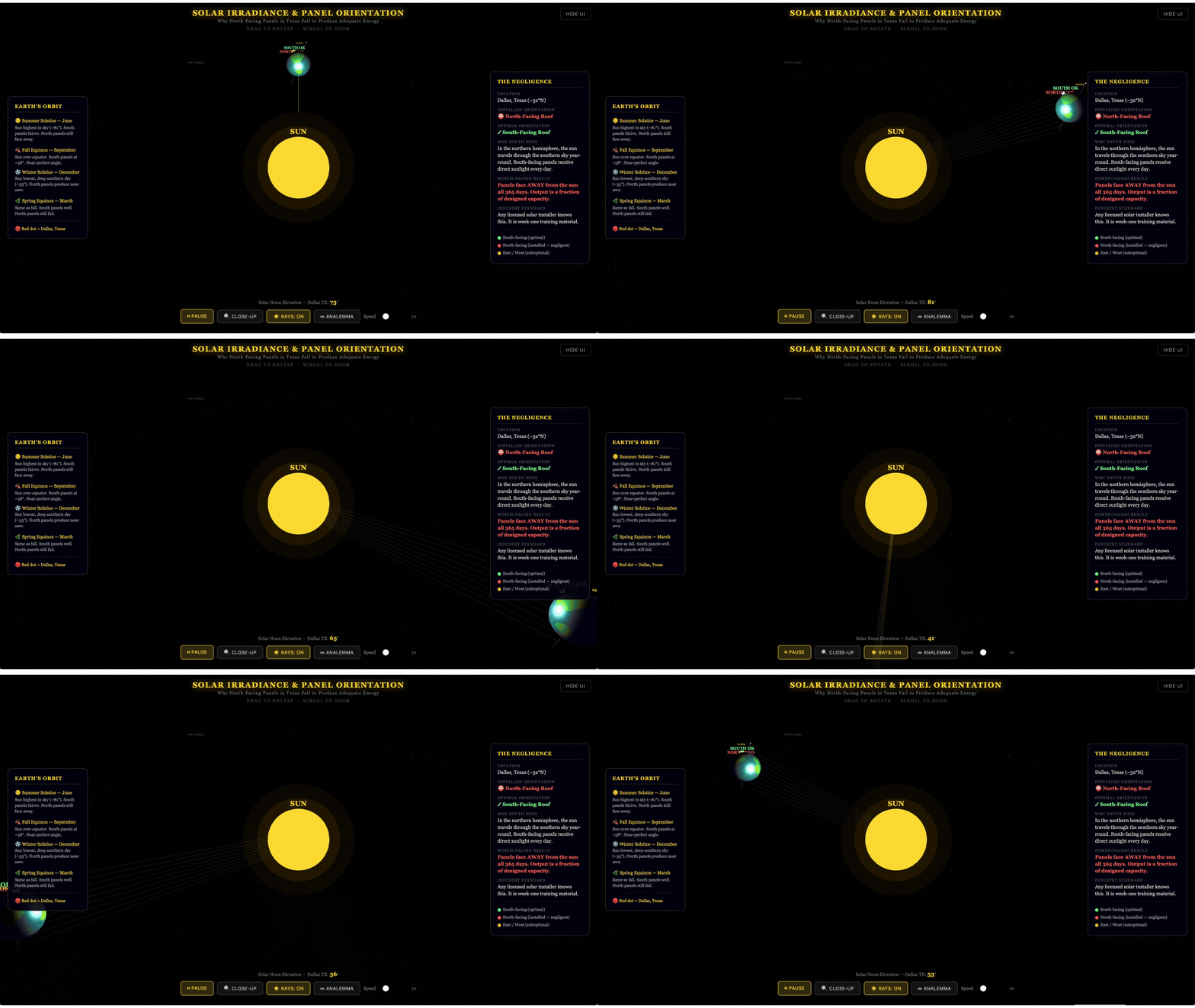
To understand why panel direction matters so much, it helps to see the sun's path with your own eyes.
The sun never appears in the northern sky in Dallas (~32°N latitude). Not in summer. Not in winter. Not ever. A north-facing panel is always pointing away from the energy source it's supposed to capture. Any licensed installer knows this — it's foundational training material.
If your panels were installed facing north and no one explained why that would drastically reduce your system's output, that's exactly what they failed to disclose.
Where Should My Solar Panels Face in Texas?
Texas sits between roughly 26 and 36 degrees north latitude. In Dallas, the latitude is approximately 33 degrees — meaning the sun consistently occupies the southern sky throughout the year. For a typical Dallas-area home, south-facing panels tilted at around 30–33 degrees will capture the most annual energy.
That configuration maximizes production during the hottest months, when air conditioning drives electricity bills to their peak — and when you most need your solar system to deliver on the savings you were promised.
If your solar company never discussed your roof's orientation, never explained which direction your panels would face, or brushed off the topic with "any roof works," you have good reason to be skeptical.
The reality is that many of the companies driving the solar fraud crisis in Texas are not qualified installers. They are commission-driven door-to-door sales operations that use high-pressure tactics whose goal is to close the sale — not to design a system that will actually perform.
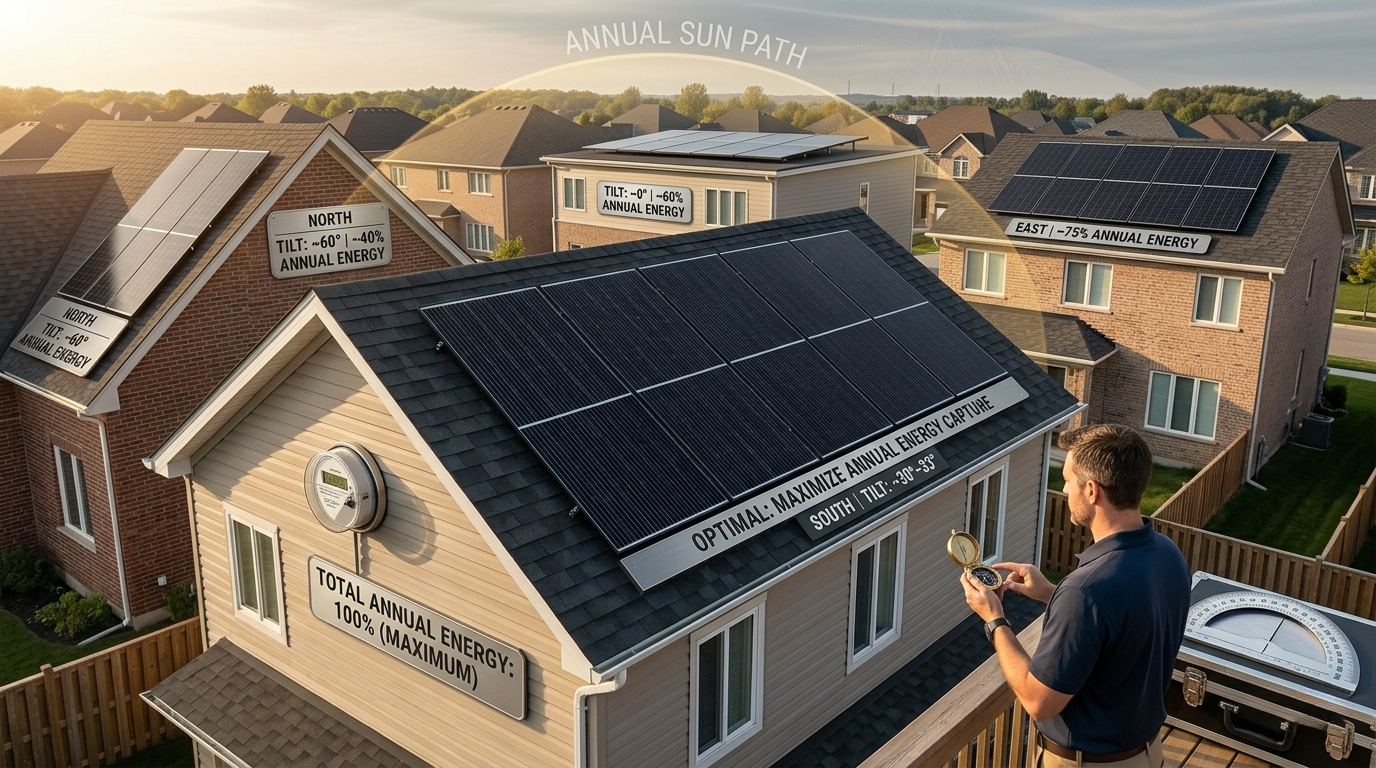 Best direction for solar panels in Texas
Are Solar Panels Facing North a Red Flag?
Not every north-facing solar installation is automatically evidence of fraud. There are situations where it might make sense — for example, if it's part of a larger system that also covers south-facing roof area, or if the roof pitch is very low.
But a north-facing installation becomes a red flag when paired with specific patterns of deception we see case after case across Texas:
The company promised significant savings. If you were told your electric bill would drop to zero and your panels are facing north, the math was never going to work. North-facing panels in Texas can produce roughly half the energy of a south-facing system.
The company failed to disclose the orientation issue. A legitimate solar proposal includes a site plan showing exactly where panels will be placed and which direction they'll face. If you were never shown this, the company didn't give you the opportunity to make an informed decision.
You were not shown realistic production estimates. Solar proposals should include modeled production figures based on your specific roof. If the only numbers you saw were verbal promises from a salesperson standing in your driveway, those weren't real estimates.
Better roof sections were available. If your home has south-facing roof area that was suitable for panels but the company installed on a north-facing section instead, that raises questions about whether the system was designed to benefit you or simply to maximize the size of the financing contract.
Why North-Facing Solar Panels Can Be a Problem
The production gap between south-facing and north-facing panels is not subtle. According to simulations run through the National Renewable Energy Laboratory's PVWatts calculator, north-facing roof planes produce almost 50% less energy compared to south-facing installations.
To put that in practical terms: if a south-facing 8 kW system in the Dallas area produces roughly 11,000–12,000 kWh per year, the same system facing north might only produce around 6,000–7,000 kWh. That's a gap of roughly 5,000 kWh — hundreds of dollars in electricity savings you'll never see.
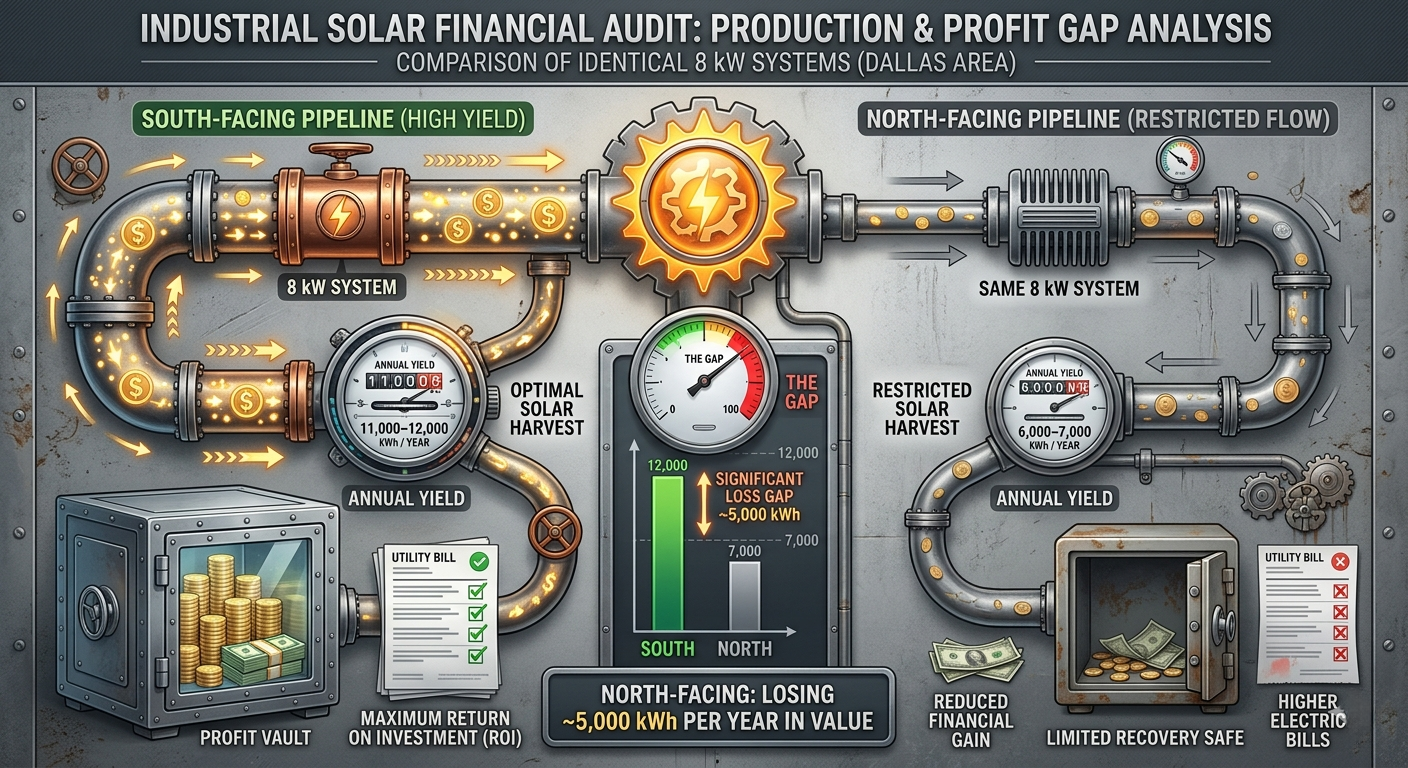 North vs South facing solar panels — energy production comparison
This matters enormously when you consider how solar deals are typically sold: the pitch almost always revolves around financial savings. "Your new solar payment will replace your electric bill." "You'll save money every month." Those promises only hold up if the system produces enough energy to meaningfully offset your electricity usage.
Across Texas, homeowners are reporting the same pattern: they were promised lower bills, but their costs went up after installation. Some are paying both a solar loan and a higher electric bill than they had before.
Worried your solar deal isn't what you were promised? You don't have to figure this out alone. Bennett Legal offers free, confidential solar contract reviews. Request your free case review today.
Warning Signs Your Solar Company May Have Misled You
Panel orientation is just one piece of the puzzle. Here are a few of the biggest red flags:
They never discussed which direction your panels would face. A real installer evaluates roof orientation before making promises. If the topic never came up, the company likely skipped the assessment entirely.
They promised you'd never pay another electric bill. That kind of guarantee almost never holds up — especially if the system was installed on a suboptimal roof section. Real savings projections are based on modeling, not verbal promises in your driveway.
They said the panels were "free" or part of a government program. The FTC and U.S. Treasury have both warned that these are among the most common lies in the predatory solar playbook. There is no government program that gives free panels to individual homeowners.
They had you sign on a tablet without giving you copies. Many victims report being told they were "checking eligibility" or "signing for a quote" when they were actually executing a binding, multi-decade loan agreement.
These are just a few of the patterns. We've written a more detailed breakdown in our full guide: 7 Red Flags That Could Mean Your Solar Panel Contract Is a Scam.
What to Check If Your Solar Panels Were Installed Facing North
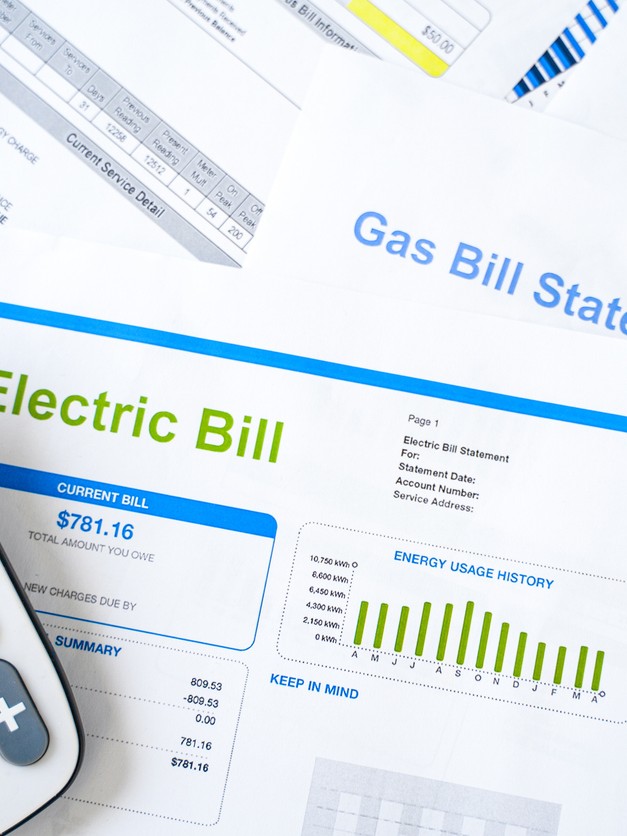 Compare your electric bills before and after solar installation
If you suspect your panels may be facing the wrong direction — or if your system simply isn't performing the way you were told it would — here are concrete steps:
Review the contract and proposal documents. Look for a site plan, system design layout, or engineering diagram showing panel placement, orientation (in degrees of azimuth), and which roof sections are being used.
Look for production estimates and the assumptions behind them. Your proposal should include projected annual energy production in kilowatt-hours (kWh). Compare the projected production to your actual production — your solar monitoring app or inverter data will show real output.
Check whether orientation was disclosed. Were you ever told which direction the panels would face? Was the impact on production explained to you? If not, the company may have failed to disclose material information.
Compare promised savings to actual bills. Gather your electricity bills from before the panels were installed and compare them to your bills after installation. Document the gap.
Document your roof layout and panel placement. Take photos and note the compass direction each array faces. A simple compass app will tell you the orientation.
Gather all communications. Save every text message, email, voicemail, and handwritten note related to your solar purchase. These records of what the salesperson told you — especially promises about savings or government programs — are potential evidence of misrepresentation.
When Bad Panel Placement Could Mean You Have a Legal Case
If your panels were installed facing the wrong way and you weren't told — and the company also made big promises about savings — that's not just bad luck. It could be something the law was designed to protect you from.
Texas has a strong consumer protection law called the DTPA. The Texas Deceptive Trade Practices Act says companies can't lie to you about what they're selling. If a solar company told you the panels would wipe out your electric bill but knew north-facing panels couldn't deliver those results, that may count as a violation. And if the company did it on purpose, a court can award you up to three times what you lost — plus legal fees.
Your lender may share responsibility. If you financed your system through a company like GoodLeap, Mosaic, or LightReach, the federal FTC Holder Rule may protect you. You can learn more about how solar panel financing fraud works and how to spot a predatory financing deal. In plain terms, the finance company can't just say "that's between you and the salesperson."
Hidden fees may have inflated what you owe. Many solar loans include dealer fees that add 15–30% to the cost of the system — fees the salesperson never mentioned. On top of that, some contracts include payment jumps after 18 months that can double your monthly bill.
Texas is cracking down. Since September 1, 2025, Texas law (Senate Bill 1036) has required covered residential solar contracts to give homeowners a 5-business-day right to cancel and clear disclosure of the total cost of the system. Starting September 1, 2026, solar salespeople and their companies will also be required to register with the state. Companies that break these rules face fines up to $50,000 per violation — or $100,000 if the victim is 65 or older.
What Homeowners Can Do Next
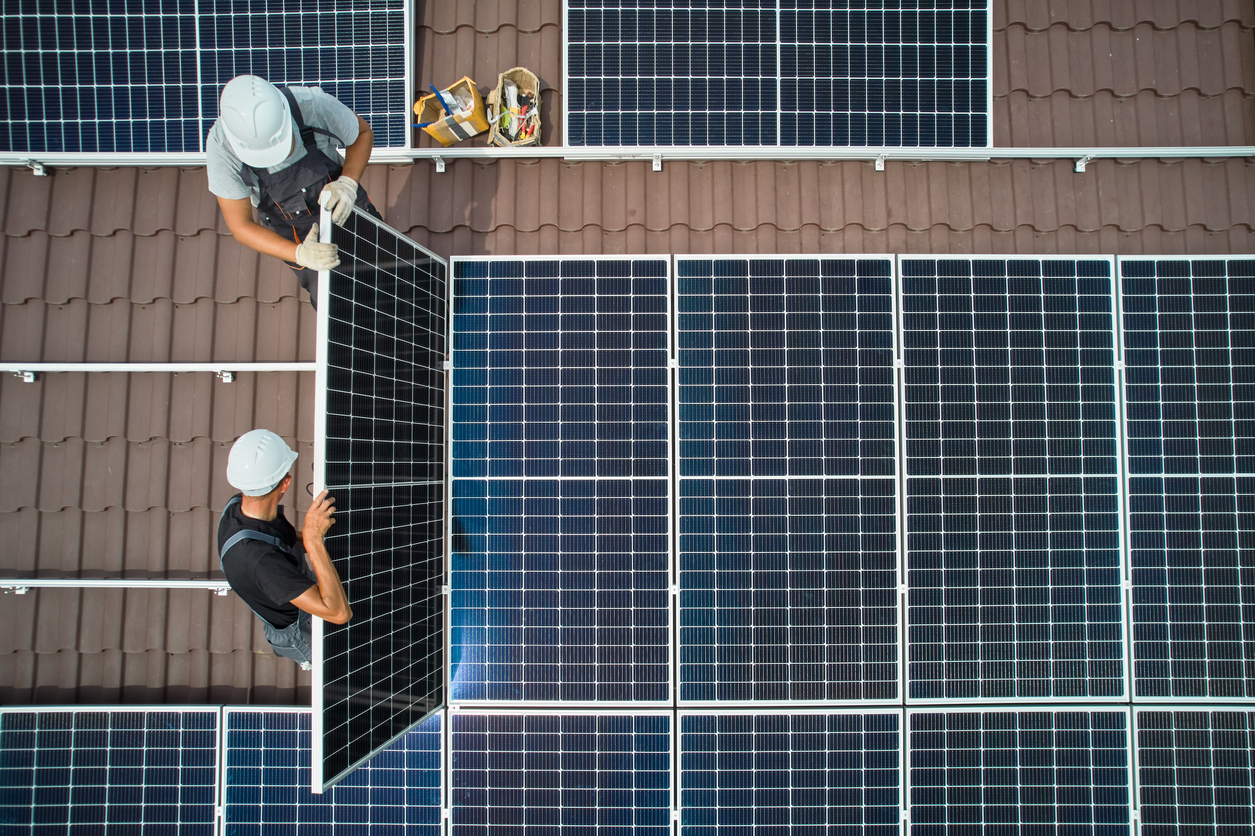 Solar panels getting inspected on a residential roof
If your solar panels are facing north — or if your system simply isn't delivering the savings you were promised — you don't have to accept the situation as it is.
Ask the company for the design rationale. Request a written explanation of why panels were placed on a north-facing roof section. Ask for the production model used to generate their savings estimates. A legitimate company should be able to provide this.
Seek an independent solar review. A qualified independent solar professional — one not affiliated with the company that sold you the system — can evaluate whether the panels are performing as they should.
Report suspected fraud. File complaints with the Texas Attorney General's Consumer Protection Division, the Texas Department of Licensing and Regulation, and the Federal Trade Commission at ReportFraud.ftc.gov.
Talk to a consumer protection attorney. If your solar company misled you about savings, installed panels on a suboptimal orientation without disclosure, or locked you into a financing agreement you didn't understand, you may have legal claims under the Texas DTPA, common law fraud, breach of contract, and federal consumer protection statutes.
Contact Bennett Legal for a free, confidential review of your solar contract and situation.
Frequently Asked Questions
Where should my solar panels be facing?
In Texas and most of the U.S., solar panels perform best when facing south. Southeast and southwest orientations can also work well depending on roof pitch and shading. A reputable installer will evaluate your specific roof and explain the best available orientation before you sign anything.
What is the best direction for solar panels?
South-facing is generally considered optimal in the Northern Hemisphere. East- and west-facing systems produce somewhat less energy (roughly 15–20% less), while north-facing panels can produce up to 50% less than south-facing installations.
Are north-facing solar panels always wrong?
Not always. In limited situations — very low-pitch roofs, multi-array systems that also include south-facing panels — north-facing panels can still generate meaningful energy. However, in Texas, a north-facing-only installation is almost always a significant compromise. If your installer didn't explain the tradeoffs or made unrealistic savings promises, that's a problem.
Can a north-facing solar installation be evidence of fraud?
By itself, panel direction doesn't prove fraud. But when combined with misleading sales claims, omitted disclosures, inflated savings promises, and a system performing far below what you were told to expect, the orientation can support a broader fraud or misrepresentation claim.
What should I do if my solar panels aren't producing what I was promised?
Start by reviewing your contract, comparing promised production to actual output, and documenting everything. Gather your pre- and post-installation electricity bills. File complaints with the Texas Attorney General and the FTC. And consider consulting with a consumer protection attorney.
If this article sounds like your experience, you're not alone — and you have rights. Contact the Bennett Legal consumer protection team for a free, confidential review of your solar contract and situation.
Related Articles from Bennett Legal:
Free consultation
Solar panels not performing as promised?
We help Texas homeowners fight back against solar fraud. Free, confidential case review — no fees unless we win.