Inheriting a home is already a big responsibility. But finding out the house has a fake or suspicious solar lease attached can make things feel even more stressful. Don't worry—there are clear steps you can take to protect yourself, the estate, and the property. This guide walks you through everything in simple terms.
$170,000+ recovery
Against Sunlight Financial · Solar fraud arbitration
- $113,000 loan cancelled
- UCC lien removed
- Credit repaired
- $58,000 cash to client
Past results do not guarantee a similar outcome. Every case is different.
If you're just discovering that a deceased family member may have been targeted by a solar company, start with our guide on what adult children should do when they suspect solar panel fraud. This article picks up where that one leaves off — focusing specifically on what happens when you've already inherited the property.
Free consultation
Solar panel contract problems?
We help homeowners fight back against solar fraud. Free consultation.
1. Verify the Inherited Solar Lease Is Real and Legally Valid
 Check for forged signatures on inherited solar lease
Sometimes solar companies place liens or long‑term agreements on a home without the homeowner fully understanding—or even agreeing—to it. If you're not sure what kind of deal was signed, our overview of what solar panel financing fraud actually looks like can help you sort through the paperwork. Before you respond to the solar company, double‑check that the contract is legitimate.
Look over these items:
- The solar lease or power purchase agreement (PPA)
- Any UCC‑1 financing statements filed with the county or state
- All signatures and dates
- Notary stamps or electronic signature records
- Permits for installation
- Utility approvals for connecting solar panels
- Any updates or changes to the contract
Warning signs of fraud:
- The deceased person's signature looks wrong or inconsistent
- There is no installation permit
- Signatures look edited, copied, or fake
- The company cannot provide the original signed contract
- The equipment was installed without permission
For a more detailed breakdown of these red flags, see 7 Red Flags That Could Mean Your Solar Panel Contract Is a Scam.
Laws that may help you:
- Contract rules (was a real agreement formed?)
- Rules about capacity and undue influence (important for elder fraud)
- Forgery laws (a forged contract is usually completely void)
- Unjust enrichment (a company can't charge for benefits that were never received)
- State property disclosure laws
2. Notify the Probate Court and the Executor
Solar lease issues can affect the estate's debts and responsibilities. That means they need to be handled during probate—not after.
If you are the executor: You must address the solar contract before distributing the estate.
If you are a beneficiary: Tell the executor right away so they can take action.
Why this step matters:
- Prevents the estate from accidentally accepting a fake or invalid debt
- Gives the executor time to challenge the claim
- Helps meet important state deadlines for objecting to creditor claims
Probate rules that may apply:
- Deadlines to object to creditor claims (often 60–90 days)
- Rules about notifying companies that may claim a lien
- Inventory and appraisal requirements
3. Send a Written Request Asking for Proof
 Writing a formal request asking for proof of solar lease
You or the executor can formally demand that the solar company prove the contract is real. Most states allow this request.
Ask for:
- The fully signed contract
- Electronic signature logs or audit trails
- Utility approval for connecting the system
- Photos or inspection records of installation
- Proof of the lien they claim exists
If they cannot provide real documents, the contract may not be enforceable. For more on what cancellation options may be available, see our guide on how to get out of a solar panel contract.
Relevant laws:
- UCC Article 9 (rules for liens and filings)
- State consumer protection laws, such as:
- California CLRA
- Florida Deceptive and Unfair Trade Practices Act
- Texas DTPA
Inherited a home with a suspicious solar contract? Bennett Legal helps families investigate fraudulent solar leases and fight back against invalid liens and deceptive agreements. Request a free, confidential case review.
4. File a Dispute With the Utility Company
If the solar company tries to bill the estate or move the solar account into your name, you can dispute it.
Steps to take:
- File a fraud report with the utility
- Ask for confirmation that no solar PPA is linked to the account
- Ask the utility to pause all billing during the investigation
Utility companies keep records that show whether the solar panels were ever legally connected, which can help your case.
5. Challenge the Lien or UCC Filing
If the solar company filed a lien using a fake or invalid contract, you can fight it.
Your options include:
- Filing a UCC‑5 request to terminate the lien
- Asking the probate court to reject or remove the lien
- Filing a quiet title action in civil court
- Seeking damages under consumer protection laws
Some states even issue penalties for filing false liens. For a deeper look at how solar liens work and the damage they can cause, see The Hidden Solar Panel Lien That Could Kill Your Home Sale or Refinance.
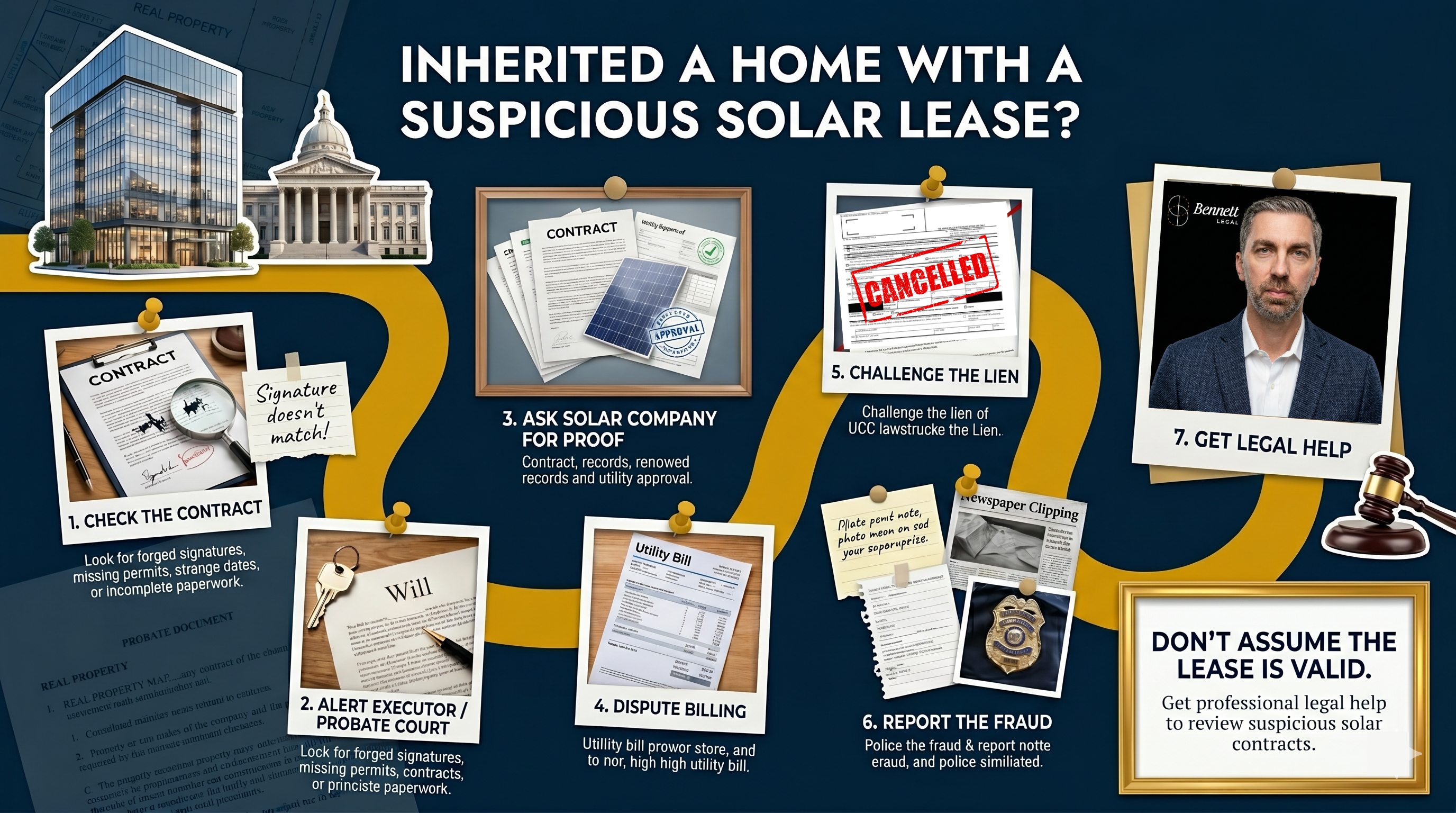 What to do if I inherited a home with a solar lease
6. Report the Fraud to State Agencies
Fake solar contracts sometimes involve elder fraud or other serious consumer scams. Several agencies can help.
Where to report:
- Your state's Attorney General
- The utility or public service commission
- Contractor licensing boards
- The Federal Trade Commission (FTC)
- Local police or elder abuse units
Reporting helps protect others from the same fraud.
7. See If You Can Void the Contract Completely
Most fraudulent solar leases are considered void, meaning they never legally existed—especially if the signature was forged. Still, states have different rules, so it's helpful to understand how each handles these situations.
In Texas, the Deceptive Trade Practices Act (DTPA) is particularly powerful for these cases. Senate Bill 1036 has required a 5-business-day cancellation right and full-cost disclosure for covered residential solar contracts since September 1, 2025, and as of September 1, 2026 also requires solar salespeople and their companies to register with the state — companies that break these rules face fines up to $50,000 per violation, or $100,000 if the victim was 65 or older. If you inherited this lease, the natural question is whether any of that new law reaches back to help you — we broke down exactly what the new rule does and doesn't change for a contract signed before it took effect. To understand the aggressive tactics these companies use, see The Solar Panel Sales Playbook: High‑Pressure Tactics That Signal Fraud.
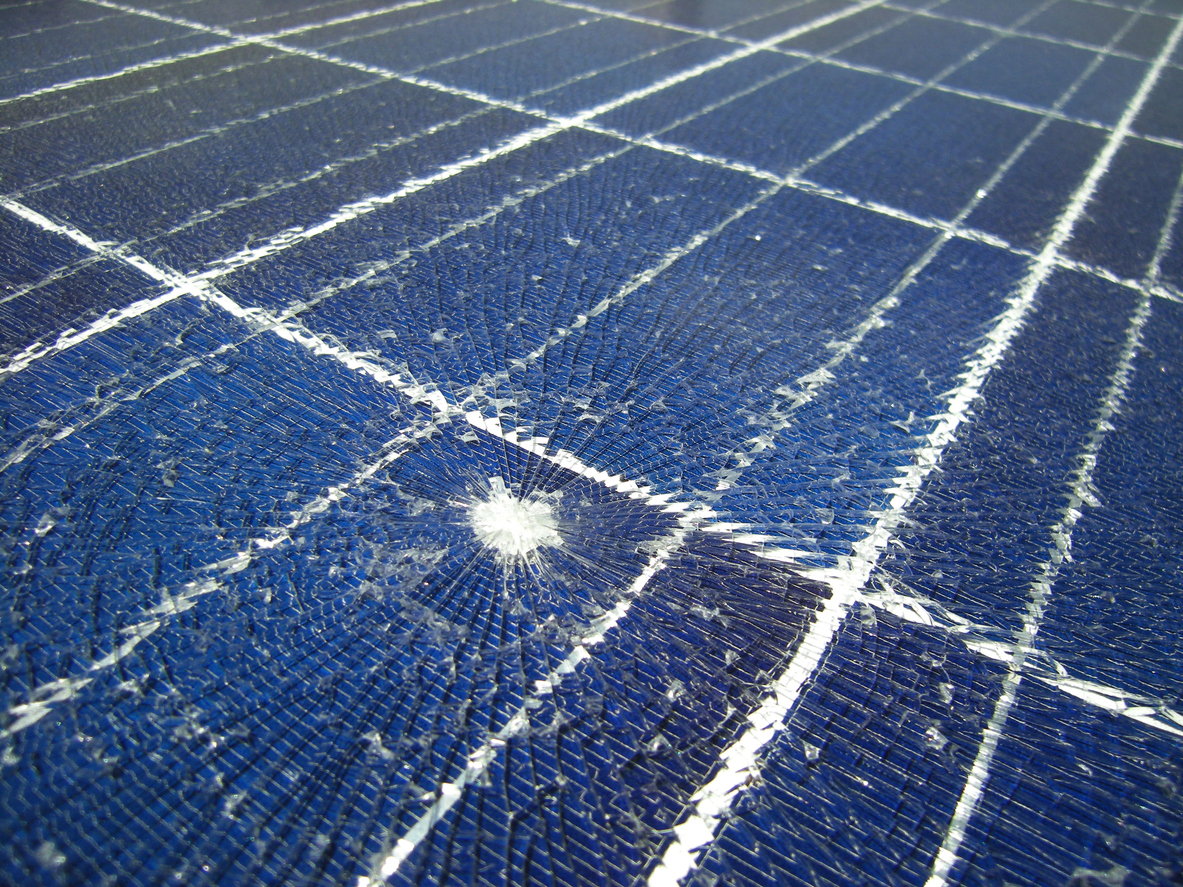 Broken solar panels on an inherited home
How Different States Handle Fraudulent Solar Leases
| State | Key Rules | What You Can Usually Get | Extra Things to Know |
|---|---|---|---|
| California | Strong consumer protection laws for solar contracts. CLRA applies. | You can cancel the contract, remove the lien, and sometimes get attorney fees or damages. | California strongly protects seniors from financial abuse. |
| Arizona | Uses A.R.S. §§ 44‑1521 consumer fraud laws. | Contracts made with fraud can be voided. Liens can be removed. Civil penalties may apply. | Arizona has many solar complaints, so regulators respond quickly. |
| Texas | Uses the Texas Deceptive Trade Practices Act (DTPA) and UCC rules. | You can get damages, and sometimes triple damages for deception. | Texas is tough on notary fraud and fake signatures. |
| Florida | Uses Florida's Deceptive and Unfair Trade Practices Act and UCC Article 9. | You can cancel the contract, challenge the lien, and seek damages. | Utilities help verify whether the solar system was ever legally connected. |
Frequently Asked Questions
Can heirs be forced to take over a fraudulent solar lease?
No. Heirs generally do not inherit personal liability for a parent's solar contract. The obligation may attach to the property, but that doesn't mean you personally owe the money. And if the underlying contract was fraudulent, the company's claim may not be enforceable at all.
What if the solar company that signed the lease is now bankrupt?
If the original company is in bankruptcy, the contract or lien may have been sold or assigned to another entity. You'll need to identify who currently holds the account before you can negotiate removal. A consumer protection attorney can help trace the assignment and push for resolution. For more on this scenario, see Solar Company Bankruptcy: What Happens to Your Panels, Contract, and Warranty.
How long do I have to challenge the contract or lien?
Statutes of limitations vary by state but typically run between two and six years from the date of the contract or from the date the fraud was discovered. In probate, you may have separate deadlines to object to creditor claims — often 60 to 90 days. Acting quickly preserves your strongest options.
Can a fraudulent solar lease be voided after the homeowner has died?
Often, yes — especially when the contract was induced by deceptive practices, the homeowner lacked capacity, or required disclosures were never provided. The estate or heirs may have standing to challenge the contract through probate or a separate legal action.
Does a solar lien stay with the property after someone dies?
It can — but many can be challenged or removed during the estate process, especially if the underlying contract was fraudulent. Don't assume a lien is permanent just because it appears on the title.
If this sounds like your family's situation, you're not alone — and you have rights. Contact Bennett Legal for a free, confidential review of your inherited solar contract. Schedule your free case evaluation.
Related Articles from Bennett Legal
- What Adult Children Should Do If They Suspect Their Parents Were Victims of Solar Panel Fraud
- Can a Solar Panel Contract Outlive You? What It Means for Your Family and Your Home
- 7 Red Flags That Could Mean Your Solar Panel Contract Is a Scam
- What Is Solar Panel Financing Fraud?
- The Hidden Solar Panel Lien That Could Kill Your Home Sale or Refinance
- How Do I Get Out of My Solar Panel Contract?
- The Solar Panel Sales Playbook: High‑Pressure Tactics That Signal Fraud
- How to Spot a Predatory Solar Panel Financing Deal
Bennett Legal | BennettLegal.com | Dallas, Texas
Free consultation
Solar panel contract problems?
We help homeowners fight back against solar fraud. Free consultation.