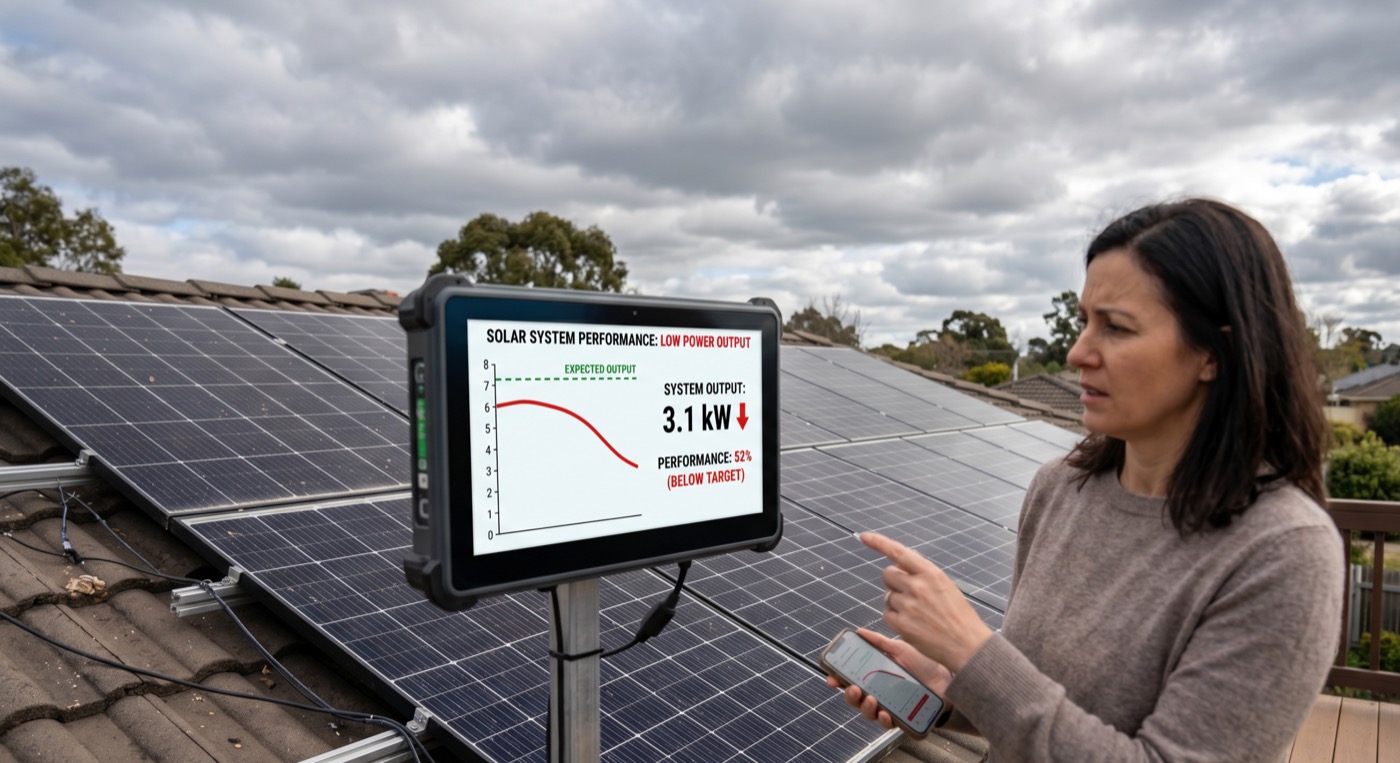
"My solar company guaranteed a certain amount of power, but my utility bill is still sky-high, and my monitoring app shows a huge drop in production. What went wrong?"
Recent case result — Bennett Legal$170,000+ recovery
Against Sunlight Financial · Solar fraud arbitration
- $113,000 loan cancelled
- UCC lien removed
- Credit repaired
- $58,000 cash to client
Past results do not guarantee a similar outcome. Every case is different.
If this is you right now, your frustration is 100% justified. You signed on the dotted line because you were promised energy independence and a lower, predictable bill. Instead, you are trapped in an energy nightmare: paying a massive loan for the panels on your roof while still paying the electric company every month for power you thought you’d be generating yourself.
You feel ripped off. You know the numbers don’t add up. And every time you call the solar company, they give you a new excuse. You are not crazy, and you are not powerless.
Here is exactly why your solar system is producing less power than promised, how to prove it, and what you can legally do about it.
Free consultation
Is your solar system underperforming?
You paid for a promise. We make sure they keep it. Free case review — no win, no fee.
Is Your Solar System Actually Underperforming?
Yes — if your system’s actual energy output, measured in kilowatt-hours (kWh), is measurably and consistently below the minimum production level stated in your signed contract or proposal, it is underperforming.
Most legitimate solar contracts include a “performance guarantee” or a detailed “production estimate.” If the company fails to meet the numbers in that legal document, they are in breach of contract and may be guilty of a deceptive trade practice. For a full breakdown of what those contract terms actually mean, see The 10 Questions You Must Ask Before Signing Any Solar Contract.
A key detail people often miss: not meeting a vague estimate is different from failing to meet a written guarantee. That distinction is legally critical. But if the numbers are far off from what they sold you, you have a case.
What the Solar Company Will Claim — and What’s Actually Going On
Before accusing a company of fraud, it’s worth knowing which temporary issues can legitimately reduce output — because your installer will use every one of these as an excuse to avoid accountability.
Unusually Bad Weather (Seasonal or Temporary) Extended rain, snow, wildfire smoke, or abnormal cloud cover can naturally reduce solar output. The key word is temporary — a weather explanation that lasts months is not a weather explanation. It’s a stall tactic.
Normal Panel Degradation (A Small Annual Drop) Solar panels lose roughly 0.5% to 1% of their efficiency each year. Any honest long-term production guarantee already accounts for this. If a company is citing degradation on a system that’s only a few years old, push back.
Dirty Panels A heavy layer of dust, pollen, or bird droppings can reduce output. This is a real but easily resolved issue — one professional cleaning should confirm whether it’s the cause. If cleaning doesn’t move the numbers, the problem is something else.
New Tree Growth or Obstructions If a tree has grown significantly since installation or a neighbor built an addition that now shades your panels, that new shade can reduce output. Check your monitoring data to see if the drop correlates with when the obstruction appeared.
⚠️ Bottom line: If the company offers one of these explanations but your production stays down for months, doesn’t recover after cleaning, or never matched the contract in the first place — you are not dealing with a weather event. You are dealing with a solar panel fraud problem.
4 Red Flags You Shouldn’t Ignore
If none of the legitimate explanations above fit your situation, you are likely dealing with a defective system or a deceptive installer.
Production Drops Dramatically and Stays Down You log into your Enphase or SolarEdge app and see a sudden, significant, and sustained drop in kWh output — 20% to 50% below average for weeks or months, far beyond any normal weather pattern.
The Solar Company Blames You When you call for service, they refuse to send a technician. Instead, they claim your energy usage must have increased, that you aren’t cleaning the panels correctly, or that “weather patterns just changed.”
They Offer You a Tiny Credit for Lost Production The company admits your system is underperforming but offers a token credit of $50 or $100 — while you’ve calculated losses in the hundreds or thousands.
No Remote Monitoring or a Broken App The salesperson showed you a monitoring app, but it has never worked, consistently shows “no data,” or was never connected. This prevents you from gathering the very data you need to prove they sold you a failing system.
4 Common Underproduction Scams
Underproduction is rarely an accident. It is often the direct result of a company cutting corners or deliberately misleading you during the sales process.
The “Inflated Production Estimate” Bait and Switch The salesperson uses energy modeling software like Aurora or Helioscope to generate an unrealistically high kWh estimate — one your home could never actually achieve — specifically to get your signature. This is one of the most common tactics in the high-pressure solar sales playbook.
System Oversizing with an Undersized Inverter The company installs 40 panels (a high DC kilowatt rating) but pairs them with a much smaller, cheaper inverter (a low AC kilowatt rating). On sunny days, the inverter gets overwhelmed and “clips” your production — a permanent, built-in bottleneck.
Selling a Broken System (Pre-Existing Defect) The system is installed with a faulty central inverter, dead microinverters, or shoddy high-resistance wiring from day one. The company avoids diagnosing it until you start complaining about high bills months later.
Improper Installation by Unlicensed Subcontractors The solar company used cheap, unlicensed subs who installed the panels at the wrong tilt, facing the wrong direction, or with faulty electrical connections that consistently drain your production. In some cases, this same shoddy installation causes roof leaks and structural damage on top of the lost energy output.
Why It Matters: The Real Financial Cost
A system that doesn’t produce what it promised is not just an inconvenience — it is a direct financial threat to your household.
Paying for “Net-Zero” You Don’t Get You are paying a massive monthly loan for a system that was supposed to eliminate your electric bill, but you are still paying the utility company thousands of dollars a year for grid electricity.
Voided Performance Guarantees Many contracts require you to formally document the underproduction and give the company a chance to fix it. If you don’t follow that process, they can argue you waived your right to the guarantee.
Loss of Property Value An underperforming solar system is a financial liability — not an asset — when you try to sell your home.
Your Legal Rights as a Homeowner
You do not have to keep paying for a system that doesn’t work.
Contractual Performance Guarantees
If your contract contains a clause explicitly stating a minimum kWh production number or percentage, and your system has failed to meet it, the solar company is in breach of contract.
Warranty Claims (Inverter and Panel Failure)
Underproduction is often caused by a faulty component — a dead central inverter or failing microinverters — that is covered by the manufacturer’s equipment warranty.
Misrepresentation and Deceptive Trade Practices
If you can prove the salesperson deliberately showed you inflated production numbers to trick you into signing, that is a direct violation of your state’s consumer fraud laws — including the Texas Deceptive Trade Practices Act (DTPA).
Breach of Implied Warranty
Even without a written guarantee, the law implies certain warranties. A solar system must be “fit for its ordinary purpose” — generating electricity efficiently. If it cannot do that due to a design or installation flaw, the company has breached this implied warranty.
State-by-State: Performance Guarantees and Legal Remedies
| State | Contract Language | Underproduction Claims | Your Best Recourse |
|---|---|---|---|
| Texas | Often vague estimates rather than guarantees — read the fine print | High volume of DTPA misrepresentation claims | Treble damages for knowing fraud; send a formal DTPA demand letter before filing suit |
| California | Strong performance guarantees standard | High — CSLB and civil lawsuits | File with CSLB to compel repairs; sue for damages or rescission |
| Florida | Variable; depends heavily on individual contract | Moderate — AG investigations active | Breach of contract damages; AG complaint for pattern fraud |
| New Jersey | Strong consumer protections built in | High — Consumer Fraud Act (CFA) litigation | Treble damages + attorney fees under the NJ CFA |
| Massachusetts | Strong, especially on performance-based incentive contracts | High — Attorney General enforcement | Enforcement of SREC contracts; Chapter 93A consumer protection claims |
⚖️ Handling cases across Texas and nationwide. If your state isn’t listed, your rights may still be significant — contact us for a free case review.
Action Steps if Your Solar System Is Underproducing
- Document everything meticulously. Download every monthly production report from your monitoring app. Compare it to the guaranteed production numbers in your original contract and your utility bills.
- Identify the exact guarantee. Find the specific clause in your contract about kWh production. Note the exact wording: is it an estimate or a guarantee?
- Calculate your financial loss. Add up the extra money you have paid to your utility company because your solar system is not producing the power it promised.
- Formally notify the solar company in writing. Send a certified letter or email demanding they diagnose and fix the underperformance within 30 days.
- File complaints with regulatory bodies. Report to your state’s contractor licensing board, your Public Utility Commission (PUC), and your State Attorney General.
- Consult a solar fraud attorney. If the company denies responsibility, delays indefinitely, or offers a ridiculously low credit, you need legal leverage to enforce your contract.
When Your Solar System Lies, We Make Them Pay.
You made a massive investment in your home based on a promise. When the system fails to deliver, it is not just a technical problem — it is a financial betrayal.
At Bennett Legal, we know how to hold these companies accountable. We don’t get fooled by excuses about “the weather” or “dirty panels.” We go straight to the data and the contract.
We help homeowners by:
- Auditing your production data: We forensically analyze your monitoring app data and compare it line-by-line against the kWh numbers in your contractual guarantee.
- Identifying hidden defects: We work with solar experts to prove that underperformance is caused by shoddy installation, undersized inverters, or faulty equipment.
- Building deceptive trade practice cases: We use the salesperson’s original, inflated proposal to build misrepresentation claims under laws like the Texas DTPA and New Jersey CFA.
- Suing for the full value of your lost electricity: We don’t just want the system fixed — we fight to recover every dollar you overpaid to the utility company because the panels failed to do their job.
- No upfront cost: We handle solar fraud cases on contingency. You pay nothing unless we win.
Reach out when you’re ready. We’ll take it from here.
Contact Bennett Legal today for a free case evaluation.
Related Reading
- Solar Panel Removal: Who Pays When You Need Your Roof Repaired? — Shoddy installations cause both underproduction and roof damage. If your panels are underperforming and you’ve noticed leaks, this explains who’s responsible.
- The 10 Questions You Must Ask Before Signing Any Solar Contract — Understand what your existing contract actually says about performance guarantees, escalators, R&R fees, and more.
- 7 Red Flags That Could Mean Your Solar Panel Installation Is a Scam — If your system is underperforming, it may be because the installation was fraudulent from the start.
- Best Direction for Solar Panels: If Your Panels Face North, It Could Be a Red Flag — One of the most common causes of underproduction is a deliberate or negligent orientation error.
- My Solar Loan Interest Rate Changed After I Signed — Is That Even Legal? — If you’re dealing with both an underperforming system and a loan that doesn’t match what you signed, you may have multiple claims.
Frequently Asked Questions
How do I prove my solar panels are underperforming? Download your monthly kWh production reports from your solar monitoring app and compare them to the guaranteed production numbers in your original contract or sales proposal.
What is a solar performance guarantee? A clause in your contract where the installer legally promises your system will produce a minimum amount of electricity (kWh) over a specific period.
Can I sue my solar company for underproduction? Yes. If your contract contains a performance guarantee and your system has measurably failed to meet it, you can sue for breach of contract. If the company deliberately used inflated numbers to sell you the system, you can also sue for deceptive trade practices or fraud.
Will my solar warranty cover low energy output? It depends. A standard equipment warranty covers a specific broken part. If the low output is caused by a system-wide design flaw or bad installation, you’ll likely need to rely on the installer’s performance guarantee or sue for breach of contract.
How do I calculate lost electricity value from underperforming solar panels? Determine the kWh shortfall (Promised kWh − Actual kWh), find your cost per kWh on your utility bill, then multiply the two. That’s the dollar value of electricity you were forced to buy from the grid.
Free consultation
Is your solar system underperforming?
You paid for a promise. We make sure they keep it. Free case review — no win, no fee.