You know they were on their phone. You felt the impact, you saw them looking down when they should have been watching the road, and now you're dealing with the aftermath of a cell phone car accident in Texas.
But here's what you may not know: the law that protects you today is not the same law that existed two years ago. On September 1, 2025, Texas replaced its narrow texting-only ban with a full statewide hands-free law called SB 47 — "Allie's Way." That single change rewrote the playbook for how distracted driving cases are investigated, argued, and settled in this state.
If you were hit by someone using their phone, the new law is squarely on your side. But only if the evidence is preserved before it disappears.
Free consultation
Hit by a distracted driver in Texas?
The law changed in 2025 — and so did how we build your case. Free consultation, no fees unless we win.
The Old Law — What HB 62 Did and Didn't Cover
From 2017 until last year, the controlling law on phone use behind the wheel was House Bill 62. HB 62 made it illegal to read, write, or send an electronic message while driving. In plain terms, it was a texting ban.
And that's all it was.
Holding your phone to your ear for a call? Legal. Scrolling through social media? Fell into a gray area. Checking GPS on a handheld phone? Not explicitly covered. The law was narrow by design, and defense attorneys knew exactly how to exploit that. "I wasn't texting" became one of the most effective four-word defenses in distracted driving cases across Texas.
The result was a patchwork. Over 40 Texas cities — Dallas, Austin, San Antonio, and others — passed their own hands-free ordinances to fill the gaps that HB 62 left wide open. But city-by-city ordinances created confusion. Where did one rule end and another begin? Which standard applied on which road? Insurance companies used that ambiguity to muddy the water in settlement negotiations.
For injury victims, it was frustrating. You could be hit by a driver who was clearly on their phone, and the law made filing a distracted driving lawsuit in Texas an uphill fight.
The New Law — SB 47 "Allie's Way" Changed Everything
SB 47 — officially named "Allie's Way" after Allie White, a young girl killed in 2019 when a distracted driver struck her — took effect on September 1, 2025. The Texas hands-free driving law replaced the old patchwork with a single statewide standard, and the scope is dramatically broader.
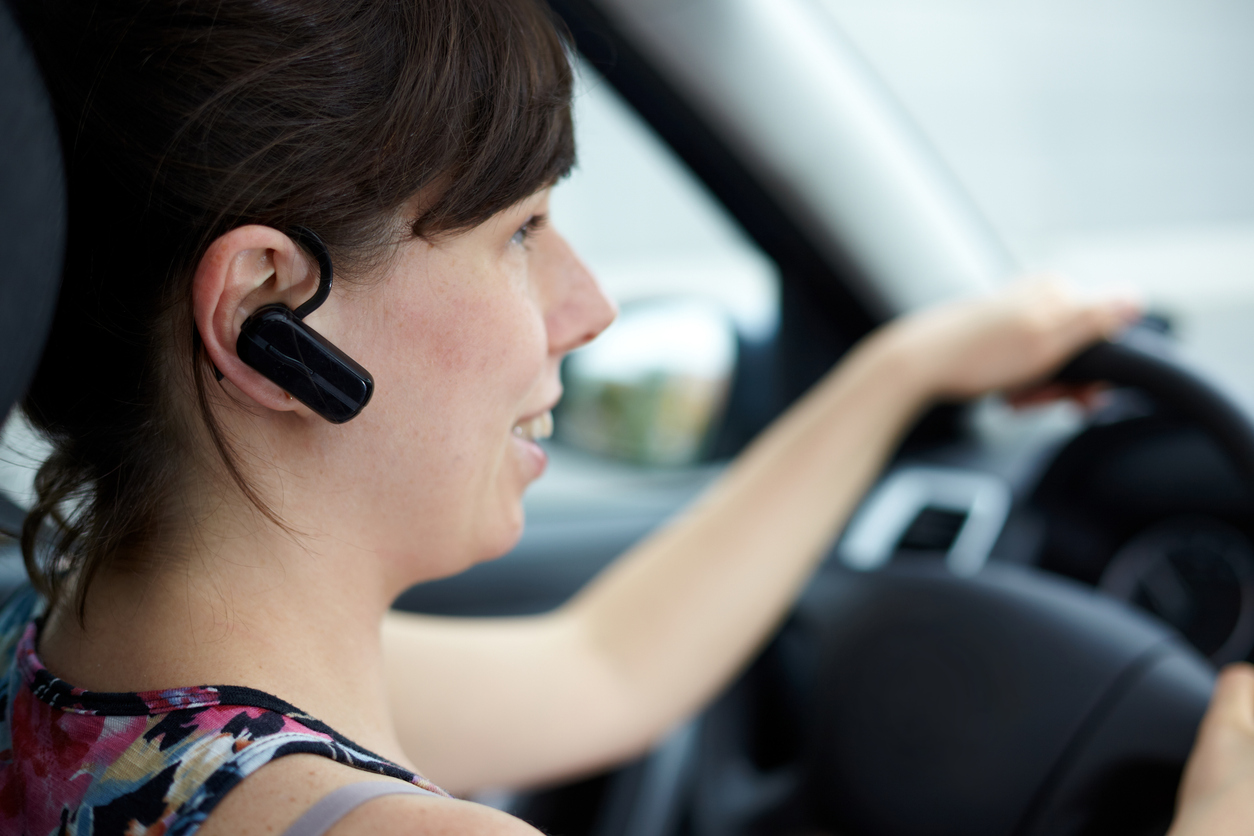
Under Allie's Way, it is illegal to use a portable wireless communication device while operating a vehicle unless the vehicle is stopped outside a lane of travel. The only exceptions are hands-free use, emergency calls, and devices mounted to continuously record video.
Let me say that more directly: if the phone is in your hand and the car is moving, you are breaking the law. It doesn't matter whether you were texting, calling, checking GPS, scrolling Instagram, or glancing at a notification. Handheld use, period, is a violation.
The law also preempts those 40-plus local ordinances. No more confusion about which city's rules apply on which stretch of highway. One standard. Statewide. And it's enforceable.
On its face, a violation is a fine-only offense — up to $99 for a first offense, up to $200 after that. But the real consequence isn't the ticket. When a driver violates a safety statute and that violation causes an injury, it triggers a legal doctrine that fundamentally changes the case.
Why This Matters for Your Case — Negligence Per Se Under the New Standard
In a standard negligence case, we prove four things: the other driver owed you a duty of care, they breached that duty, the breach caused your injuries, and you suffered damages. The hardest part is usually proving the breach — that the driver did something wrong.
Negligence per se shortcuts that entire argument.
When a driver violates a safety statute and that violation causes harm, the law treats it as automatic proof of negligence. We don't have to argue about whether using a phone behind the wheel was unreasonable. The legislature already made that call. The driver broke the law, someone got hurt — negligence is established.
Here's where the HB 62 vs. SB 47 distinction matters most. Under HB 62, we had to prove the driver was specifically texting — a narrow behavior that was easy to deny and sometimes difficult to document. Under SB 47, we only have to prove the driver was using a handheld device. That's a much wider net. Call logs, data usage, app activity, screen-on time — any of it can establish the violation.
The insurance company's playbook just got a lot thinner.
(Related: Do I Have a Case If the Other Driver Was Using Their Phone?)
The Old Defenses That Don't Work Anymore
If you've been following distracted driving cases in Texas for any length of time, you've heard these defenses. Under the old law, they actually worked. Under Allie's Way, they're dead on arrival.
"I was just checking GPS." Under HB 62, navigation wasn't explicitly prohibited. Under SB 47, holding the phone for any purpose while driving is a violation. GPS on a handheld device? That's a violation.
"I wasn't texting — I was making a call." Under HB 62, handheld calls were legal. Under SB 47, holding the phone to your ear is a violation unless you're using hands-free.
"I only glanced at a notification." Under HB 62, passively looking at a phone wasn't clearly covered. Under SB 47, any interaction with a handheld device while driving qualifies.
"I was at a red light." Under SB 47, the vehicle must be stopped outside a lane of travel for the exception to apply. Sitting at a red light in a traffic lane does not qualify.
The pattern is clear. Every loophole that defense attorneys relied on under the old texting ban has been closed. The new law doesn't ask what you were doing on the phone. It asks whether the phone was in your hand.
How We Build Evidence Under the New Standard
The good news for injury victims is that the broader law means a broader range of evidence is now directly relevant. The challenge is that digital evidence still has a shelf life, and carriers still purge records on rolling timelines.
Here's what we go after in the first 48 hours:
Spoliation letters. Before anything else, we send formal legal notices to the at-fault driver, their insurance company, and in some cases their carrier, requiring them to preserve all electronic evidence. If they destroy or allow evidence to disappear after receiving that letter, the court can instruct the jury to assume the evidence would have helped your case.
Cell phone records. We subpoena the carrier for call logs, text logs, and data usage — all time-stamped. Under the old law, we were mainly hunting for texts. Under SB 47, any handheld activity at the time of the crash is proof of a violation. That widens the scope of what counts as a smoking gun.
Vehicle black box data (EDR). Most modern vehicles have an Event Data Recorder that captures speed, braking, and steering input in the seconds before a crash. When we cross-reference EDR data with phone records, we build a timeline showing the driver wasn't braking, wasn't reacting — because they were distracted.
App and social media activity. Posts, stories, notifications, screen-on logs. Under SB 47, any of this activity while the vehicle was in motion establishes a violation — not just evidence of distraction, but evidence of breaking the law.
The bottom line hasn't changed: carriers purge certain records in as little as 90 days. Every day that passes without a lawyer preserving this evidence is a day that works in the insurance company's favor.
(Related: Distracted Driving Now Causes More Serious Wrecks Than Drunk Driving in Texas)
How the New Law Changes Settlement Negotiations
I've watched this play out in real time since September. Cases that would have been contested for months under the old standard are resolving differently now.
Insurance adjusters know the legal landscape changed. They know that under SB 47, a negligence per se argument is easier to make and harder to defend against. When we come to the table with time-stamped phone records showing any handheld use — not just texting, but anything — paired with a spoliation letter that went out on day one, the risk calculation shifts.
And it goes further. In cases where a driver's conduct wasn't just negligent but reckless — where they consciously disregarded a known safety law to scroll their phone at highway speed — Texas law allows for punitive damages. That's compensation designed not to make you whole, but to punish the behavior. Insurance companies do not like that conversation. The broader standard under Allie's Way makes it easier to get there.
(Related: How to Deal with the Insurance Company After an Accident)
What to Do Right Now After a Cell Phone Car Accident in Texas
If you were hit by someone who you believe was on their phone, here's what I need you to understand: the new law is on your side in a way the old law never was. But the law only helps if we can prove the violation, and proving it depends on preserving evidence fast.
Do not wait. The evidence that makes your case has a shelf life. The longer you wait to contact an attorney, the harder it becomes to preserve it.
Tell your attorney everything in the first conversation. Where were you? What time was it? Did you see the phone? Did witnesses? Was there a police report? Details that seem small to you can be pivotal to us.
Our job is to move fast on the evidence while you focus on getting better. That's the division of labor that wins these cases.
While you're thinking about next steps, it also helps to know what pitfalls to avoid — see 11 costly mistakes people make in car wreck lawsuits for a breakdown of what not to do after any crash, including distracted driving cases.
The law changed. The standard changed. If you were injured by a distracted driver in Texas, I want to hear from you. There's no fee unless we win, and the first conversation costs you nothing.
Call (972) 972-4969 or contact Bennett Legal online.
Frequently Asked Questions
Can I sue someone for using their phone while driving in Texas?
Yes. If another driver was using a handheld device and caused your accident, you can file a personal injury lawsuit. Under Texas' new hands-free law (SB 47, "Allie's Way"), any handheld phone use while driving is a violation — and that violation can establish negligence per se in Texas, meaning the law treats the phone use as automatic proof of negligence.
What is Allie's Way and how does it affect my car accident case?
Allie's Way is the name of Senate Bill 47, a statewide Texas hands-free driving law that took effect September 1, 2025. It replaced the old HB 62 texting-only ban with a much broader prohibition on all handheld wireless device use while driving. For injury victims, the law makes it significantly easier to prove the at-fault driver was negligent, because any handheld use — not just texting — now counts as a violation.
How long do I have to get cell phone records after a car accident?
There is no universal deadline, but carriers purge certain records on rolling timelines — some as short as 90 days. That's why it's critical to contact an attorney immediately after a crash. One of the first things we do is send a spoliation letter requiring the other side to preserve all electronic evidence before it disappears.
Does the Texas hands-free law apply at red lights?
Yes, in most cases. Under SB 47, the exception for stopped vehicles only applies when you are stopped outside a lane of travel — for example, pulled over on the shoulder or in a parking lot. Sitting at a red light in a traffic lane does not qualify. If you were using a handheld device at a red light and caused a crash, that's still a violation under the new law.
This article provides general information and is not legal advice. Laws vary by jurisdiction. Consult a qualified attorney about your specific situation.
Free consultation
Hit by a distracted driver in Texas?
The law changed in 2025 — and so did how we build your case. Free consultation, no fees unless we win.