DISCLAIMER: Car‑accident and insurance laws vary by state — including how uninsured/underinsured motorist coverage works, whether you can "stack" policies, and what you can collect from an at‑fault driver personally. This article is general information only, not legal advice. Talk to a qualified attorney in your state as soon as possible about your specific wreck.
What We're Covering — Tall Chuck's 6-Phase Roadmap
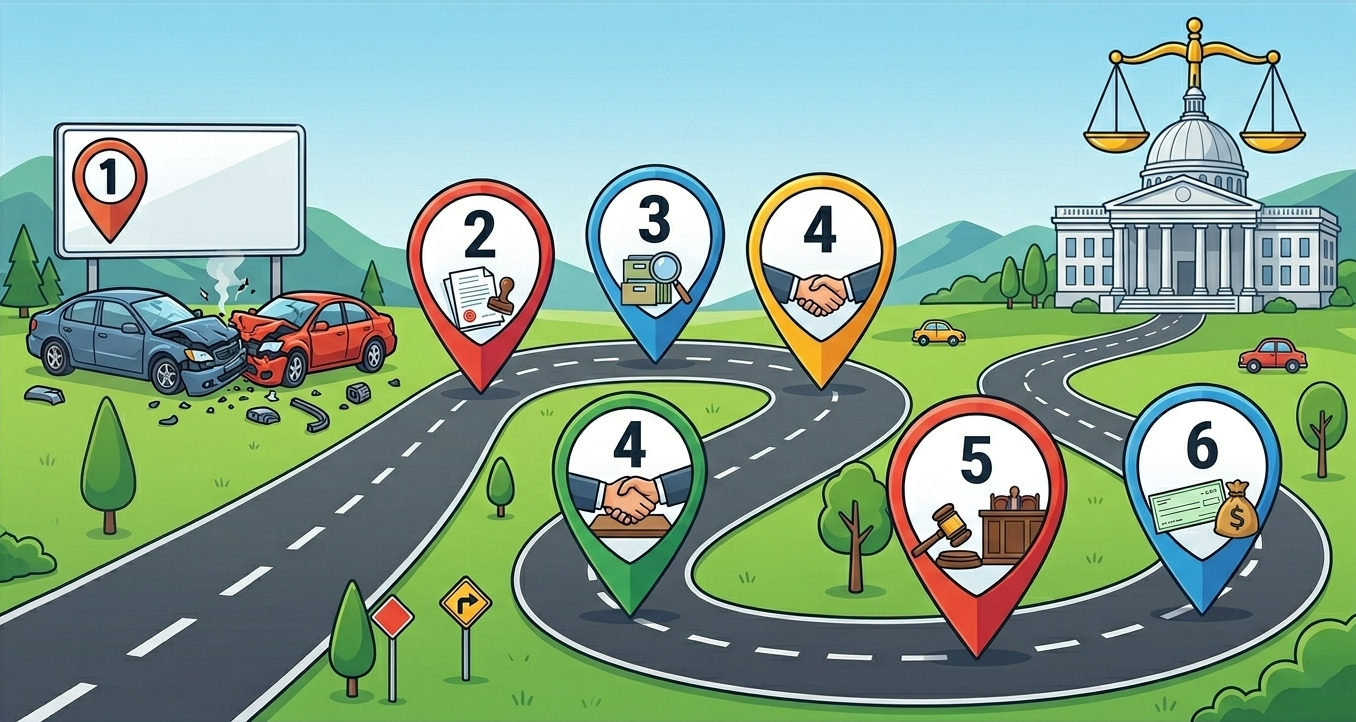
This is a long one, folks. Here's the full roadmap so you can jump to where you are right now:
- Phase 1: Crash Scene (First 0–60 Minutes) — Safety, 911, evidence, what to say
- Phase 2: Early Aftermath (First 24–72 Hours) — Medical care, reporting, mistakes to avoid
- Phase 3: Treatment & Recovery (Weeks–Months) — Doctors, documentation, building your case
- Phase 4: "Do I Need a Lawyer?" — When you do and when you might not
- Phase 5: How a Car Wreck Lawyer Builds Your Case — Investigation, experts, demand package
- Phase 6: Negotiation & Litigation — Mediation, settlement, or trial
Alright, boots on — let's walk through it.
Hey folks, Tall Chuck here.
If you're reading this, chances are your life just got turned upside down. You've been in a car wreck. Your phone's blowing up with calls from adjusters, body shops, and maybe bill collectors. You're hurting, you're scared, and you're asking: What do I do? What happens next? Do I need a lawyer?
From my 7‑foot‑tall view, I see the same thing over and over: good people get steamrolled because they don't know the road ahead — but the insurance company does. So let's fix that. This is your complete car wreck attorney roadmap — the full car wreck lawsuit process from the moment of the crash, through medical treatment, through the insurance mess, and all the way to settlement or courtroom if needed.
You don't have to memorize it all. You just need to understand where you are in the journey and what smart move comes next.
Table of Contents
- The Car Wreck Lawsuit Process: Your Case in 6 Phases
- Phase 1: What to Do In a Car Wreck (First 0–60 Minutes)
- Phase 2: What to Do After a Car Wreck (First 24–72 Hours)
- Phase 3: Treatment, Recovery, and Building Your Case
- Phase 4: "Do I Need a Lawyer for My Car Wreck?"
- Phase 5: How a Car Wreck Lawyer Builds Your Case
- Phase 6: Advanced Negotiation & Litigation Options
- "Car Wreck Lawyer Near Me": Why Local Experience Matters
- You're Not Alone — And You're Not Powerless
Free consultation
Been in a car wreck? Here's what to do next.
Get the legal help you need. Free consultation with a Dallas car accident attorney.
The Car Wreck Lawsuit Process: Your Case in 6 Phases
Here's the overview of the car accident lawsuit steps — what happens after a car wreck, from the legal side:
- Crash Scene (Minutes – Hours) – Safety, 911, evidence, initial statements
- Early Aftermath (First 72 Hours) – Medical care, reporting, early mistakes to avoid
- Treatment & Documentation (Weeks – Months) – Seeing doctors, building your damages
- Insurance Battle (Ongoing) – Adjusters, recorded statements, property vs. injury claims
- Hiring a Lawyer & Case Building – Investigation, experts, demand package
- Lawsuit, Negotiation, and Resolution – Mediation, settlement, or trial
We'll walk through each of these personal injury claim phases so you know what to do in a car wreck, what happens next, and when having a car wreck lawyer in your corner can potentially change the outcome.
Phase 1: What to Do In a Car Wreck (First 0–60 Minutes)
This is the part nobody plans for. One minute you're driving. Next minute: airbags, screeching tires, shock.
Here's what to do when you wreck your car or someone wrecks into you.
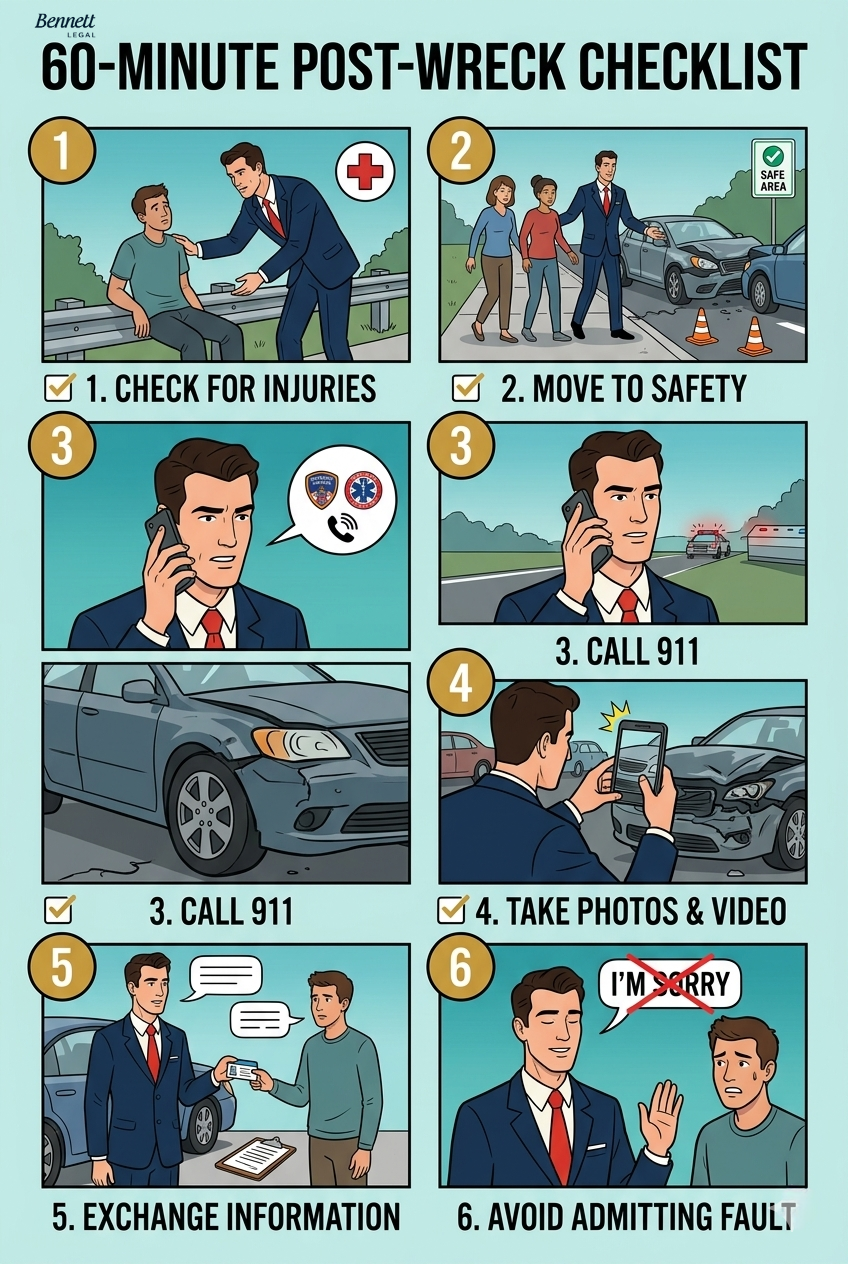
1. Protect Life First
- Check yourself and passengers for obvious injuries.
- If there's danger (fire, traffic, unstable vehicle), move to safety if you can do it without making injuries worse.
- Call 911 – even if the other driver says, "Let's just handle this ourselves."
No matter what, your body is more important than their bumper.
2. Call Law Enforcement
A police report may become key evidence later.
- Tell dispatch where you are, how many cars, and whether anyone seems injured.
- When officers arrive, be honest but don't guess:
- Don't say "I'm fine" if you're not.
- Don't say "It was my fault" or "I wasn't paying attention."
- Stick to facts: where you were, what you saw, what you felt.
3. Gather Evidence at the Scene (If You Can Safely)
 60-Minute Post Wreck Checklist
If you're physically able:
- Take photos and video:
- All vehicles from multiple angles
- Skid marks, debris, traffic lights, stop signs
- Any visible injuries
- Get contact info:
- Other drivers (licenses, insurance cards)
- Witnesses (names, phone numbers, emails)
- Note details:
- Weather, road conditions, unusual behavior (smell of alcohol, texting, etc.)
You are building a time capsule of what happened before it gets cleaned up, towed, and forgotten.
4. Watch Your Words
At the scene:
- Don't argue with the other driver.
- Don't apologize or accept blame.
- Don't make promises like "I'll just pay for everything out of pocket."
You can be kind without confessing to a crime you didn't commit.
Tall Chuck says: "Right after a wreck, your adrenaline is pumping. You are not thinking clearly. Before you talk at length to anyone — especially the other driver's insurance — slow down. Short, factual answers now are better than long explanations you regret later."
Phase 2: What to Do After a Car Wreck (First 24–72 Hours)
Once you leave the scene, the second phase starts. This is where a lot of people make mistakes that hurt their case months later.
1. Get Medical Care — Even If You "Feel Okay"
Common injuries like whiplash, concussions, back injuries, or internal damage may not show up fully for hours or days.
- Go to the ER, urgent care, or your doctor.
- Tell them about the car wreck and all the symptoms you're feeling, even if minor.
- Follow through on recommended tests (X‑rays, CT scans, MRIs).
If you wait weeks to see a doctor, the insurance company will say: "They must not have been hurt. If they were, they'd have gone in right away."
2. Notify Your Insurance Company (Carefully)
Most policies require you to report wrecks "promptly."
- Call your insurance and give basic facts: date, time, location, vehicles involved, and that you were injured.
- Don't guess about speed, exact distances, or whether you're "fine now."
If the other driver's insurance calls: you do not have to give them a recorded statement right away. You can say, "I'm still getting medical care and considering legal counsel. I'm not comfortable with a recorded statement today."
For a deeper dive on this exact issue, see our guide: Your First Call After a Car Wreck: Insurance Company or Lawyer?
3. Preserve Evidence at Home
Start a simple folder or notebook:
- Medical visits, diagnoses, medications
- Time missed from work
- Pain levels and what you can't do anymore (lifting kids, household chores, hobbies)
- Receipts: prescriptions, braces, co‑pays, Uber/Lyft to appointments, etc.
This becomes the backbone of your damages.
4. Stay Off Social Media About the Wreck
- Don't post photos of the wreck.
- Don't post "I'm okay!" or "I walked away without a scratch!"
- Don't vent about fault or discuss the case.
Insurance companies and defense lawyers absolutely check your social media.
Tall Chuck says: "One innocent post — 'Feeling grateful I walked away!' — can become Exhibit A in the insurance company's file. Save the updates for after your case is done."
🔵 Already dealing with insurance calls and not sure what to say? You don't have to figure this out alone. Bennett Legal can step in and handle those calls for you. 👉 Get your free case review →
Phase 3: Treatment, Recovery, and Building Your Case (Weeks – Months)
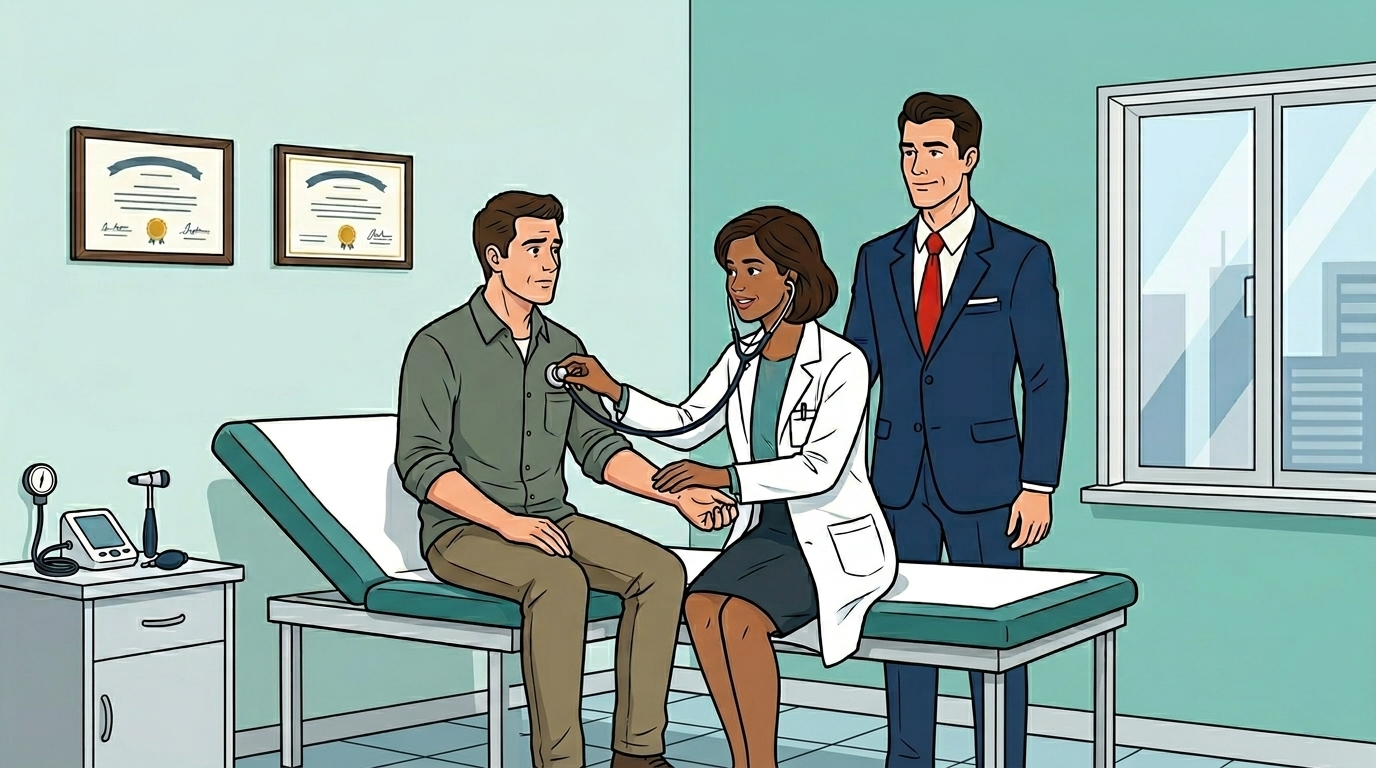 Patient getting checked at the doctor after a car crash
Once the dust settles, you move into the long stretch: medical treatment and case building.
This is the hardest part for most people. The adrenaline from the wreck is gone, but the pain isn't. You're juggling doctor's appointments, missing work, watching the bills pile up, and wondering if any of this is going to pay off. I get it. But this stretch is where your case is won or lost — so hang in there.
Stick With Your Treatment Plan
- Go to your appointments.
- Follow specialist referrals (orthopedist, neurologist, physical therapist, etc.).
- Be honest with your doctors about what hurts, what's getting better, and what's not.
Gaps in treatment = ammo for the insurance company: "If they were really hurt, they'd have kept going to the doctor."
Separate Property Damage From Injury
There are usually two different claims:
- Property damage – your car and personal property.
- Bodily injury – your medical, pain, and long‑term harm.
Insurance loves to dangle the property damage (getting your car fixed or totaled) to get you to relax on the bigger injury claim. You can often handle property damage yourself. For injury, especially with ongoing problems? That's when a car wreck lawyer can make a big difference.
Expect the Insurance Company to Look for Weak Spots
Behind the scenes, adjusters are:
- Reviewing the police report for any hint they can blame you
- Attacking the severity of your injuries
- Looking for prior injuries or conditions to blame instead
- Watching how desperate you are for cash
Their job is to save their company money — not to take care of you.
For more on how these tactics work, check out: 11 Costly Mistakes People Make in Car Wreck Lawsuits
Phase 4: "Do I Need a Lawyer for My Car Wreck?"
Here's where the big question hits: "Do I need a lawyer for my car wreck case, or can I just deal with the adjuster myself?"
There's no one‑size‑fits‑all answer. But here's some straight talk.
You Might Not Need a Lawyer If:
- You had very minor property damage.
- You had no injuries or a single urgent‑care visit that quickly resolved.
- The other insurer promptly paid for your repairs and medical bill, and you're truly back to normal.
In those "fender‑bender, no real injury" situations, hiring a lawyer may not significantly change your outcome.
You Very Likely Need a Lawyer If:
- You have ongoing pain, limited movement, or serious injuries.
- You missed work and lost income.
- You might need surgery or long‑term treatment.
- The insurance company is blaming you, lowballing you, saying your injuries are "pre‑existing," or asking for invasive recorded statements and medical authorizations.
- There are multiple cars, commercial vehicles, or complicated facts.
- There's talk of uninsured or underinsured drivers.
In those cases, having a car wreck lawyer near you — someone who knows your state's rules and local courts — can protect you from mistakes that cost tens of thousands of dollars.
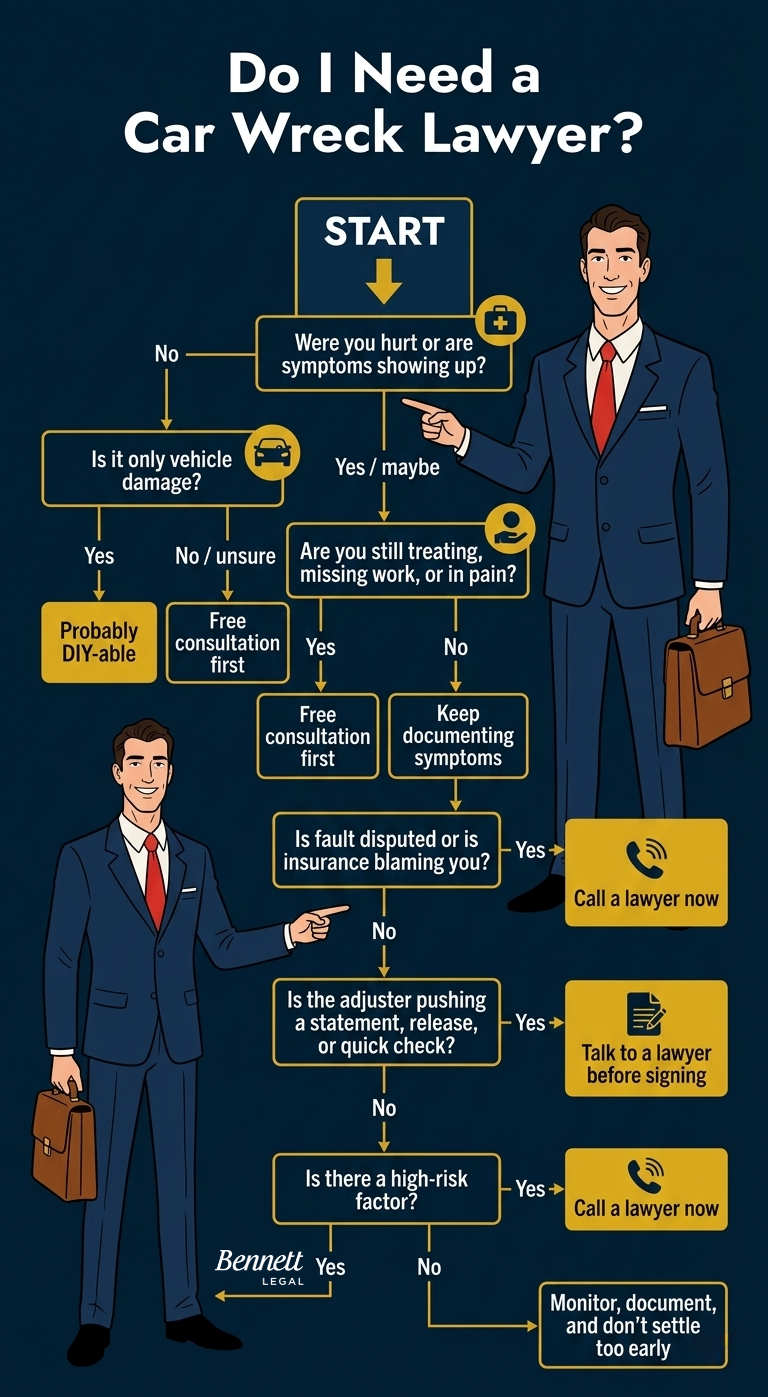 Do I need a car wreck lawyer?
And here's the part that keeps me up at night: in many states, you have as little as one to two years from the date of the wreck to file a lawsuit. That clock started ticking the day you got hit. Evidence disappears, witnesses forget, and once that deadline passes, no lawyer on earth can help you. Don't let time run out because you were waiting to "feel better first."
Tall Chuck says: "If the adjuster's first offer won't even cover your medical bills, that's a flashing red light. Before you sign anything, talk to a lawyer. Once you sign a release, you can't come back later and say, 'Actually, my injuries were worse than I thought.'"
🔵 Not sure if your case needs a lawyer? That's exactly what our free case review is for. No pressure, no obligation — just straight answers. 👉 Talk to Tall Chuck's team →
Phase 5: How a Car Wreck Lawyer Builds Your Case
Let's say you decide you don't want to face this alone. Good — because you shouldn't have to. By the time most people call us, they're exhausted: tired of fighting with adjusters, tired of worrying about bills, tired of feeling like the system is rigged against regular people. That's exactly when having someone in your corner changes everything.
1. Free Consultation and Case Screening
We'll ask how the wreck happened, what injuries you have, what treatment you've had, and what insurance is involved. If we don't think we can add real value, we'll tell you that. I'm too tall to hide behind false promises.
For car wreck cases, we work on a contingency fee — meaning you pay no fee unless we win. Zero upfront cost.
2. Investigation
We work to lock down proof:
- Police reports
- Photos and videos (yours, businesses nearby, dash cams if available)
- Witness statements
- Vehicle data (in some cases)
- Phone records if distracted driving is suspected
3. Medical & Damages Documentation
We gather medical records and bills, notes from providers about prognosis, proof of lost wages, and evidence of how your daily life changed. We may work with medical experts, vocational experts, and life‑care planners in severe cases.
This is the fuel behind your demand to the insurance company.
4. Dealing With Insurance So You Don't Have To
We communicate with adjusters, push back on lowball offers, and protect you from tricky questions or unfair blame.
You focus on healing. We focus on the fight.
5. The Demand Package
Once you've reached maximum medical improvement — or we understand your long‑term prognosis — we prepare a demand letter laying out how the wreck happened, why their insured is at fault, the full picture of your injuries and losses, and a demand for fair compensation. Then negotiations begin.
Phase 6: Advanced Negotiation & Litigation Options
Sometimes cases settle without a lawsuit. Sometimes they don't. Here's what happens next if we can't get a fair deal out of court.
Filing a Lawsuit
If the insurer won't play ball, we file a lawsuit against the at‑fault driver (and sometimes others). This doesn't mean you're definitely going to trial — many cases still settle later. It does mean we're serious about not letting them lowball you.
Discovery: The "Digging" Phase
Both sides exchange information — written questions, document requests, and depositions of you, the at‑fault driver, witnesses, and doctors or experts. It's not fun, but it's how we build a case strong enough that the other side starts worrying about what a jury will do.
Mediation and Settlement Talks
Before trial, most courts and parties will try mediation. A neutral mediator meets with both sides. A lot of cases settle here. If the insurance company finally offers something that reflects your injuries and risks, we'll walk you through the pros and cons.
Trial
If there's no fair settlement, we go to trial. A judge or jury decides: Was the defendant at fault? If so, how much are your damages worth? Trial is stressful, but sometimes it's the only way to force the truth into daylight.
"Car Wreck Lawyer Near Me": Why Local Experience Matters
You've probably already searched "car wreck lawyer near me." Here's why local experience matters:
- Local lawyers know the judges, the defense firms, and the insurance lawyers' favorite tricks.
- They understand your state's statutes of limitation, rules on fault and comparative negligence, and UM/UIM and stacking rules.
A big national brand might have a catchy jingle, but when you're the one walking into a courthouse, you want someone who knows that courthouse.
At Bennett Legal, we don't just practice car wreck law — we live it in the communities we serve. We know the local courts, the local adjusters, and the defense firms that'll be sitting across the table. That familiarity isn't a nice-to-have. It's leverage.
Tall Chuck says: "If an insurance company is pushing you to 'wrap this up quickly,' ask yourself: Who does that really help? You only get one chance to settle your injury claim. They settle claims every day. You're not being difficult by slowing down and getting advice — you're being smart."
You're Not Alone — And You're Not Powerless
 Call Bennett Legal for a free case review
Let's be clear about something: you didn't choose this wreck. You didn't choose the pain, the bills, the time off work, the fear. You're not "greedy" for wanting to be made whole. You're not "difficult" for asking what to do next or whether you need a lawyer. You're doing what a responsible person does: trying to protect your family and your future.
At Bennett Legal, that's our mission:
- Protect families from insurance games and fine‑print traps.
- Fight fraud and unfair tactics when companies try to undervalue or deny real injuries.
- Turn all this confusion into a clear, step‑by‑step plan so you can move forward.
🔵 Been in a car wreck and not sure what comes next? Bennett Legal offers free case evaluations — no pressure, no obligation. Just clear answers from Tall Chuck and the team. 👉 Get your free case review →
READY TO STAND TALL?
You've read the roadmap. You know what's coming. Now the only question is whether you walk it alone — or with someone who's been down this road hundreds of times.
👉 Tell us about your wreck — free, no obligation, no fee unless we win your car wreck case.
We'll tell you exactly where you stand, what to watch out for, and whether Tall Chuck and the team can help. If we can't, we'll say so. That's a promise.
Don't wait until the insurance company forces your hand — or until a deadline you didn't know about passes you by. Avoid the mistakes that weaken your case and reach out today.
👉 bennettlegal.com/contact | Call us today
Keep standing tall, folks. Chuck's got your back.
Free consultation
Been in a car wreck? Here's what to do next.
Get the legal help you need. Free consultation with a Dallas car accident attorney.