Hey folks, Tall Chuck here.
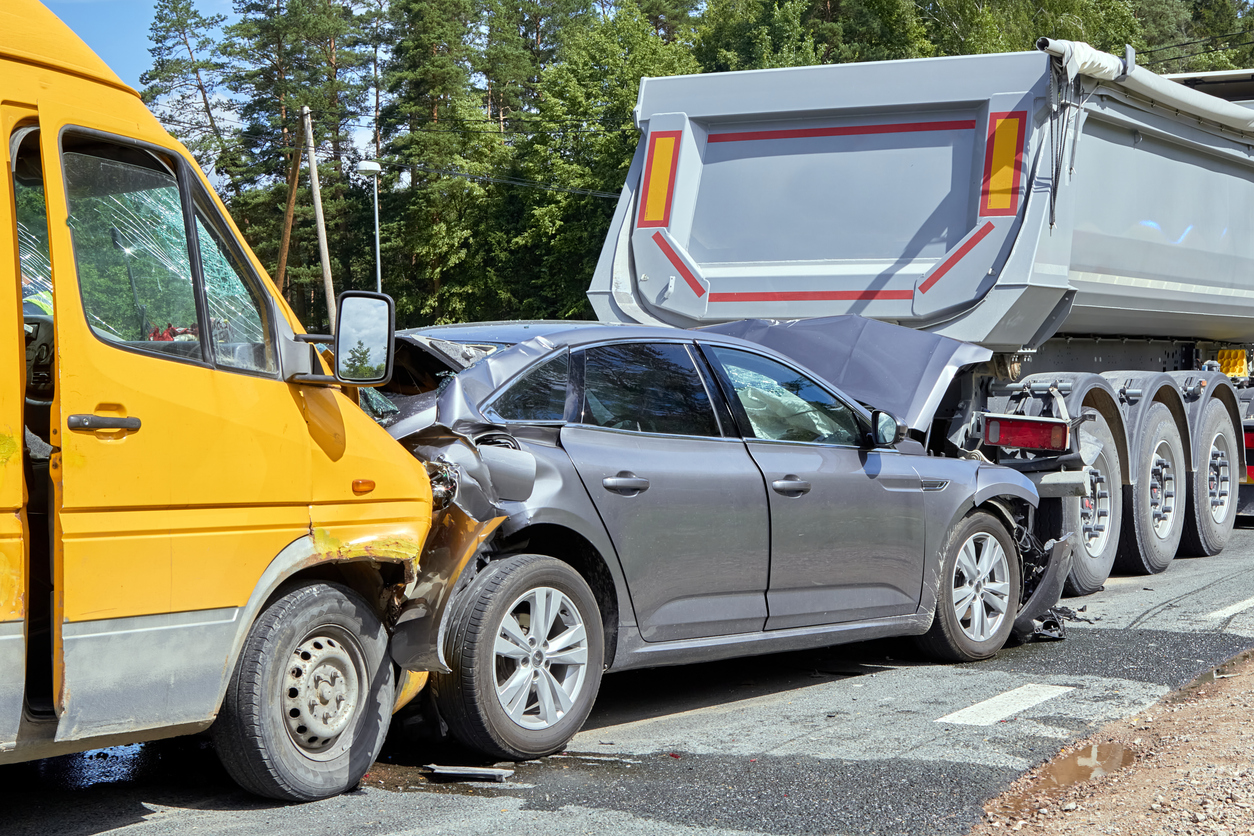
If you've just been in a commercial truck accident — hit by an 18-wheeler, delivery truck, utility vehicle, oilfield hauler, or anything big enough to block out the sun — you're facing a very different situation than a regular car accident. Not sure what qualifies as a commercial truck accident? We break that down in a separate guide.
A crash with a pickup? That's bad.
A crash with a fully loaded tractor-trailer? That's life-changing.
Maybe your car looks like it went a few rounds with a bulldozer. Maybe the truck driver's employer is already calling you. Maybe an insurance adjuster left a message saying they "just need a quick statement." Let me tell you right now — commercial truck accidents play by a whole different set of rules, and missing those differences can cost you more than the price of a new truck.
As a 7-foot-tall lawyer, I get a high-up view of how trucking companies try to hide the ball.
Let's break this down in plain English.
Why Truck Accidents Are Nothing Like Normal Car Accidents
A lot of folks assume: A wreck is a wreck. A claim is a claim. A bruise is a bruise.
Nope.
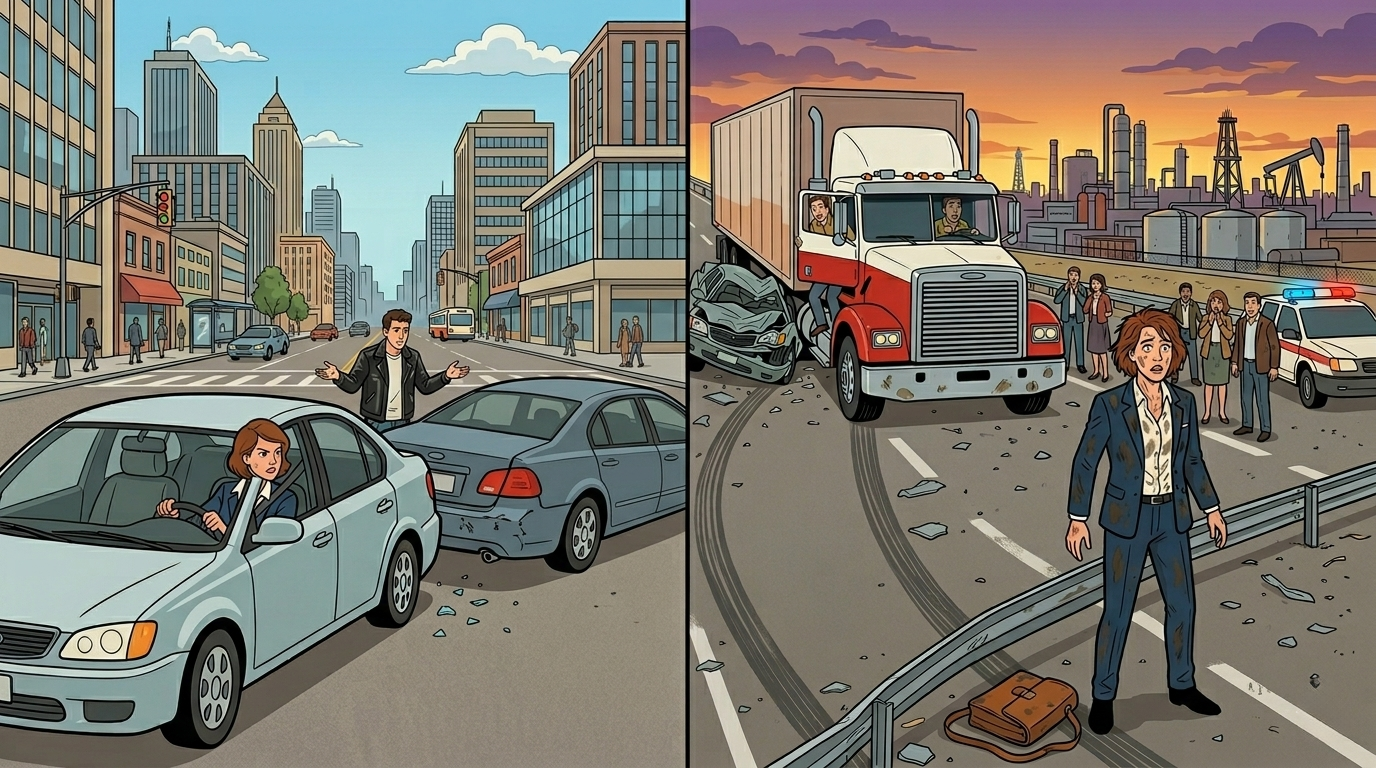
Car accidents and commercial truck accidents are as different as a garden hose and a fire hydrant — they look similar from a distance, but the power behind them isn't even close. And if you don't have a truck accident lawyer who understands the difference, you could leave serious money on the table. Truck accidents involve:
- Bigger insurance policies
- More severe injuries
- More complicated laws
- More parties who may be responsible
- More pressure from companies trying to limit payouts
And the worst part? Most drivers don't realize any of this until the trucking company shows up with lawyers before the tow truck even arrives.
7 Big Legal Differences: Car vs. Commercial Truck Accidents
Here are the differences that matter most — the ones that control how much compensation you can recover.
1. Trucks Are Covered by Federal Law, Not Just State Law
Car accidents are mostly governed by state negligence rules. Commercial trucks follow federal regulations under the FMCSA (Federal Motor Carrier Safety Administration).
That means:
- Strict limits on driving hours
- Mandatory rest breaks
- Drug and alcohol testing
- Maintenance and inspection requirements
- Cargo weight rules
- Training and certification rules
- Electronic logging devices (ELDs) that track driver activity
If a truck driver or company broke any of these rules, the case value shoots way up. Most folks never even think to ask.
2. Trucking Companies Are Responsible — Not Just the Driver
In a car accident, it's usually one person who's liable. With a commercial truck? You may have claims against:
- The driver
- The trucking company
- The trailer owner
- The cargo company
- The maintenance contractor
- The dispatcher
- The broker
- The parts manufacturer
- The insurance companies (plural)
The more parties involved, the more insurance coverage is available — and the more blame gets spread. Commercial trucks don't travel alone. They travel with a whole chain of responsibility, and when that chain snaps, we look at every link.
3. Truck Insurance Policies Are MASSIVE
Regular car insurance might cover $30,000–$100,000 if you're lucky. Commercial trucks are required to carry $750,000 to $5,000,000 in coverage — and companies often carry even more.
This is why you never want to rush into a settlement with a trucking insurer. They're not trying to protect you. They're trying to protect millions.
4. The Injuries Are Far More Severe
When a multi-ton truck hits a sedan or SUV, the physics aren't fair. Truck accidents often lead to:
- Spinal cord injuries
- Traumatic brain injuries
- Broken bones
- Internal damage
- Long-term disability
- Wrongful death
These injuries demand much larger settlements because they affect a person's entire future — not just their next few months. The biggest damages come from future medical care, lost earning capacity, permanent disability, chronic pain, and emotional trauma.
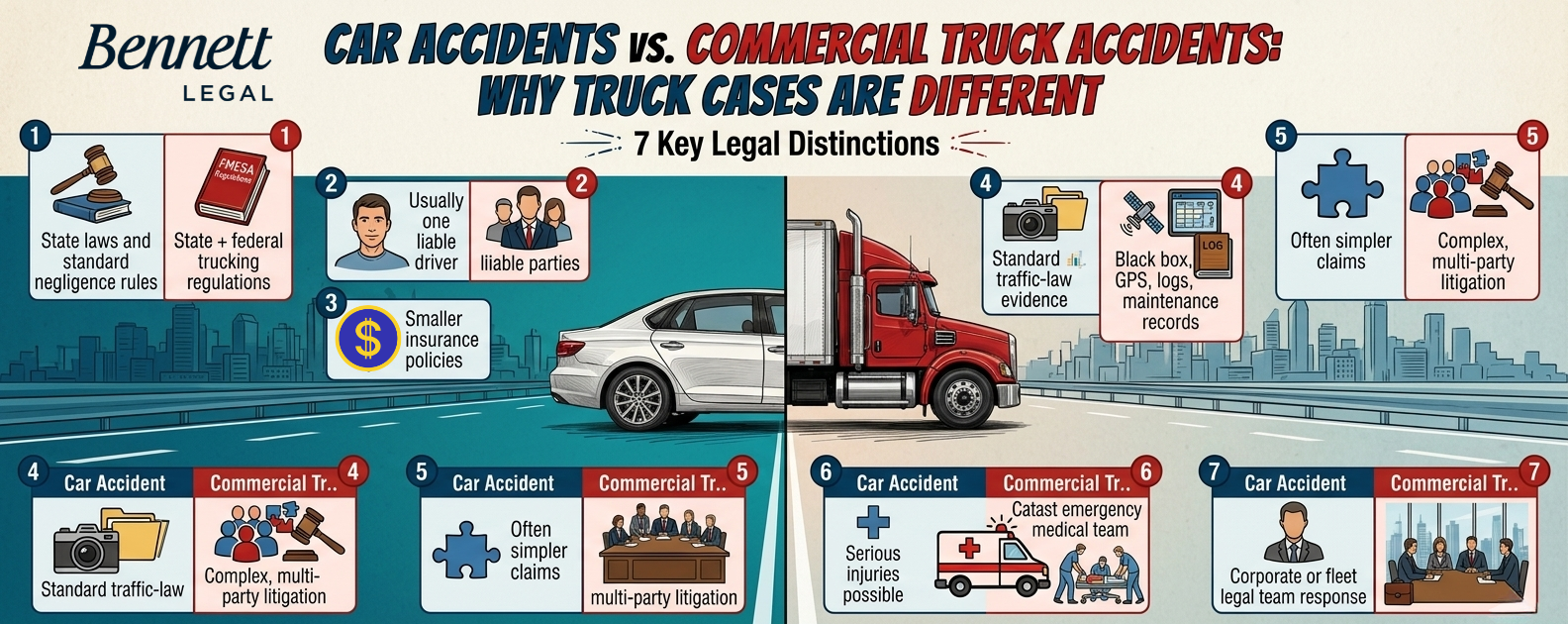 Car vs commercial truck accident legal differences
5. Evidence Disappears Fast — and Truck Companies Move Faster
Trucking companies have teams trained to respond to crashes immediately. Some arrive before the vehicles are even towed. They work to collect favorable evidence, hide or repair dangerous equipment, recover electronic logs, coach drivers on what to say, and minimize company responsibility. Meanwhile, the injured driver is at the ER trying to figure out what day it is.
Truck crashes are a race — and the trucking company starts miles ahead.
For a full breakdown of what to do in the critical first hours, see: Reporting Requirements After a Commercial Truck Accident: 11 Steps That Protect Your Case
6. Truck Drivers Must Follow Rules That Normal Drivers Don't
Truck drivers have legal requirements that everyday drivers never deal with:
- Hours-of-service limits
- Mandatory rest periods
- Maximum load weights
- CDL (Commercial Driver's License) standards
- Drug and alcohol testing
- Pre-trip and post-trip inspection logs
- Medical fitness requirements
If any of these were violated, the case gets stronger — sometimes much stronger.
7. States Handle Truck Accidents Differently (Texas + Neighboring States)
| State | Fault Rule | Damage Caps | Notable Trucking Considerations |
|---|---|---|---|
| Texas | Modified comparative fault (51% bar) | No caps on non-economic damages (except med-mal) | Many trucking companies headquartered here, strong discovery tools |
| Oklahoma | Modified comparative fault | Generally no caps for truck cases | Heavy oilfield trucking presence; layered insurance |
| Louisiana | Pure comparative fault | Caps only apply in medical malpractice | Frequent disputes over evidence rules |
| New Mexico | Pure comparative fault | Caps mainly in med-mal, not trucking | Strict regulations for oilfield haulers |
| Arkansas | Modified comparative fault (50% bar) | No caps on non-economic damages | Significant trucking corridors; multi-party liability common |
Crossing one border can change the whole playbook — from how fault is calculated to how much the trucking company has to pay.
Pro Tip from Tall Chuck
After a truck accident, do not talk to the trucking company or their insurer — not even "just to be helpful." Every word you say is recorded, analyzed, and stored. They're not checking on your health. They're checking on their wallet.
What Actually Affects Compensation After a Truck Accident?
Here are the factors that control commercial truck settlement amounts:
- Severity of injuries
- Permanent disability
- Future medical needs
- Ability to work
- Degree of fault
- Violations of federal trucking laws
- Maintenance failures
- Company safety history
- Number of liable parties
- Size of insurance policies
- Documentation quality
- Whether the company tried to cover anything up
A Story from Our Desk
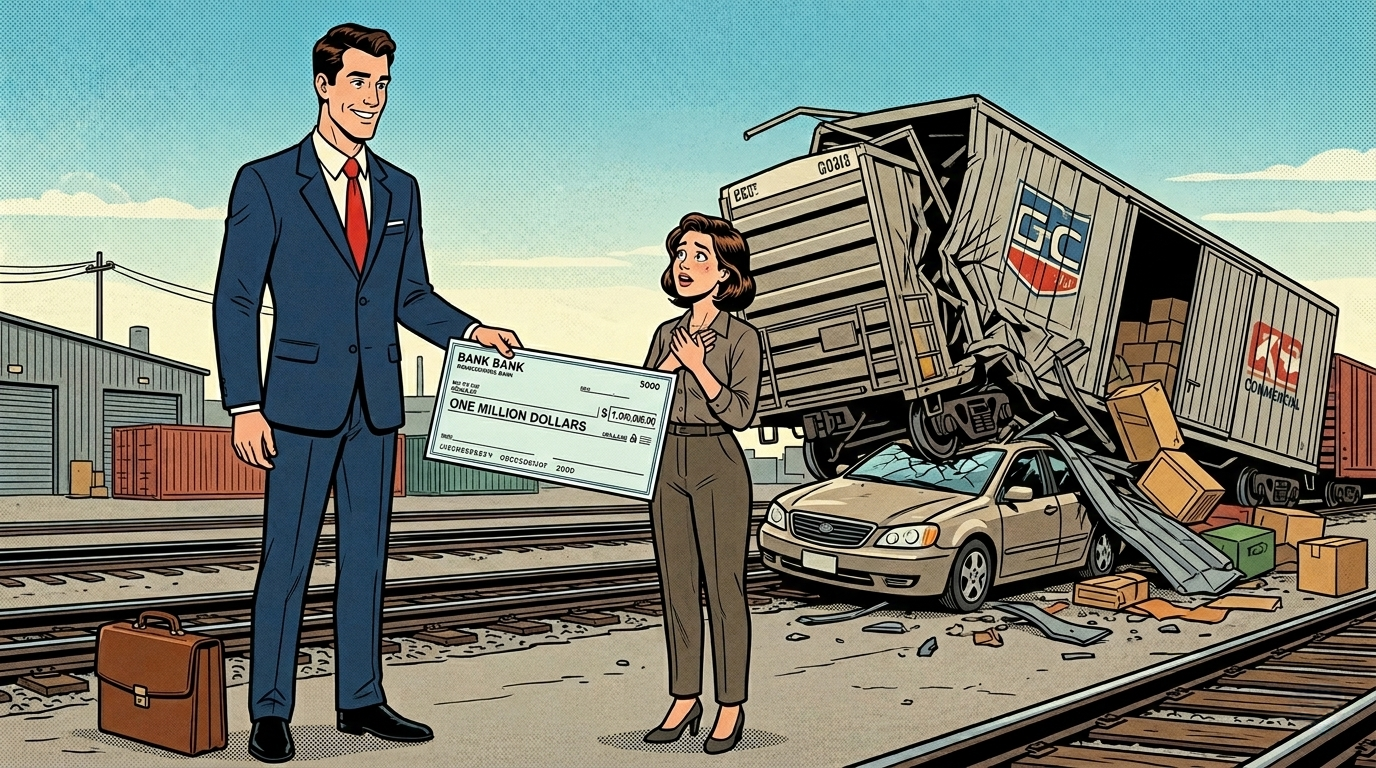 $2.2 million settlement for a traumatic brain injury — Bennett Legal
Let me tell you about a real case from our office, one that shows just how severe and life-changing truck-related injuries can be.
Andrea was driving in downtown Dallas when a commercial boxcar slammed into her. The impact left her with a traumatic brain injury (TBI) — the kind that changes your entire life overnight. The trucking company tried to play it off like it was "no big deal," claiming her injury wasn't serious.
But here's the Tall Chuck truth: Brain injuries don't always show up on X-rays — they show up in real-world struggles. Her memory problems, headaches, mood changes, cognitive difficulties, and difficulty working all painted a very different picture than the trucking company wanted to admit.
We brought in experts. We held the company accountable. We pushed back against every "the injury isn't that bad" argument.
After years of litigation — years of Andrea fighting to be believed — we secured a settlement of $2.2 million, with over $1 million going directly to her. That's the difference between what they try to offer and what justice demands.
What You Should Do Right Now (Before Calling a Lawyer)
Here's your Tall Chuck checklist if you were hit by a commercial truck:
- Get medical treatment immediately (delays hurt your health and your case)
- Save all photos of the vehicles and injuries
- Do not give any recorded statements
- Do not sign anything — especially releases or forms
- Keep every bill, receipt, and document
- Write down what you remember from the crash
- Save your car seat, clothes, and anything damaged
- Contact a truck accident lawyer who handles commercial truck cases specifically
Regular car accident lawyers don't always know the federal rules. And that makes a difference.
For a step-by-step guide on what comes next, see: From Crash Scene to Courtroom: A Car Wreck Lawyer's 6-Phase Roadmap. And make sure you avoid the 11 costly mistakes people make in car wreck lawsuits — they apply to truck cases too.
How Bennett Legal Helps in Truck Accident Cases
 Car or truck accident? Call Bennett Legal
Truck accident cases are some of the toughest fights out there. Here's what my team does:
- Preserve black box and electronic log evidence
- Investigate federal trucking violations
- Secure GPS, maintenance logs, and company records
- Identify all responsible parties and policies
- Stop the trucking company from destroying evidence
- Bring in accident reconstruction and safety experts
- Calculate full long-term damages
- Fight lowball offers backed by corporate lawyers
- Handle all calls and paperwork so you can heal
You're not up against one driver. You're up against a company. And you shouldn't fight that alone.
Truck accidents shake families to their core. And many feel guilty for asking for compensation. But here's the truth: you didn't choose this wreck, you didn't choose the injuries, and you didn't choose the stress, the bills, or the pain. You're just trying to put your life back together. That's not greed. That's fairness.
If you need clarity, options, or someone tall enough to see the tricks coming before they hit you, reach out. Chuck's got your back.
More from Bennett Legal:
Free consultation
Hurt in a truck accident?
Commercial truck cases are complex. Let an experienced attorney handle yours. Free consultation.