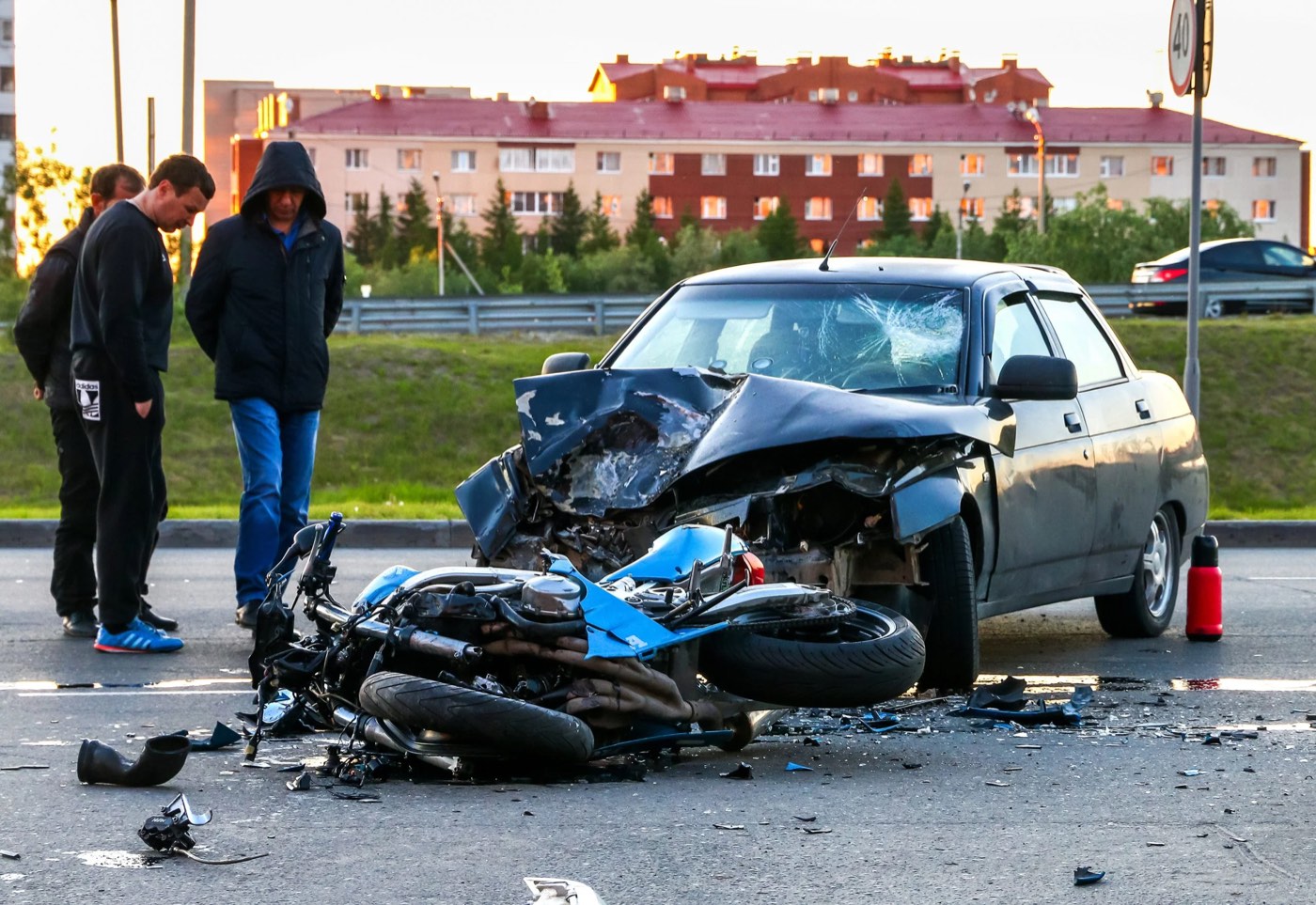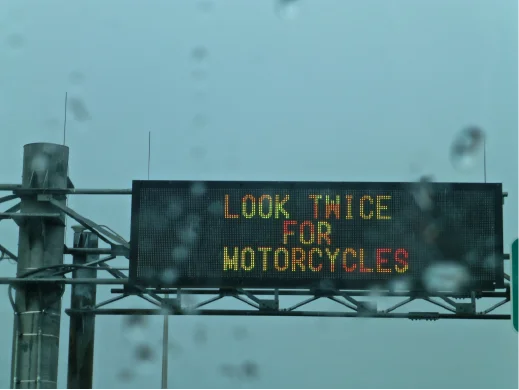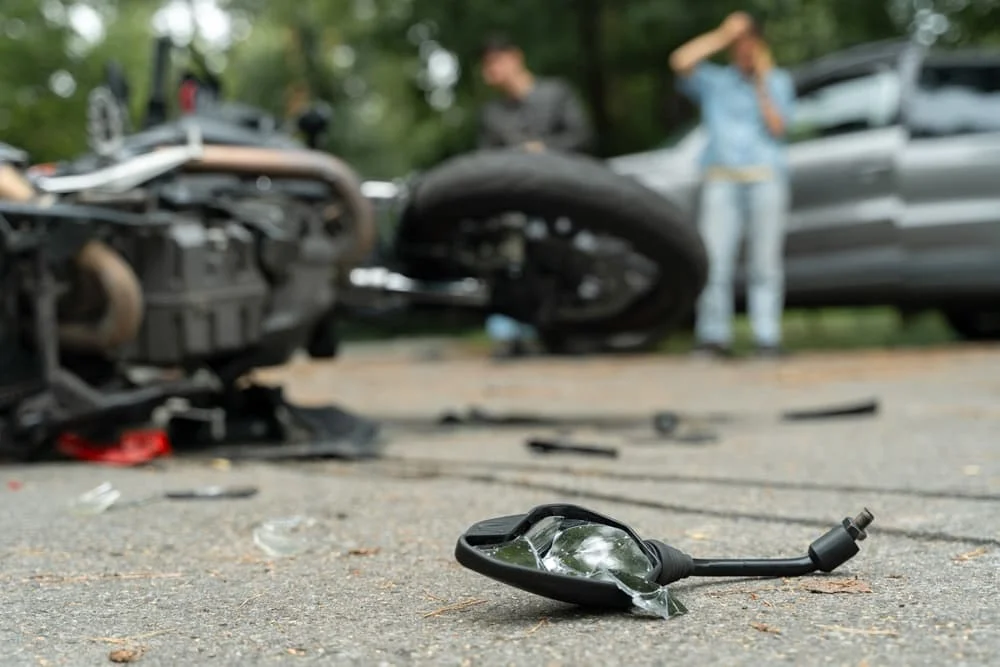
Motorcycle accidents are uniquely dangerous. Riders have no protective frame, no airbags, and no barrier between themselves and the road. Even low‑speed collisions can cause life‑changing injuries. The moments after a crash are chaotic — but what you do next can shape your medical recovery and your legal claim.
According to the NHTSA, motorcyclists are 29 times more likely to die in a crash per mile traveled than passenger car occupants. In Texas alone, hundreds of riders are killed and thousands more are seriously injured every year. If you or someone you love has been in a crash, acting quickly and correctly matters.
Here are 12 essential steps every injured motorcyclist must take — from the crash scene through medical care, insurance issues, and legal protection.
Free consultation
Injured in a motorcycle accident?
Get the compensation you deserve. Free case evaluation — no fees unless we win.
1. Get to Safety and Prevent Further Harm
After a crash, the first danger is often additional vehicles approaching at speed. If you can move safely, get to the shoulder or a protected area. Turn off your motorcycle to prevent fuel leaks or fire. Never remove your helmet until medical help arrives unless you are struggling to breathe.
If you cannot move, signal for help and remain as still as possible. Do not let others move you unless there is an immediate danger like fire — spinal injuries are common and movement can make them worse.
2. Check for Injuries — Visible or Not
Motorcycle injuries often include road rash, broken bones, concussions, internal bleeding, and neck and spine trauma. Some injuries show immediately. Others do not.
Even if you feel "okay," assume you are hurt. Adrenaline masks symptoms, and many traumatic brain injuries or internal injuries take hours — sometimes days — to appear. Do not make decisions about your health based on how you feel at the scene.
3. Call 911 Immediately
A police report and EMS evaluation are critical. Do not skip this step even if the other driver asks you to handle it privately. The officer's report documents road conditions, driver statements, witness information, and a preliminary fault determination.
This report becomes a key piece of evidence in your claim. Declining medical attention at the scene is one of the most damaging mistakes riders make — insurance companies will use it to argue your injuries weren't serious.
4. Collect Evidence While You Are Still at the Scene
If your injuries allow, gather:
- Photos of all vehicles involved
- Photos of your motorcycle, gear, and helmet
- Photos of skid marks, debris, road hazards, and weather conditions
- Names and contact information of all witnesses
If you cannot do this yourself, ask a bystander, passenger, or the responding officer to assist. Evidence disappears quickly — skid marks fade, debris gets cleared, and witnesses leave. This becomes vital when the other driver denies fault, which is extremely common in motorcycle cases.
5. Get a Full Medical Evaluation — Even If You Feel Fine
Go to an emergency room or urgent care as soon as possible, even if you walked away from the scene. Motorcycle crashes frequently cause concussions, soft‑tissue injuries, internal bruising, and delayed‑onset spine injuries that don't show up immediately.
Early medical care protects your health and creates the documentation your legal claim needs. If you wait days to see a doctor, insurers will argue that you weren't really hurt — or that something else caused your injuries. Always follow up with specialists your doctor recommends and keep every appointment.
6. Notify Your Insurance Company — Carefully
You must report the accident, but keep your statement factual and brief. Do not apologize, speculate about fault, or discuss your injuries in detail. Insurance companies — including your own — often try to:
- Shift blame to the motorcyclist
- Twist innocent statements into admissions
- Push quick, low settlements before you know your full damages
Speak with a motorcycle accident lawyer before giving any recorded statement to any insurance company. Even your own insurer can become your adversary if you need to tap underinsured motorist coverage.
{{CTA:mid}}
7. Understand How Motorcycle Accidents Really Happen
Knowing how crashes occur helps you recognize when the other driver is actually at fault. Common causes include:
- Left‑turn crashes — drivers misjudge motorcycle speed and pull across your path
- Distracted drivers pulling into a rider's lane
- Failure to yield at intersections and on-ramps
- Rear‑end collisions at stoplights and in slow traffic
- Unsafe lane changes and blind‑spot errors
- Road hazards — potholes, debris, wet pavement, loose gravel
Rider error plays a role in some crashes, but in the majority of motorcycle accidents, driver negligence is the primary cause. Insurance companies often try to flip that narrative because motorcyclists face an unfair bias in the claims process.
8. Track Every Expense and Every Symptom
Starting the day of the accident, keep detailed records of:
- All medical bills and invoices
- Prescriptions and medical equipment
- Physical therapy and specialist visits
- Lost wages and time missed from work
- Mileage to medical appointments
- Daily pain levels and physical limitations
This documentation builds your damages picture. Your attorney needs it to calculate a fair settlement, and a jury needs it to understand what you went through. A journal — even a simple notes app on your phone — is enough. Write something every day.
9. Never Accept a Fast Settlement Offer
Early settlement offers almost never reflect the true value of a serious motorcycle claim. Insurers offer fast money for one reason: to close your case before you discover how much you're actually owed.
Settlement value depends on injury severity, lost earnings, long‑term treatment needs, permanent disability or disfigurement, emotional trauma, and future medical and life‑care costs. Many motorcycle accident settlements in Texas exceed six figures when injuries are serious. Some — particularly cases involving catastrophic injury, amputation, or paralysis — reach well into the seven-figure range.
You cannot know the full value of your case until your doctors have a clear picture of your recovery trajectory. Don't let an insurer pressure you into settling while you're still healing.
10. Avoid Common Mistakes That Can Hurt Your Case
Some of the most damaging things injured riders do:
- Posting on social media about the accident, their injuries, or their activities — insurers monitor this
- Admitting fault or apologizing at the scene or to an adjuster
- Repairing the motorcycle before it's been inspected — the damage is evidence
- Missing medical appointments — gaps in treatment give insurers grounds to dispute your injuries
- Talking to the other driver's insurance without a lawyer present
Once you make a mistake, it is very hard to undo. Get legal help before you talk to anyone beyond the police and your own doctors.
11. What Rider Training Can and Can't Protect Against
Motorcycle Safety Foundation (MSF) courses and Texas Department of Public Safety licensing requirements exist for good reason — trained riders have better hazard recognition, emergency braking skills, and situational awareness. These skills do reduce crash risk.
But no amount of training eliminates the danger when another driver makes a negligent decision. A perfectly trained, fully licensed rider can do nothing about a car that turns left in front of them at an intersection or a driver who runs a red light. If the crash was caused by someone else's negligence, your training level does not reduce your right to compensation.
12. Call a Motorcycle Accident Lawyer as Early as Possible
Motorcycle cases are fundamentally different from car accident claims. Riders face bias from insurers, higher medical bills, and more complex injury evaluations. The sooner you have an attorney, the better protected your evidence, your rights, and your case will be.
An experienced motorcycle accident attorney can:
- Preserve and gather critical evidence before it disappears
- Work with accident reconstruction and medical experts
- Shield you from damaging statements to insurers
- Handle all insurance negotiations
- Calculate the full value of your damages — including future losses
- Fight back against claims that the rider was at fault
- Prepare your case for trial if needed
Most motorcycle accident lawyers — including our team at Bennett Legal — work on a contingency fee basis, meaning you pay nothing unless we win. There is no financial reason to wait.
How Bennett Legal Protects Injured Motorcyclists
At Bennett Legal, we understand the unique challenges riders face after a crash. Motorcycle accidents often cause catastrophic injuries, and insurance companies look for any reason to shift blame onto the rider. Our team steps in immediately to protect your rights and build your case.
We help by investigating fault thoroughly, working with reconstruction and medical experts, handling all communication with insurers, negotiating aggressively for full compensation, and preparing every case as if it will go to trial. You focus on healing — we handle the fight.
Contact Bennett Legal for a Free Consultation
Frequently Asked Questions
How long do motorcycle accident cases take to settle? Timelines vary. Simple cases can settle in a few months. Severe‑injury cases involving surgery, ongoing treatment, or disputed liability may take a year or more. Settling too early is almost always a mistake.
What is the average motorcycle accident settlement in Texas? There is no universal number — settlement value depends on the specific injuries, liability facts, and damages in your case. Cases involving serious injuries routinely exceed six figures. Catastrophic injury cases can be significantly higher. An attorney can give you a realistic range after reviewing your case.
Should I repair my motorcycle before filing a claim? No. Photograph it thoroughly and do not repair or move it until your attorney or an expert has assessed the damage. The bike itself is evidence.
Do I need to have worn a helmet to recover compensation? Texas law requires helmet use for riders under 21 (with some exceptions). Helmet use affects how certain damages are calculated but does not eliminate your right to file a claim.
Can I still recover compensation if I was partially at fault? Yes. Texas follows a modified comparative fault rule — you can recover damages as long as you were less than 51% responsible for the crash. Your award is reduced by your percentage of fault.
What does a motorcycle accident lawyer cost? Nothing upfront. Contingency fee arrangements mean your attorney only gets paid if and when you recover compensation. There is no out-of-pocket cost to hire a lawyer.
Related: Motorcycle Safety and Awareness | May is National Motorcycle Safety Awareness Month | How to Deal With the Insurance Company After an Accident
Free consultation
Injured in a motorcycle accident?
Get the compensation you deserve. Free case evaluation — no fees unless we win.