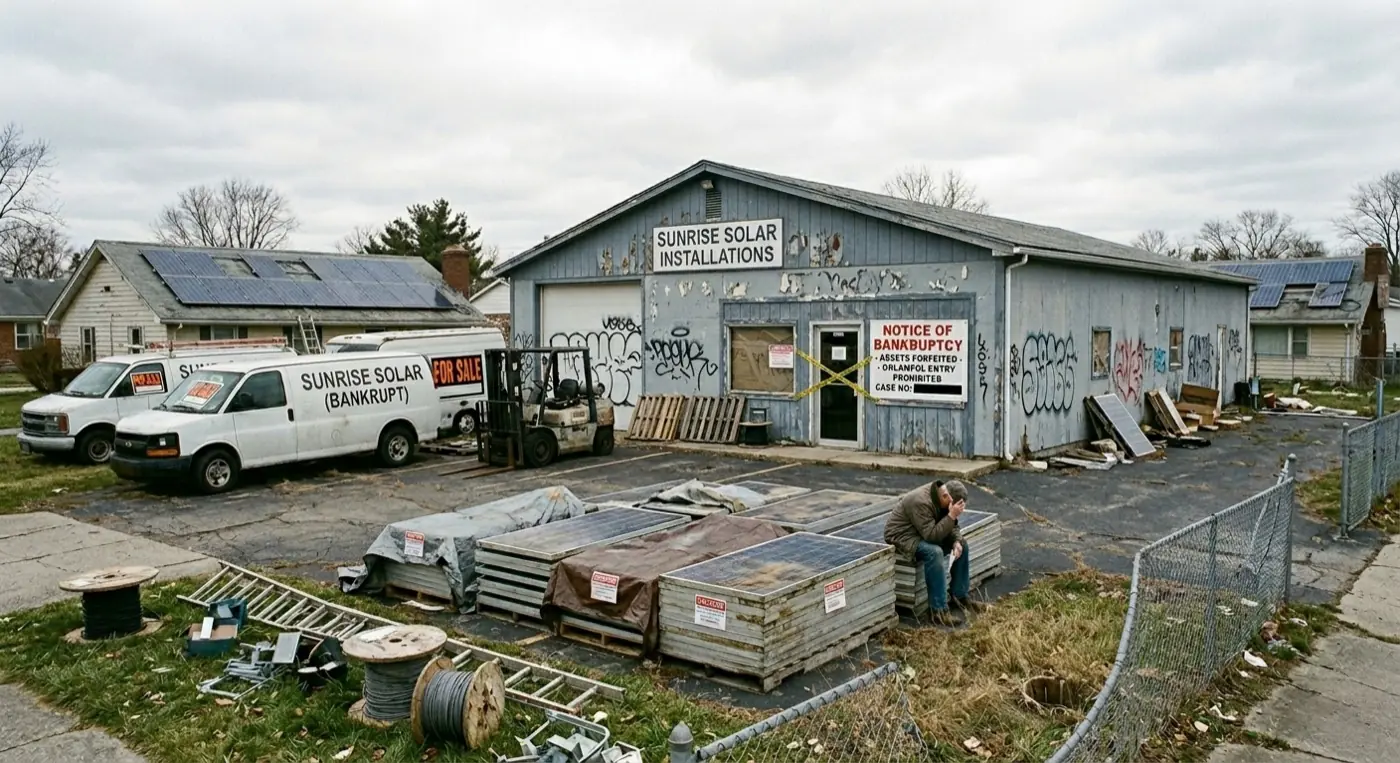
If an installer closes or files for bankruptcy, you may have questions about unfinished work, equipment service, a warranty, or the company that receives your payments. Those are separate issues, and a bankruptcy filing alone does not answer them. The relevant agreements, notices, court filings, and applicable law need to be reviewed.
$170,000+ recovery
Against Sunlight Financial · Solar fraud arbitration
- $113,000 loan cancelled
- UCC lien removed
- Credit repaired
- $58,000 cash to client
Past results do not guarantee a similar outcome. Every case is different.
This guide offers a document checklist and explains what to verify. It does not determine the status of a particular contract or tell you whether to change payments. For an overview of financing disputes, see our solar panel financing practice page.
Free consultation
Solar panel contract problems?
We review qualifying solar financing documents. Free case evaluation.
What a bankruptcy filing can—and cannot—tell you
A bankruptcy case is a court proceeding. Chapter 7 generally concerns liquidation; Chapter 11 generally concerns reorganization. The details depend on the case, court orders, and applicable law. A filing does not automatically establish that every asset or customer contract will be transferred, that a warranty has ended, or that a separate financing agreement has been cancelled.
A homeowner may have more than one agreement: a purchase or installation contract, a loan or retail installment contract, a lease or power purchase agreement (PPA), and separate equipment or workmanship warranties. Identify each agreement and the legal entity responsible for it before drawing conclusions.
Check ownership, financing, and service records
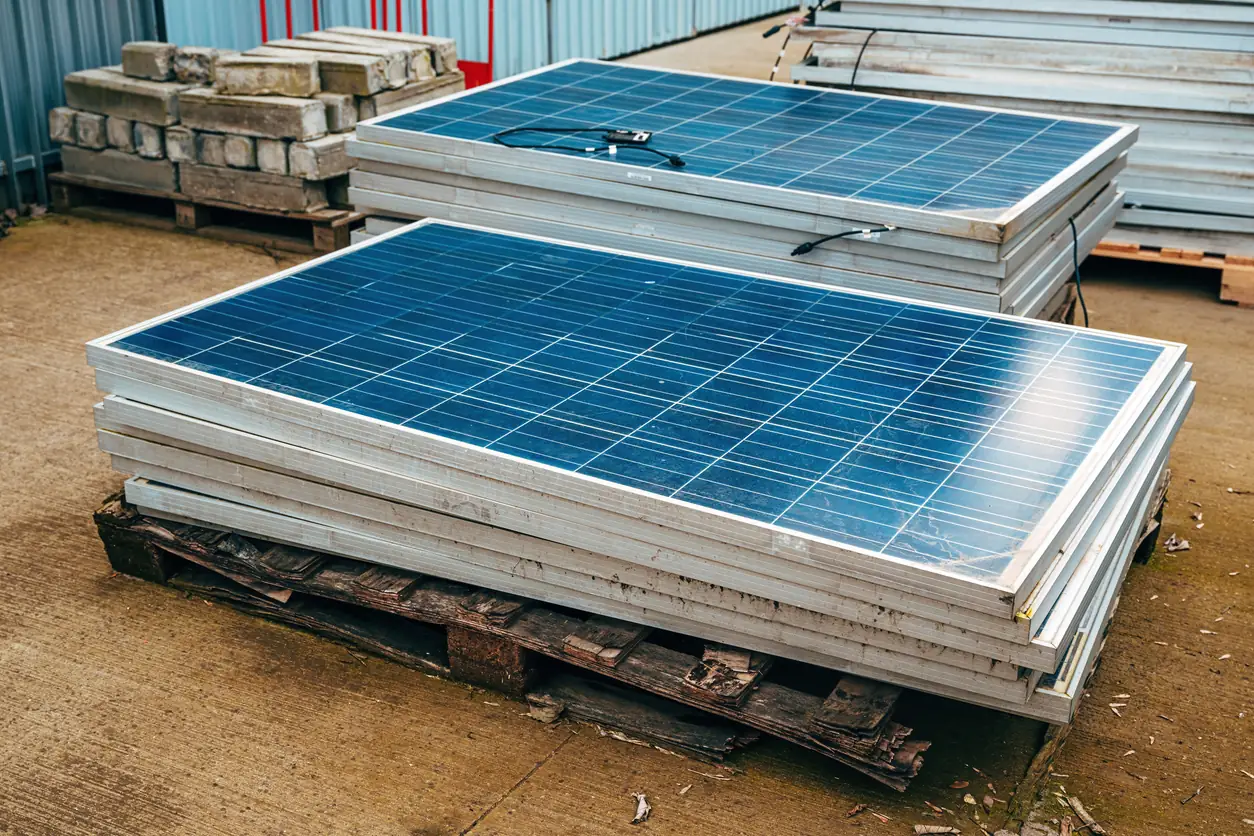
Review the signed sales and installation agreement, proof of payment, title or transfer documents, financing contract, recent statements, and notices from any creditor or servicer. A financing company may be separate from the installer. The installer’s bankruptcy does not, by itself, determine who currently owns or services an account or whether payment obligations changed. Do not change payments based only on a closure announcement; get advice about the specific contract and notices first.
For a lease or PPA, review the agreement for its named counterparty, servicing contacts, assignment provisions, and any written transfer notice. Bankruptcy law provides procedures for certain executory contracts and unexpired leases, including court-supervised assumption or rejection in specified circumstances; it does not mean every solar customer contract is automatically transferred. See 11 U.S.C. § 365.
Identify the company named in your records
Compare the legal names on your installation agreement, financing documents, statements, and any closure notice. Our solar installer directory includes dated public-record summaries for Titan Solar Power, Pink Energy / Power Home Solar, and Lumio. These summaries can help identify a company name and locate public records; they do not establish that a company worked on a particular system, had a relationship with a particular financing company, or remains responsible for an individual account.
Bennett Legal is not affiliated with Titan Solar Power, Pink Energy / Power Home Solar or Lumio.
Review warranty documents separately
A product warranty may be issued by the equipment manufacturer, while a workmanship or service warranty may come from the installer. Read the warranty documents to identify the issuer, covered equipment or work, duration, claim process, and any transfer terms. An installer’s closure alone does not establish that a separate manufacturer warranty is cancelled or that an installer warranty remains enforceable. Contact the named issuer or support provider and keep its response with your records.
If a warranty issuer itself is in bankruptcy, check the case docket, notices, and any court-approved sale or transfer documents for information about that issuer’s obligations. The result can depend on the warranty, the bankruptcy case, and applicable law; do not assume that an acquirer took on old warranty duties unless the documents say so.
Preserve the paper trail
The following records can help show what was agreed, what work occurred, and which companies communicated with you. Keep copies in their original format where possible and note when you received each notice.
Document checklist
Keep these records handy
How to Protect Yourself Before a Bankruptcy Happens
While you can’t see the future, you can reduce your risk:
- Choose companies with multiple years in business and solid financials.
- Favor equipment with independent manufacturer warranties separate from the installer.
- Review prepaid service terms, including who performs the work and what happens if that company closes.
- Check BBB, state contractor license boards, and Google reviews before choosing an installer.
The Solar Bankruptcy Paper Trail
Court process and legal guidance
If you are considering a claim involving a company in bankruptcy, first confirm the court, case number, filing date, and any relevant notices. The automatic stay under 11 U.S.C. § 362 can restrict certain actions against a debtor, subject to statutory provisions and court orders. Its application is fact-specific. A bankruptcy lawyer can explain whether the stay affects a proposed action and what process may be available. This page does not recommend starting or continuing a claim without case-specific advice.
If you believe you are owed money or services, read the case notices and applicable court instructions before deciding whether or how to submit a proof of claim. Deadlines and eligibility depend on the particular case. Save all notices, communications, invoices, photos, inspection and utility records, and warranty responses.
Solar financing scope
Bennett Legal reviews qualifying solar financing involving GoodLeap, Sunlight Financial, EverBright, or BrightOak, with any installer. EverBright matters are limited to loans and retail installment contracts (RICs), including EverOwn; EverBright leases and PPAs are excluded. BrightOak PPAs require documented proof of a filed UCC-1. A UCC-1 filing does not by itself establish a claim or outcome. Whether a matter is within scope depends on the documents and facts. Bennett Legal is not affiliated with GoodLeap, Sunlight Financial, EverBright, or BrightOak.
For a BrightOak PPA, provide the contract plus documented proof of the recorded filing. See the guide to finding a UCC-1 filing. This evidence requirement applies to BrightOak PPAs, not all solar loans.
Frequently asked questions
Does an installer’s bankruptcy cancel my solar loan?
Not automatically. The loan may be a separate agreement with a creditor or servicer. Review the signed financing documents and current account notices, and get individual advice before changing payments or taking other action.
Does the installer’s bankruptcy void my warranty?
Not necessarily. Check who issued each warranty and what its terms say. A manufacturer product warranty and an installer workmanship warranty may have different issuers and procedures. Contact the issuer named in the relevant document to ask about a claim or service request.
Should I stop paying a solar lease or PPA if the installer has closed?
Do not rely on the installer’s closure alone to decide whether to change payments. Review your agreement and any written transfer or servicing notice, then obtain advice based on your situation before taking action.
Can a trustee or another company take over a contract?
Some executory contracts or unexpired leases may be assumed, rejected, or assigned under bankruptcy procedures, with court approval and subject to statutory rules. That does not mean every solar agreement will transfer. Check the case docket and the contract for information about your specific agreement.
Can I file a claim or bring a lawsuit?
The answer depends on the bankruptcy case, the type of claim, and the parties involved. The automatic stay may restrict certain actions against the debtor, and a proof-of-claim process may apply. Review court notices and consult a bankruptcy lawyer before taking action.
Related reading
- Solar Panel Fraud: A Homeowner’s Guide to Protection
- Solar financing disputes
- How to find a UCC-1 solar filing
- The Salesperson Said I Could Cancel My Solar Contract Anytime—is That True?
Free case evaluation. Bennett Legal reviews GoodLeap and Sunlight Financial loans, EverBright loans and retail installment contracts (RICs), including EverOwn, and BrightOak financing, with any installer. EverBright leases and PPAs are excluded. BrightOak PPAs require documented proof of a filed UCC-1. Available options depend on the documents and facts.
This article provides general information, not legal advice. An attorney-client relationship is not created by reading this page or submitting an inquiry.
Free consultation
Solar panel contract problems?
We review qualifying solar financing documents. Free case evaluation.