If you need help, learn more about our Arbitration.
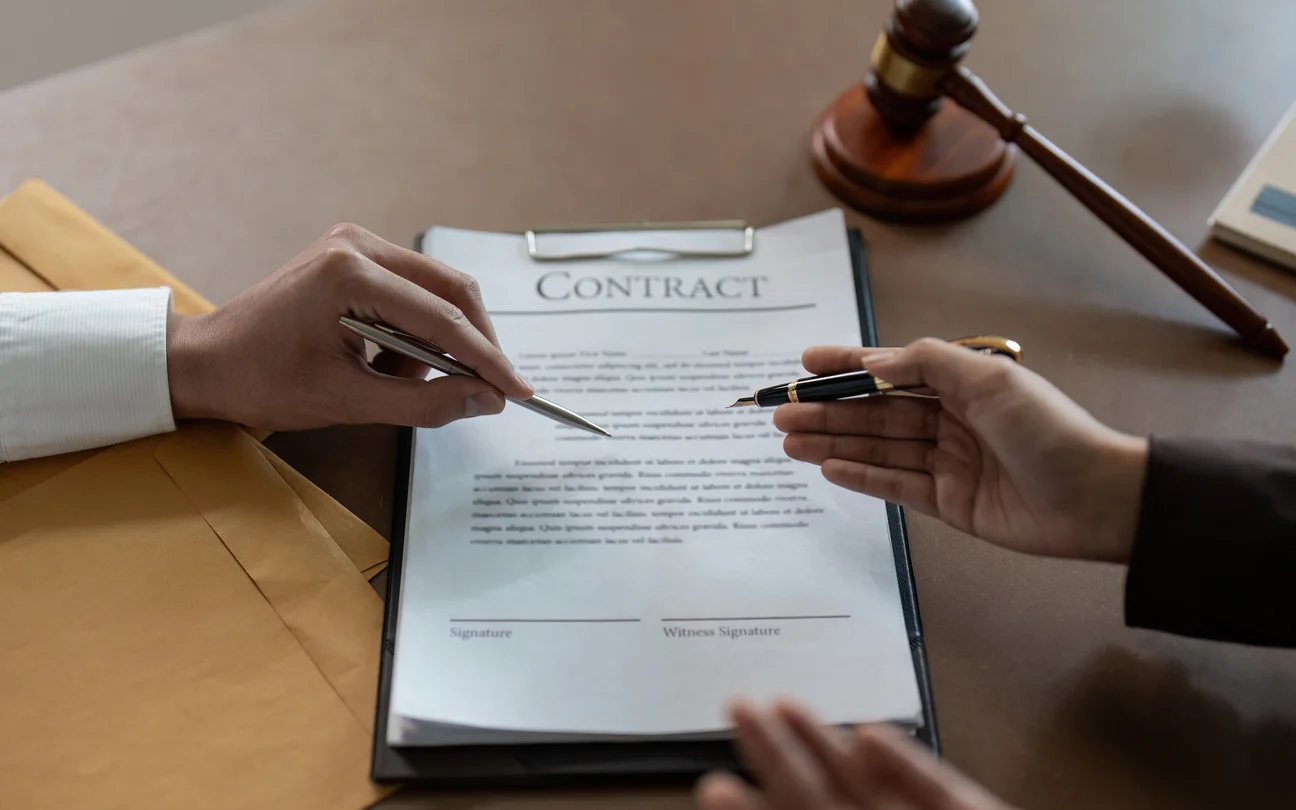
In real estate, the ink on your contract isn’t the end of the deal - it’s the beginning of the rules you’ve just agreed to live by.
Buried deep in purchase agreements, builder contracts, leases, and even realtor listing agreements, there’s often a clause most people skip right over:
“All disputes shall be resolved by binding arbitration…”
It looks harmless. In fact, sellers, developers, or brokerages might even pitch it as a good thing, promising it will “save everyone time and money.”
Sometimes, that’s true.
Sometimes, it’s the opposite - locking you into a costly, private process with limited rights and no real appeal, even if the arbitrator gets it wrong.
In the real estate world, disputes aren’t theoretical. They’re about big money and high stakes:
- A buyer discovers undisclosed water damage after closing.
- A seller claims the buyer improperly backed out and wants to keep the deposit.
- A commercial tenant refuses to pay rent, citing building code violations.
- An agent’s commission is withheld after a heated transaction.
When these conflicts hit, the clause you barely noticed can dictate how you fight, where you fight, who’s deciding, and how much it will cost.
This guide will walk you through what arbitration in real estate really means, where it appears, when it can help - and when it can cost you more than you bargained for. Learn more about 20 things to know to succeed in arbitration.
What Is Real Estate Arbitration?
Arbitration in real estate is a private dispute resolution process where a neutral third party - the arbitrator - hears both sides of a property-related disagreement and issues a decision. Learn more about common arbitration myths debunked.
Unlike court cases, arbitration doesn’t happen in a public courtroom with a judge and jury. Instead:
- It might take place in a conference room at a law office.
- It might be handled virtually over a video conference.
- It often happens under the umbrella of a real estate association, like a local REALTORS® board, or a commercial arbitration body such as the American Arbitration Association (AAA).
Typical Uses in Real Estate:
- Buyer–Seller Contract Disputes – e.g., a failed closing, disputes over earnest money deposits, or allegations of nondisclosure.
- Agent/Broker Commission Conflicts – e.g., competing commission claims between agents in dual or co‑brokered transactions.
- Construction Defects – e.g., new home buyers alleging faulty workmanship or code violations against a developer.
- Landlord–Tenant Disputes – especially in commercial leases that mandate arbitration for rent, maintenance, or renewal conflicts.
- HOA Disputes – over dues collection, rule enforcement, or property maintenance.
How It Differs from Mediation or Litigation:
- Mediation: Facilitated negotiation, non-binding. No decision is imposed; parties voluntarily settle. Learn more about Hot Topic VI: Round 2 on Schein and arbitrability.
- Litigation: Court-based, public proceedings with full appeals available; slower and more formal.
- Arbitration: Private, formal hearing with an arbitrator making the decision. Usually binding, meaning once it’s decided, you must comply.
Reality Check:
Because property disputes often involve significant financial stakes and technical details like appraisals, zoning, and inspections, many arbitration rules encourage selecting arbitrators with real estate law or industry experience. That can be an asset - or a disadvantage - depending on who’s picking the arbitrator.
Free consultation
Facing forced arbitration?
Know your rights. Bennett Legal can help you navigate the process.
Mandatory Arbitration in Real Estate Contracts
Mandatory arbitration means you don’t get to choose whether to go to arbitration later. You commit to it up front, often before a dispute is even on the horizon.
Where You’ll See It in Real Estate Documents:
- Residential Purchase & Sale Agreements – Especially in contracts using standard forms from state realtor associations.
- New Construction Agreements – Builders frequently insert binding arbitration clauses to avoid court battles over construction defects or warranty claims.
- Commercial & Residential Leases – Particularly in high-value or corporate landlord situations.
- Exclusive Listing Agreements – Between sellers and brokers, often to resolve commission disputes.
- HOA Bylaws or Covenants – May require arbitration for owner–association conflicts.
What Happens When a Dispute Hits?
If a dispute arises - say, a buyer claims undisclosed mold, or a seller refuses to release escrow - neither party can file a lawsuit in court right away. The arbitration clause will require:
- Filing a claim with the designated arbitration forum (e.g., AAA, JAMS, or a local REALTORS® association).
- Following their specific procedural rules.
- Accepting that the arbitrator’s decision is final (in binding clauses) with no real appeal.
Why Real Estate Contracts Use It:
- Industry Preference: Many local realtor boards and national franchises see arbitration as a faster, more “professional” process that keeps disputes out of the public eye.
- Confidentiality: Arbitration doesn’t put sales disputes on a public court record - helping avoid reputational harm for agents, sellers, or developers.
- Perceived Efficiency: Companies can streamline repeat issues, like commission fights or buyer cancellation penalties.
Example – The Post‑Closing Surprise:
- You buy a home.
- Six months later, you discover extensive foundation issues the seller didn’t disclose.
- You want to sue in court for damages.
- Surprise:
- Your purchase agreement requires binding arbitration with a local real estate board arbitrator - and you must split the arbitrator’s hourly fees.
- You’ve now lost access to a jury, may have limited discovery, and the process could cost you nearly as much in fees as court litigation.
Key Takeaway for Buyers & Sellers:
Mandatory arbitration in real estate contracts isn’t unusual - but its fairness depends entirely on the clause’s terms. The who, where, and how of the arbitration process can either level the playing field … or tilt it from the start.
How a Real Estate Arbitration Process Works
Even though arbitration is “private” compared to court, it still follows an organized sequence.
Understanding the flow helps you anticipate deadlines and expenses.
Step 1: Filing the Claim
One party (buyer, seller, broker, landlord, HOA, etc.) files a written demand for arbitration with the forum named in the contract - often a local REALTORS® association, AAA Real Estate Panel, or another designated arbitration body.
This demand outlines:
- The dispute (e.g., failure to close, disclosure violations, commission disputes).
- The relief sought (e.g., damages, escrow release, contract termination).
- The documents or evidence supporting the claim.
Step 2: Arbitrator Selection
The arbitration body provides a list of potential neutrals.
Real estate twist: Many lists include professionals with real estate law or brokerage backgrounds. While expertise helps in understanding the issues, be aware of possible repeat-player bias if the arbitrator regularly decides cases connected to large brokerages, developers, or property management companies.
Step 3: Preliminary Hearing
A scheduling conference sets:
- Timelines for exchanging evidence.
- Scope of discovery (often more limited than court).
- Hearing dates.
- Procedural rules (in-person, virtual, or documents-only).
Step 4: Discovery / Evidence Exchange
This is where parties exchange:
- Contracts, inspection reports, closing statements.
- Photos and videos of property conditions.
- Emails and messages between parties.
- Expert appraisals or engineering assessments. Note: Real estate arbitration often limits depositions - which can make it harder to fully investigate hidden defects.
Step 5: The Arbitration Hearing
Similar to a trial: opening statements, witness testimony, expert reports, visual evidence (e.g., property defect photos, market value charts), and closing arguments.
It’s less formal than court but just as decisive.
Step 6: Issuance of the Award
The arbitrator delivers a written decision - often within 14–30 days.
If binding, this award is final and enforceable in court.
Step 7: Enforcement
If a party refuses to comply:
- The prevailing party can file the award in court.
- The court can then order compliance or judgment collection.
Real Estate Example:
A buyer files for arbitration against a developer for water intrusion damage. The chosen arbitrator has handled many similar cases for that same developer. Without understanding or negotiating the clause beforehand, the buyer faces an uphill battle from day one - even with strong inspection evidence.
Pros of Arbitration in Real Estate
If structured fairly, arbitration offers real advantages in property disputes.
Faster Resolution
Closings, commission disputes, and property defect claims can be resolved in months instead of years.
Industry Expertise
Arbitrators often have real estate law, construction, or brokerage backgrounds - meaning they can understand complex contract terms, local property market dynamics, and inspection jargon.
Confidentiality
Sensitive disputes - like inspection failures, appraisal disagreements, or title issues - stay out of public court records, protecting reputations (important for agents, sellers, and developers).
Flexibility
Schedules can be set around parties’ availability, and hearings can be tailored to fit the dispute - from half‑day virtual sessions to full multi‑day property defect reviews.
Pro Tip 💡: These benefits only matter if both parties have equal procedural footing. Look for clauses that share arbitrator selection rights, provide sufficient discovery, and allocate costs fairly.
Cons & Risks of Arbitration in Real Estate
Unfortunately, real estate arbitration can also create expensive traps if the contract terms are one-sided.
Potential Arbitrator Bias
If the arbitrator has ongoing ties to a brokerage, developer, or property association, impartiality can be compromised.
High Upfront Costs
Arbitrator hourly rates, filing fees, and admin costs are often due at the start - a shock for parties accustomed to relatively low court filing fees.
Limited Discovery
Without robust evidence rights, you may struggle to prove hidden defects or misrepresentation - especially if key witnesses can’t be compelled to testify.
Restricted Remedies
Some clauses cap damages or limit certain remedies (e.g., rescission, voiding the sale contract), reducing your options versus what court might allow.
No Typical Appeal
Binding arbitration usually means you accept the decision, even if errors were made in interpreting real estate law.
Real Estate Example:
A tenant claims a commercial landlord failed to address code violations. The lease’s arbitration clause bans recovery of punitive damages and limits witness depositions. Even if the tenant proves the violation, the recovery may not offset the losses - costs they could have pursued in court.
Real Estate Arbitration Costs
Arbitration is often sold as “cheaper than court,” but in real estate disputes, the price tag can surprise you.
Typical Costs Include:
- Filing Fees:
- REALTORS® association arbitration: $500–$1,500 depending on claim size.
- AAA Real Estate Panel: $1,000–$3,000+.
- Arbitrator’s Hourly/Daily Rate:
- $250–$800 per hour or $2,000–$5,000+ per day for experienced real estate arbitrators.
- Administrative Fees: Charged by the arbitration body for case management.
- Venue Costs: Rental fees for hearing rooms in neutral locations.
- Expert Witness Fees: Inspectors, engineers, appraisers - $100–$300+ per hour.
- Document Production: Copying, scanning, or preparing exhibits for presentation.
Who Pays?
- Cost-Splitting: Most real estate clauses split fees evenly between buyer and seller (or landlord/tenant).
- Loser Pays: Some contracts provide that the losing party covers both sides’ costs - risky if the claim fails.
Pro Tip 💡: Before filing, calculate whether the likely recovery outweighs your arbitration costs. Especially in smaller disputes, the math matters.
5 Common Mistakes to Avoid
Real estate arbitration can protect your interests - but only if you avoid these costly errors.
Signing Unreviewed Clauses
Many buyers, tenants, and even agents agree to arbitration clauses without reading them - missing venue, cost, and remedy restrictions.
Ignoring Venue Rules
Agreeing to arbitrate in a distant city can add thousands in travel costs - plus logistical headaches for witnesses.
Overlooking Cost-Shifting Terms
“Loser pays” clauses can bankrupt smaller parties who take valid disputes to arbitration and lose.
Failing to Preserve Evidence Early
Photos, inspection notes, and emails should be saved from day one of the real estate transaction. Waiting until there’s a dispute risks losing crucial proof.
Skipping Expert Support
Trying to prove property defects or valuation disputes without expert testimony often weakens your case.
How to Protect Yourself
Whether you’re signing a purchase agreement or stepping into a lease negotiation, here’s how to make arbitration work fairly for you:
Negotiate Before You Sign
- Mutual Arbitrator Selection to avoid one-sided control.
- Reasonable Venue close to the property or parties.
- Clear Costs with caps or fair splits.
- Adequate Discovery so you can investigate and prove your claims.
- Preserve Remedies available under local real estate law.
Document Everything
- Maintain a transaction file - contracts, inspection reports, emails, texts, receipts.
- Secure all pre-closing and post-closing communications with timestamps.
Consult a Real Estate Dispute Attorney
- Review arbitration clauses before you sign.
- Evaluate strengths and weaknesses of your potential case.
- Identify risks for cost, venue, and remedies.
Pro Tip 💡: The best time to “fix” an unfair arbitration clause is before a dispute arises. After a conflict starts, negotiating terms becomes nearly impossible.
Real Estate Arbitration- On Your Terms
Arbitration in real estate deals can be fast, private, and handled by industry experts - if the clause is fair and the process balanced.
The danger lies in signing away rights without realizing it - venue, discovery limits, restricted remedies, or steep “loser pays” rules.
Before you close on a property, renew a lease, or sign a listing agreement, read the arbitration clause like your future depends on it - because in a dispute, it will.
We’ve represented buyers, sellers, landlords, tenants, brokers, and HOAs in real estate disputes - from earnest money battles to multi‑million‑dollar construction defect claims.
Our services include:
- Contract Review: Spotting hidden arbitration risks.
- Negotiating Better Terms: Venue, costs, arbitrator selection.
- Strategic Case Preparation: Evidence files, expert witness coordination, hearing presentations.
- Cost Control: Keeping arbitration within budget while delivering strong advocacy.
We fight to make sure arbitration in real estate is a fair process, not a built‑in disadvantage.
Whether you’re reviewing a contract or facing a real estate dispute, we strive to help you negotiate fair arbitration terms, control costs, and build a strong case from day one.
Because in property disputes, the fine print can cost you thousands - or save you them.
Related Reading
Free consultation
Facing forced arbitration?
Know your rights. Bennett Legal can help you navigate the process.