If you need help, learn more about our Car Accident.
Hey folks, Tall Chuck here.

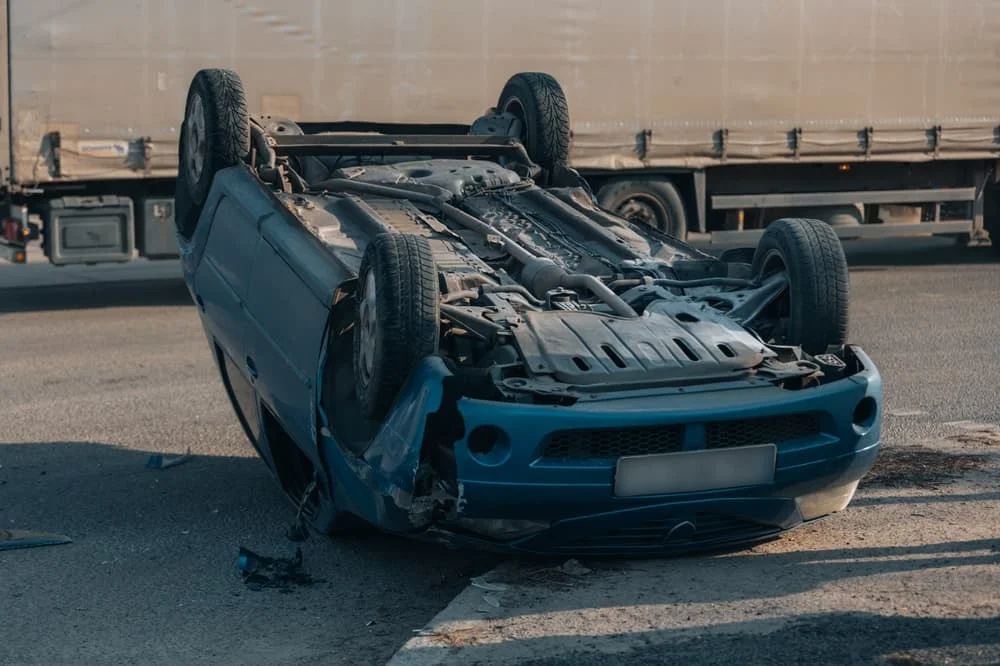
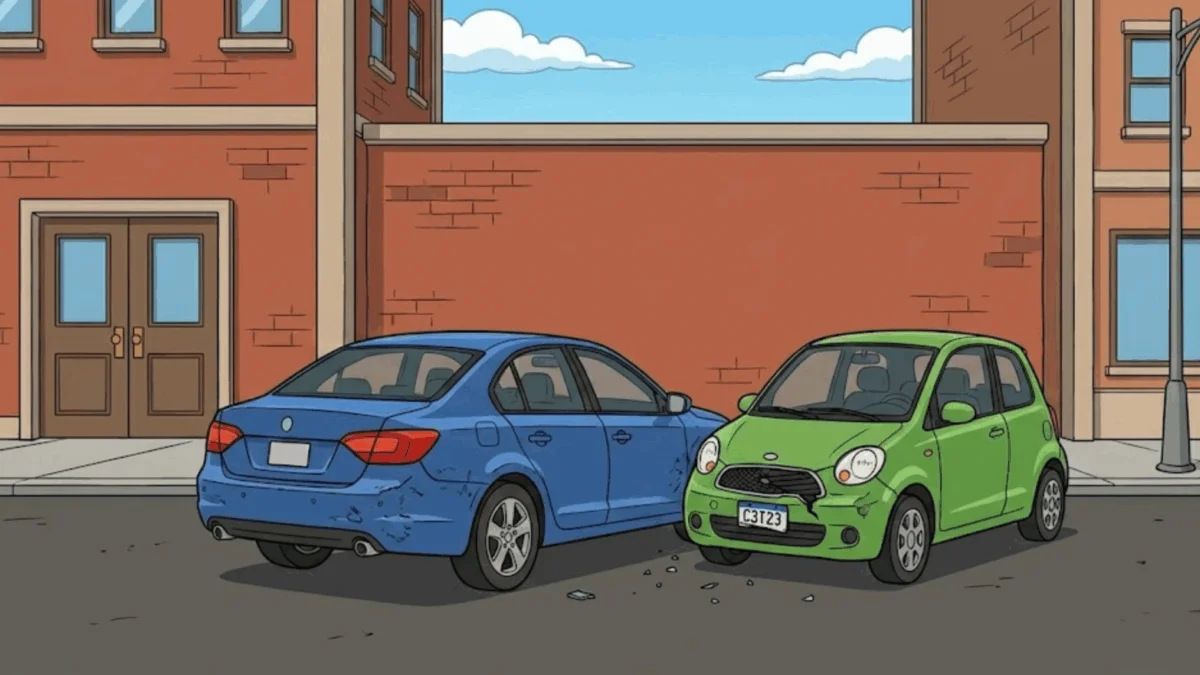
I can’t count the number of times I’ve heard someone say, “It was just a fender bender - no one was hurt.” From where I’m standing (about seven feet up), that phrase lands about like those bumpers did - light on impact, heavy on consequences later.
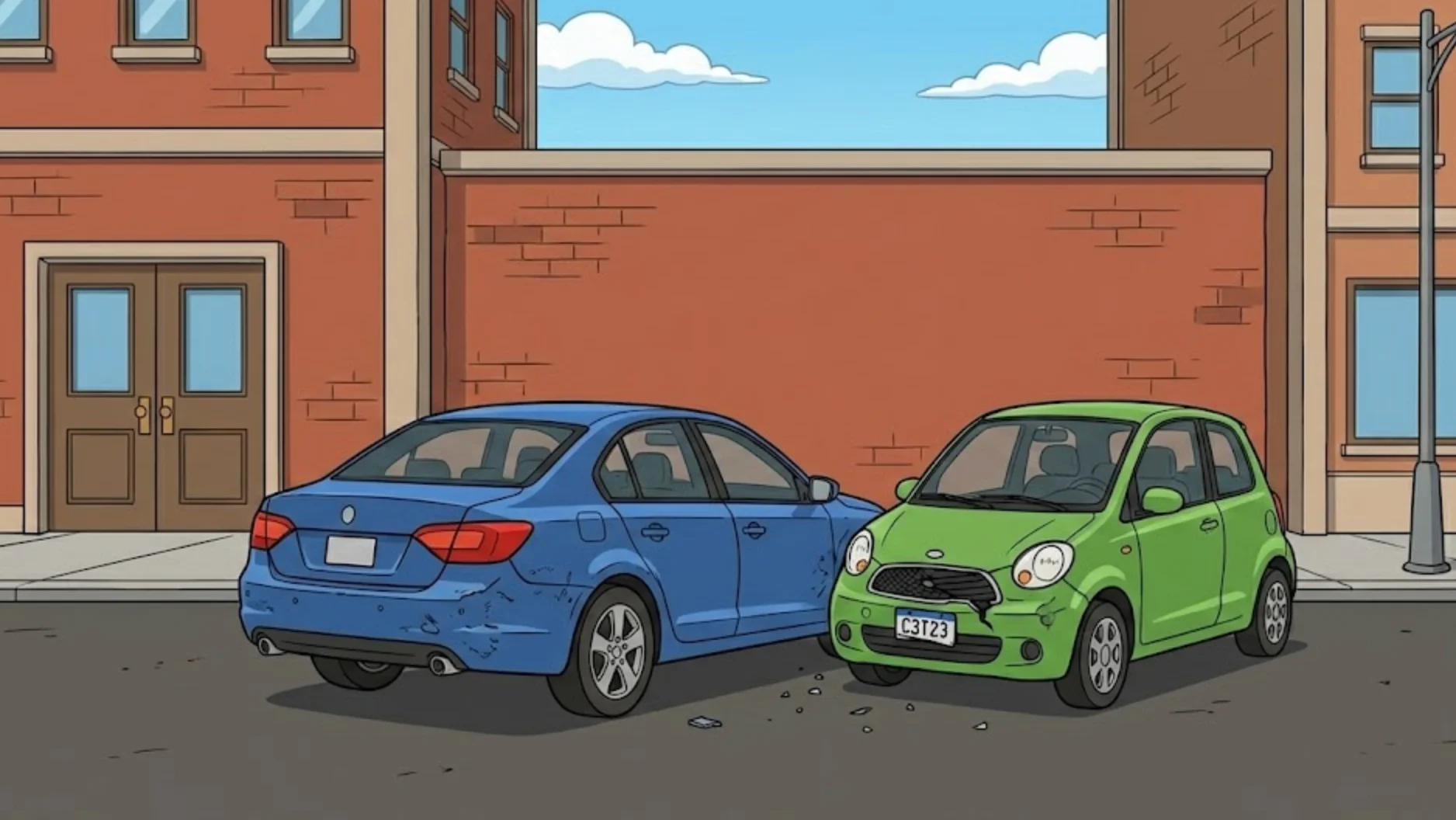
At first, everything seemed fine. The cars barely look scratched. Everyone’s walking around, swapping insurance info. You decline the ambulance because you feel more embarrassed than injured.
Then a week later, your neck locks up. Your lower back feels like a rusted hinge. Suddenly, that “little bump” becomes a very big deal.
Here’s what I see over and over: insurance companies jump on low property damage to argue “no injury.” They show clean bumper photos, minor paint transfer, maybe a $700 repair bill, and claim no real person could be seriously hurt. They treat physics like a PR tool - dismissing your pain before you even feel it. Learn more about your rights as a passenger in a car accident.
The truth? The body doesn’t care how the metal looks. Impact energy travels through the vehicle, through the seat, and into you. Your spine, muscles, and ligaments absorb that shock. That’s why you felt fine on day one and wrecked by day five.
Why Low Speed Doesn’t Mean Low Harm
Physics vs. the Human Body
Even slow-speed collisions send hundreds of pounds of force through a vehicle frame. The car absorbs part of it. The rest transfers to you. Ligaments stretch. Muscles snap tight to brace. Vertebrae compress like a stack of coins.
Medical Reality
Doctors know these injuries often hide. Soft-tissue trauma and whiplash may not surface for hours or days as inflammation builds. By then, the insurer is already saying the crash was “too minor to matter.”
Common Symptoms
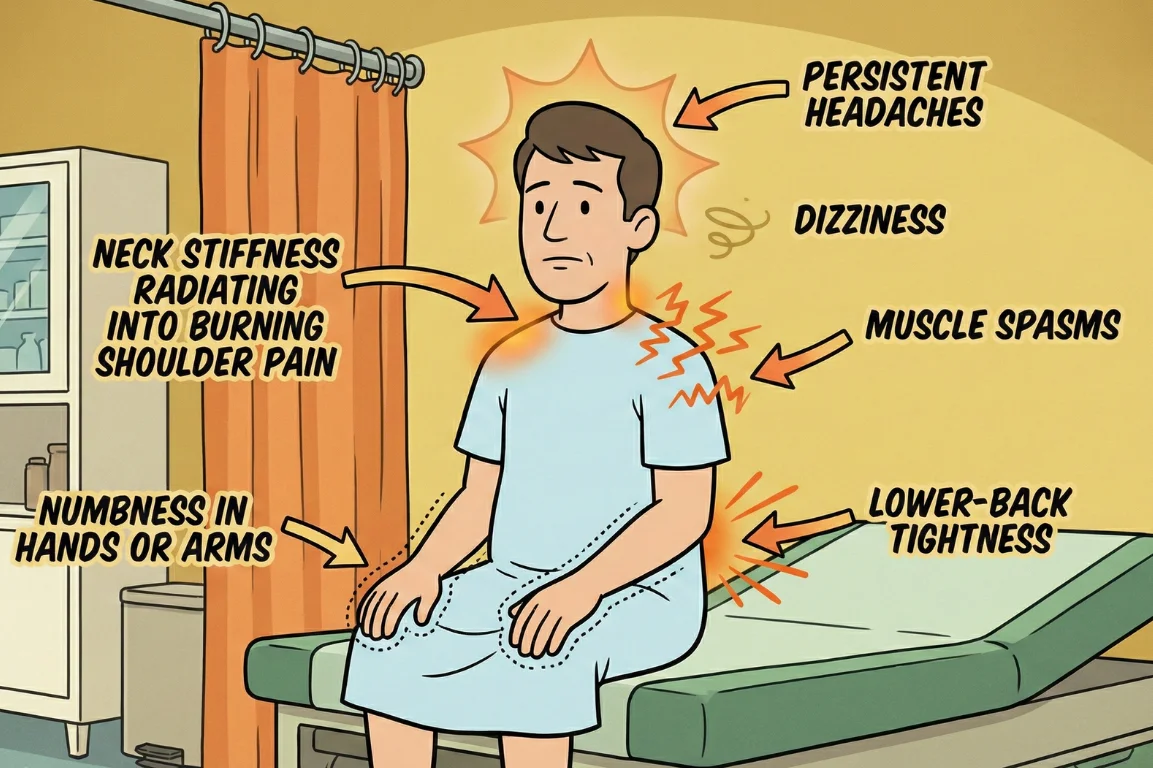
- Neck stiffness that becomes burning shoulder pain
- Numbness in hands or arms
- Persistent headaches
- Muscle spasms
- Dizziness
- Lower-back tightness
Tall Chuck Translation: Cars bounce back from scratches. Necks don’t. Metal was made for impact - you weren’t.
Free consultation
Injured in a car accident?
Get the compensation you deserve. Free case evaluation.
Why Insurance Companies Love Low-Impact Excuses
When you’re hurting and confused, insurers see opportunity. Adjusters treat small crashes like simple math:
- No visible damage = no injury
- Delta-V under 10 mph = no compensation
- Impact “improbable” to cause harm
Then comes the pressure. Fast, tiny settlements. Symptoms reframed as “soreness.” The goal is to get your signature before the real pain shows up. Learn more about proving vicarious liability in truck accident cases.
From my seven-foot view, I can tell you this: those numbers measure metal, not muscle. Body physics beats car physics every time.
Tall Chuck Pro Tip: Insurers count scratches. You feel spasms.
The Hidden Injury Timeline - What Doctors See
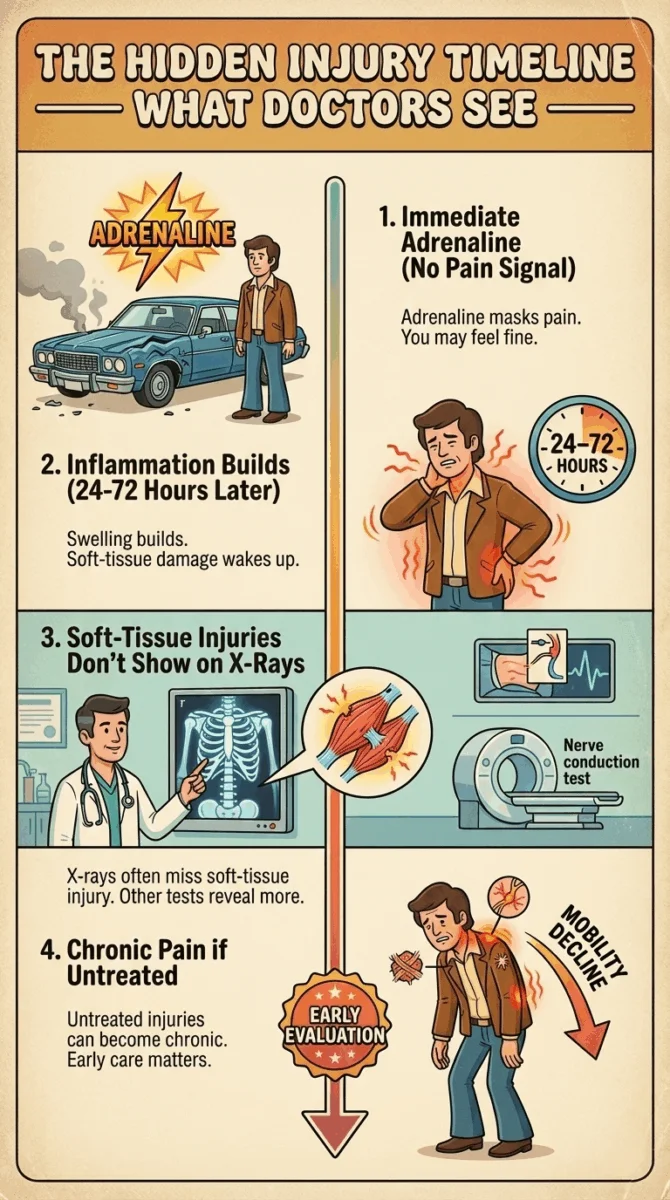
1. Immediate Adrenaline (No Pain Signal)
Right after a crash, adrenaline floods your system. It shuts down pain. You walk away thinking you’re fine.
2. Inflammation Builds (24–72 Hours Later)
As adrenaline fades, swelling starts. That stiffness in your neck or back is soft-tissue damage waking up.
3. Soft-Tissue Injuries Don’t Show on X-Rays
Basic imaging often misses ligament and muscle tears. MRI or nerve testing tells the real story.
4. Chronic Pain if Untreated
Ignore these injuries and they settle in. Scar tissue forms. Nerve pain spreads. Mobility declines. That’s why early medical evaluation matters. “Toughing it out” sounds brave - but it’s how minor wrecks turn into major medical bills.
Tall Chuck Translation: Pain shows up late - but it always shows up. Meet it with a doctor, not an adjuster.
How to Prove Real Injuries in Small Wrecks
Insurance won’t take your word for it. You have to document it clearly and consistently.
Step 1 - Document Everything
Photograph the scene, vehicle damage, and any visible bruises or marks. Small details support big claims.
Step 2 - Get a Full Medical Workup
Don’t rely on urgent-care notes alone. Request MRI or specialist evaluations to capture soft-tissue damage early.
Step 3 - Track Daily Symptoms
Use a journal or voice notes. Record pain, sleep issues, lifting difficulty, or driving discomfort. Consistency turns pain into evidence.
Step 4 - Connect the Dots
Your lawyer and medical experts explain how force moved through your body and why it hurts now - in plain language jurors understand.
Bring to your lawyer:
- Accident photos
- Repair estimates
- Medical records
- Pain journal
- Witness contacts
- Insurance correspondence
Tall Chuck Translation: You don’t need fancy words. You need clean records that tell the truth.
Tall Chuck’s guide: Ask our team for the low-impact injury guide during your free case review.
Common Insurance Arguments - and How We Counter Them
| Insurance Claim | Reality |
| “No vehicle damage, no injury.” | Energy transfers to occupants even without visible damage. Bodies aren’t bumpers. |
| “You didn’t go to the ER that day.” | Adrenaline masks pain. Delayed treatment is medically normal. |
| “You already had a bad back.” | Aggravated conditions are compensable injuries. |
| “Minor crash means minor settlement.” | Case value comes from life impact, not metal damage. |
Tall Chuck’s Take: We bring X-rays to a physics argument. It’s hard to debate proof that hurts in black and white.
How Bennett Legal Fights for Low-Impact Victims
When an accident looks “minor,” most folks assume the system will be reasonable.
That’s when the system gets mean.
At Bennett Legal, we know the hardest fights often come from the smallest crashes. Insurance carriers weaponize the phrase “low impact” to cast doubt on your pain and trim their payouts.
Our job is to change the conversation - from dented bumpers to damaged lives - and build the proof that forces fairness.
1. We Start Fast, Before Evidence Fades
- We get investigators on the scene while skid marks are still fresh.
- Photographs, traffic-camera footage, 911 calls, and vehicle crash-data downloads (the “black box”) establish exactly what happened before anyone can rewrite it.
- Every document we preserve early keeps the truth from getting paved over later.
2. We Secure the Science
- Low-speed collisions generate real forces.
- We partner with biomechanical engineers and accident-reconstruction experts who demonstrate how a five-mile-per-hour bump can damage ligaments, discs, and soft tissue.
- Their models and diagrams translate invisible injuries into courtroom-ready evidence.
3. We Elevate Medical Voices
- Emergency-room charts don’t tell the full story.
- We work directly with treating physicians, orthopedists, and rehabilitation specialists to document inflammation, range-of-motion loss, and day-to-day limitations.
- These voices matter when insurers try to dismiss injuries as “just soreness.”
4. We Refuse Premature Settlements
- Insurers push fast checks to close cases before real pain appears.
- We shut down pressure tactics and make sure nothing is signed until doctors fully understand the injury timeline.
- Once insurers realize we won’t rush, negotiations change quickly.
5. We Tell Your Story in Numbers That Count
- We translate treatment plans, therapy costs, missed work, and disrupted sleep into the data insurers respect most - hard numbers supported by human proof.
- Fair compensation isn’t about what your bumper cost. It’s about what the crash took from your life.
Even a gentle nudge at a stoplight can reroute your days. What looks insignificant on a repair estimate often blindsides families with months of pain and medical bills.
From where I’m standing, justice is about gravity - not speed.
When a big insurer uses a small accident to shrink your worth, we stand tall enough to see through it. Don’t let the phrase “fender bender” convince you your pain doesn’t count.
👉 Contact Bennett Legal for a free, no‑pressure case review today.
Related Reading
Free consultation
Injured in a car accident?
Get the compensation you deserve. Free case evaluation.