You've just had a car wreck. The adrenaline is still pumping. Your hands are shaking. You pick up your phone. And that's when everything changes.
That first call you make—whether to your insurance company or a lawyer—could make or break your case. Not in a dramatic way. In a practical, your-money-in-the-bank way.
Let me tell you why the order matters. And what happens when you get it wrong.
Free consultation
Been in a Car Wreck?
Get Legal Advice Before You Call Insurance
Table of Contents
- Real Talk: Insurance Is Not Your Friend After a Wreck
- What Happens When You Call Insurance First
- Back Porch Story Time: How One Call Hurt a Good Case
- Why Calling a Lawyer First Protects You
- When You Have to Contact Insurance Early (And How to Do It Safely)
- Recorded Statements After a Car Wreck: What's Really Going On
- So… Call Insurance or Lawyer First?
- Red Flags That Mean "Call a Lawyer First"
Real Talk: Insurance Is Not Your Friend After a Wreck
I'm going to say something that might sound harsh: your insurance company is not your friend.
That's not because they're evil. It's not even because they don't want to help you. It's because their incentive is to pay you as little as possible.
That's their job. They're a business. They have shareholders. They have underwriters. They have loss ratios to manage. And you—right now, sitting in your car after a wreck—you are a loss in their P&L.
They will be polite. They will be professional. They might even sound sympathetic. But every word they say, every question they ask, every bit of information they gather, is designed to protect their bottom line, not yours.
And the first conversation you have with them? That's the most dangerous one. Because you haven't had time to think. You haven't talked to a lawyer. You don't know what you should say or shouldn't say.
What Happens When You Call Insurance First
You call your insurance company. Within 30 minutes, you're on the phone with a claims adjuster.
They ask you what happened. You explain. You're still shaky. You're still in pain, maybe. You might not remember every detail clearly. You might contradict yourself slightly. You might downplay your injuries because you're in shock and they don't feel as bad right now as they will tomorrow.
The adjuster is taking notes. Everything you say is recorded. Everything is documented.
Then they ask: "Do you have any prior injuries to the area that was hurt?"
Or: "Had you been experiencing any neck pain before the accident?"
Or: "Have you seen a doctor about this yet?"
Innocent questions. But here's the trap: anything you say can and will be used to reduce what they owe you. If you mention an old shoulder injury, they'll use that. If you say you haven't seen a doctor yet, they'll say your injuries couldn't have been that serious. If you downplay your pain, they'll point to that.
You just gave them ammunition. Without meaning to.
And they haven't given you a dime yet.
Back Porch Story Time: How One Call Hurt a Good Case
I had a client once. Good person. Honest. The kind of person who tells the truth, even when it's not convenient.
She got hit at a red light. Not her fault. Clear liability.
But instead of calling a lawyer first, she called her insurance company first. She was a longtime customer. She trusted them. She thought that's what you're supposed to do.
On that first call, when they asked about prior injuries, she mentioned—honestly—that she'd had some lower back pain years ago. Not from a car accident. Just from getting older. It had resolved. She hadn't thought about it in five years.
But she mentioned it.
Fast forward six months. She's in real pain now. The accident really did hurt her. She's got imaging that shows disc herniations. She's got medical bills. She's got lost wages. Real damages.
But the insurance company's defense? "She had pre-existing back pain. We don't know how much of this is from our accident and how much is from the prior condition."
That conversation she had on day one—the one she thought was just a simple claim report—became the foundation of their defense strategy.
We still got her a settlement. But it was less. Significantly less. Because of that one phone call.
That's the power of that first conversation.
Why Calling a Lawyer First Protects You
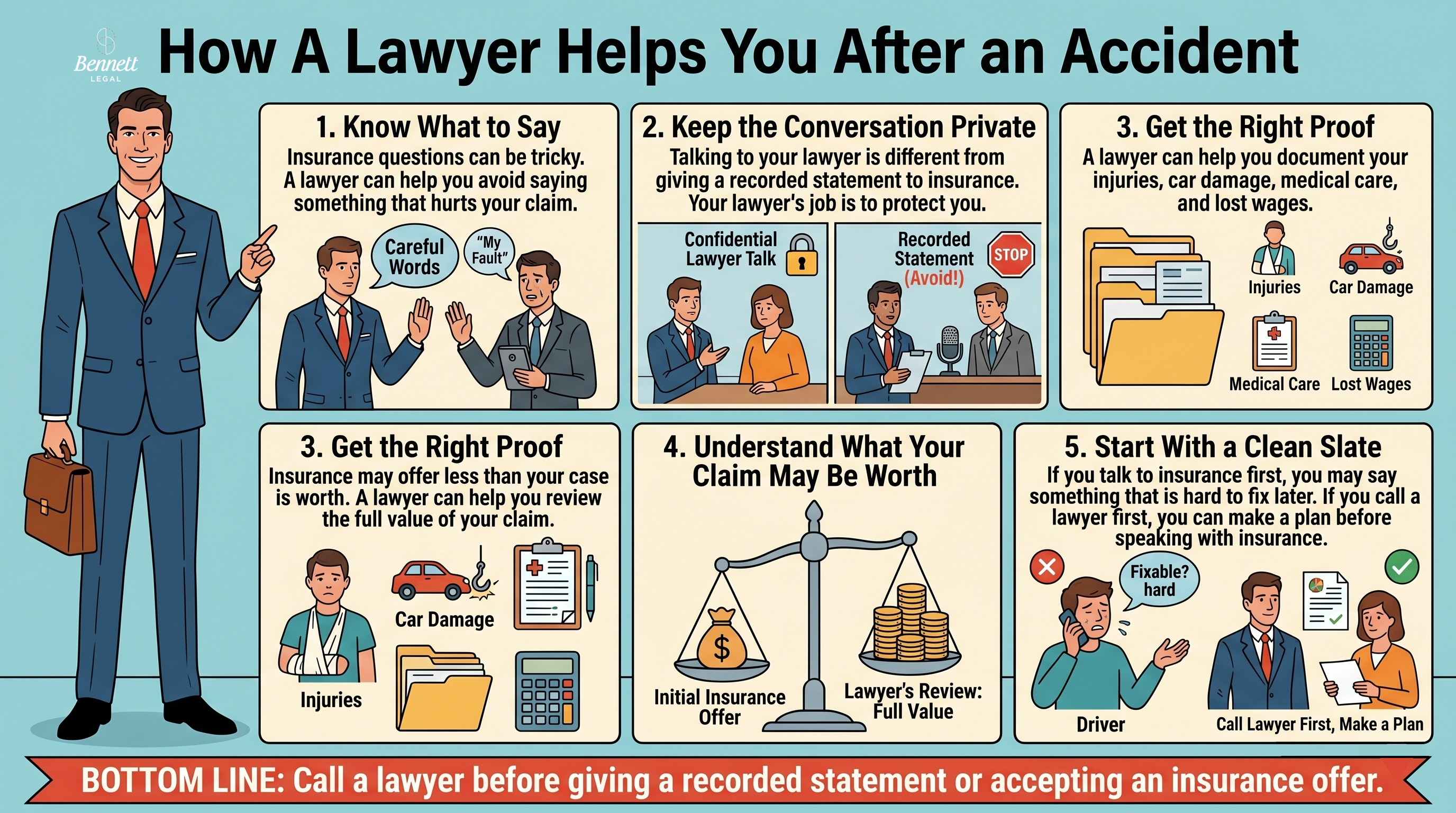 How a Lawyer Helps You After an Accident
When you call a lawyer first, everything changes.
First, a lawyer knows what you should and shouldn't say. A lawyer knows the traps. A lawyer knows what information helps you and what information hurts you.
Second, everything you tell a lawyer is protected by attorney-client privilege. When you talk to me, you're not making a recorded statement that the insurance company can use against you later. You're having a confidential conversation with someone whose job is to protect your interests, not theirs.
Third, a lawyer can help you gather the right information before you talk to insurance. We can help you document your injuries properly. We can advise you on what to say and what not to say. We can make sure that when you do talk to insurance, you're protected.
Fourth—and this is important—a lawyer can often get you more money. Because we know how to value your claim. We know what your case is worth. And we know how to negotiate with insurance companies who are trying to lowball you.
If you call a lawyer after you've already given a damaging statement to insurance, we're working uphill. We're trying to overcome something you've already said.
If you call a lawyer first, we're working with a clean slate. We're controlling the narrative from day one.
When You Have to Contact Insurance Early (And How to Do It Safely)
Here's the reality: sometimes you have to contact your insurance company right away.
Maybe your car is totaled and blocking traffic. Maybe you need a police report and your insurance company handles that. Maybe your state law requires it.
Fine. But do it the right way.
First, call a lawyer before you call insurance. Or call a lawyer at the same time. Get legal advice before you make that statement.
Second, if you do have to call insurance, keep it simple. Say this and nothing more:
"I was in an accident. I'm safe. My information is [give your policy number]. I'm going to have my attorney contact you with the details."
That's it. Don't explain. Don't answer questions. Don't give a statement. Don't say anything about how the accident happened, how you're feeling, or anything else.
You're legally required to notify them. You don't have to give them a full statement right away.
Then, after you've talked to a lawyer, your lawyer can handle the rest of the conversation. Your lawyer can filter what information gets to them. Your lawyer can make sure you're protected.
Recorded Statements After a Car Wreck: What's Really Going On
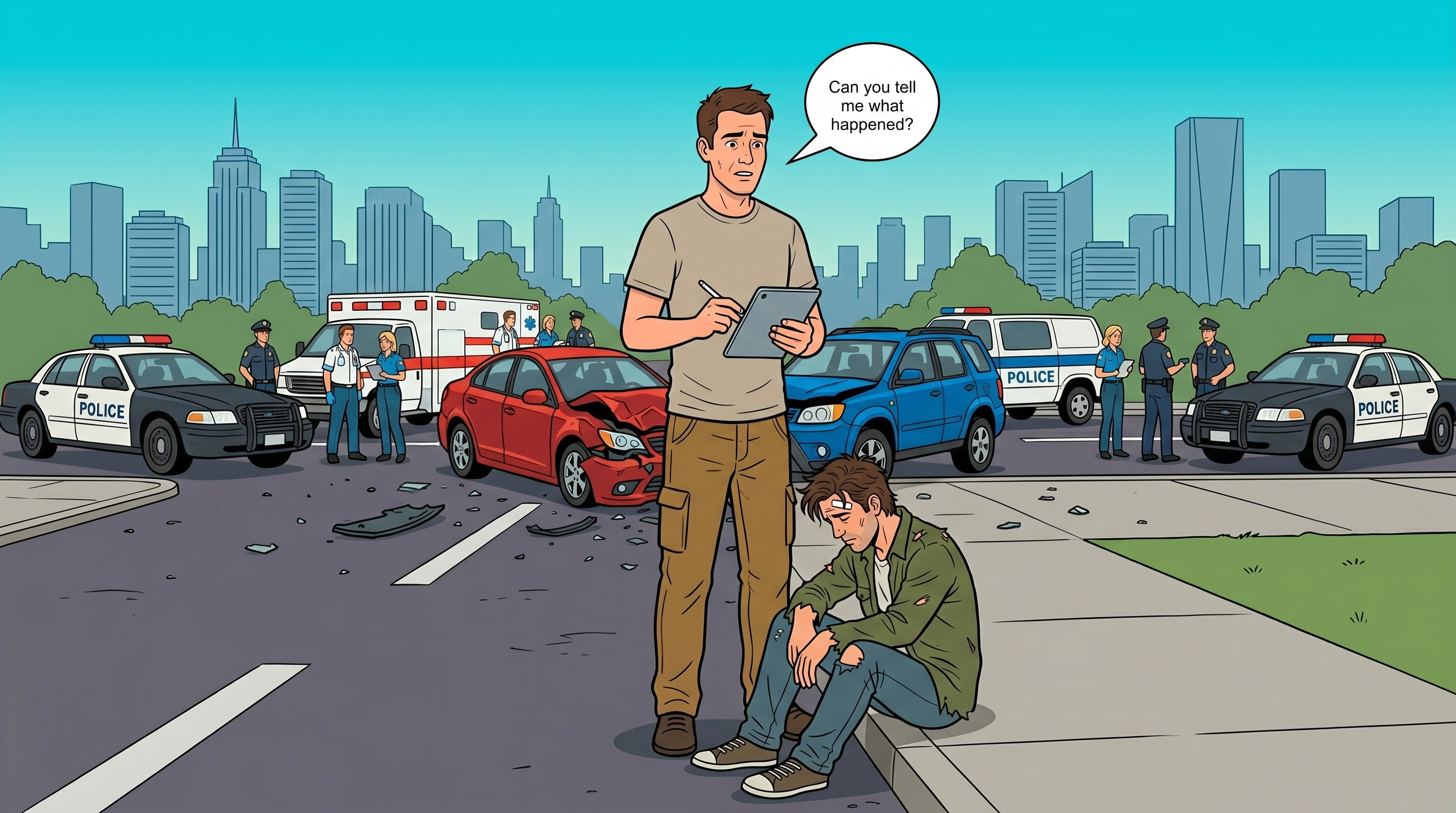 Insurance Adjuster Taking a Recorded Statement from Accident Victim
Insurance companies always ask for recorded statements. They make it sound routine. They make it sound like it's no big deal.
"We just need you to tell us what happened so we can process your claim faster."
But here's what's really going on: they're creating a permanent record of everything you say. A record they can use to contradict you later. A record they can replay in court.
Recorded statements are not your friend. Not ever.
And here's the thing: you don't have to give one.
Your insurance policy requires you to cooperate with them. But "cooperate" doesn't mean "give them a recorded statement without legal representation."
If insurance asks for a recorded statement, say this: "I'm happy to cooperate, but any statement will be made with my attorney present."
Watch how fast they back down. It's remarkable.
Why? Because once a lawyer is in the room, the statement is less useful to them. Because a lawyer won't let you say things that hurt your case.
So… Call Insurance or Lawyer First?
Here's the bottom line: Call a lawyer first.
Not because lawyers are greedy or trying to drum up business. But because a lawyer's job is to protect you. Insurance company's job is to protect them.
You deserve someone in your corner from day one.
In this state, that first phone call could be the difference between getting what your case is worth and getting shortchanged.
Red Flags That Mean "Call a Lawyer First"
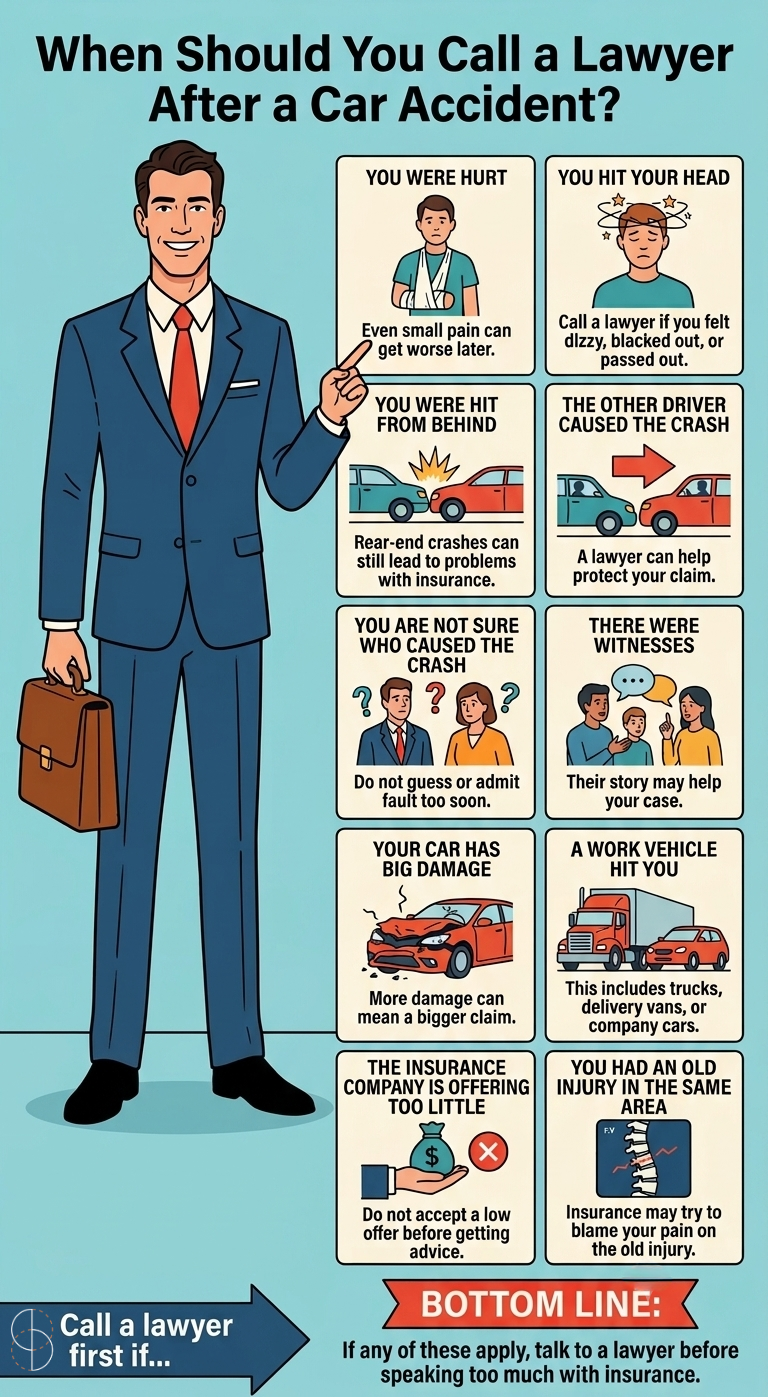
You should definitely call a lawyer first if:
- You were injured (even if it feels minor right now)
- The other car had a commercial driver (truck, delivery vehicle, etc.) — see our guide on commercial truck accidents
- The other driver was clearly at fault
- There were witnesses
- Your car sustained significant damage
- You hit your head or lost consciousness, even briefly
- You were hit from behind
- The other driver has insurance from a company known for lowballing claims
- You have a prior injury in the same area that was hurt
- You're not sure who was at fault
Honestly? If you're reading an article about whether to call a lawyer after a car wreck, you probably should call a lawyer.
That first conversation—the one you have in the next few hours—is the most important one. Make it count.
For a comprehensive overview of common car accident mistakes to avoid, check out our detailed guide. And if you need help with your personal injury claim, we're here to help.
Have you been in a car wreck and aren't sure what to do next? Call us. Let's talk about what happened and what your options are. The first conversation is free. Because we believe you deserve legal advice before you talk to insurance, not after.
Free consultation
Been in a Car Wreck?
Get Legal Advice Before You Call Insurance