DISCLAIMER: Injury laws and spine conditions vary by state and by individual. This article is general information, not legal advice. Don't rely on this alone to decide what to say, sign, or settle after a wreck. Talk to a qualified attorney in your state about your specific neck, back, or disc injury.
Hey folks — Tall Chuck here.
If you're reading this, odds are your neck or back has not been the same since a car wreck. Maybe an MRI showed a bulging disc or herniated disc. Maybe a doctor mentioned stenosis or "degenerative changes" and your heart sank.
And now you're hearing things like: "Those changes are just from age." Or: "A minor car wreck can't cause this kind of disc herniation."
You're probably wondering: "Can a car wreck cause a bulging disc?" or "Can a car wreck cause a herniated disc, or are they just blaming it on age?" or "How does this affect a disc herniation car accident settlement?"
From my seven-foot-tall view, I see this pattern a lot: The worse the MRI looks, the more the insurance company wants to call it old instead of caused by the wreck.
Table of Contents
- 11 Ways Insurance Companies Undermine Neck & Back Injury Claims
- How Bennett Legal Helps With Neck, Back, and Disc Injuries
- You're Not Broken for Asking to Be Made Whole
- Your Next Step If You Have Neck or Back Injuries After a Wreck
Free consultation
Neck or back pain after a car wreck?
Insurance companies have a playbook for disc and spine injuries. Bennett Legal knows every play. Free consultation — no fees unless we win.
11 Ways Insurance Companies Undermine Car Wreck Neck & Back Injuries
Let's walk through 11 common tactics in spinal injury cases — and how good lawyers push back so neck, back, and disc injuries get the respect they deserve.
1. "Your MRI Shows Degenerative Changes — That's Just Age"
 Doctor analyzing a back MRI after a car wreck
The Problem: After your MRI, the radiology report uses words like "degenerative disc disease," "disc bulges at multiple levels," or "facet arthropathy." The insurance company pounces: "This is just wear and tear. The wreck didn't cause your problems." This is the classic pre-existing degeneration car wreck argument.
How Lawyers Fight Back: We remind everyone that lots of people have degeneration with no pain. We focus on how you felt before the wreck (working, active, functional) vs. what changed after (new or much worse pain, new limits). We use treating doctors or experts to explain: "Degeneration is like dry wood. The wreck was the match. You don't blame the fire on the wood alone." Legally, the driver who hit you is responsible for aggravating a pre-existing condition.
2. "Can a Car Wreck Cause a Bulging Disc?" (Yes — and Here's How We Prove It)
The Problem: Insurers say: "Bulging discs are normal. They're not from the crash."
How Lawyers Fight Back: We bring together the mechanism of injury (rear-end impact, sudden flexion/extension), the timing of when neck/back pain started, and imaging showing bulges that match your symptoms. We use doctors to explain that even if some disc bulging was there before, the trauma of the wreck can worsen a mild bulge or turn a previously non-painful issue into a painful one.
3. "Can a Car Wreck Cause a Herniated Disc?" (The Insurance Company's Least Favorite Answer)
The Problem: You've got an MRI showing a disc herniation. Insurers argue your herniation is "chronic," unrelated to the wreck, or from something else (lifting, sports, work).
How Lawyers Fight Back: We connect the before/after — you didn't have radiating pain, weakness, or numbness before, now you do. We identify the herniation location that explains your symptoms (e.g., C5-C6 causing arm symptoms, L4-L5 causing leg symptoms). We get doctors on record saying the mechanism and timing are consistent with traumatic herniation.
Pro Tip from Tall Chuck Any time a doctor or adjuster tosses out "degenerative changes," ask: "Okay, but why did the pain start right after the wreck?" Age doesn't pick one random Tuesday to cripple you. Traumas do.
4. "Your Neck and Back Pain After the Car Wreck Is Just Whiplash — It'll Go Away"
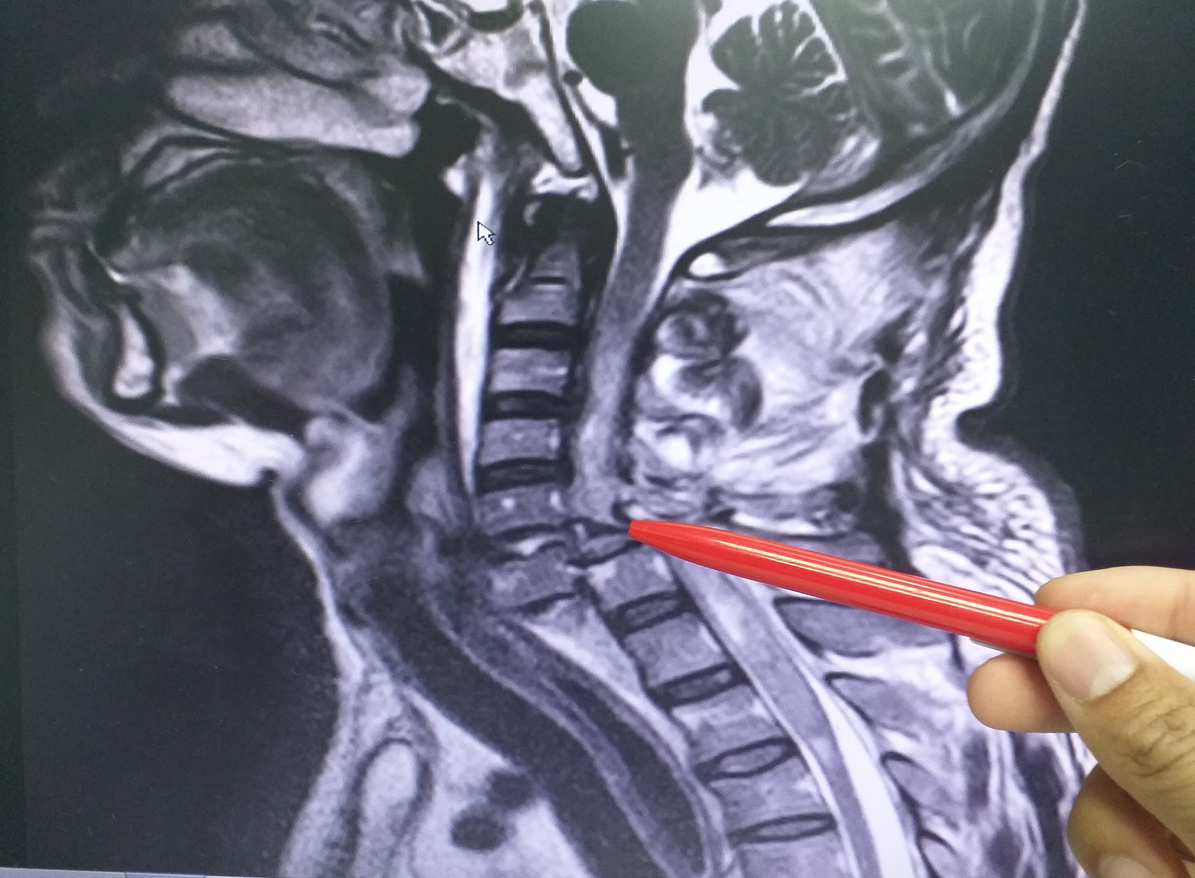 Neck injury after a car wreck
The Problem: You're still hurting weeks or months later. The defense says "It's just soft-tissue whiplash. That should have resolved."
How Lawyers Fight Back: We show that not all whiplash is the same — some strains lead to chronic pain. We document your treatment story (ER → doctor → therapy → pain management) and the functional limitations: sleep problems, work difficulty, loss of daily functions. Pain that limits your life for months is real damage, even if nothing is broken.
5. Gaps in Treatment: "If You Were Really Hurt, You'd Have Gone to the Doctor More"
The Problem: You missed appointments because of cost, work, or family obligations. Insurers seize on this: "They must not have been in serious pain."
How Lawyers Fight Back: We fill in the story — explain why there were gaps (no insurance, couldn't miss work, childcare, transportation). We emphasize that pain was continuous even if you weren't always in a doctor's office. We use pain diaries and testimony to show what you were dealing with outside clinic walls.
6. Pre-Existing Conditions: "You Were Already Messed Up"
The Problem: Maybe you had an old back injury or saw a chiropractor before. The defense argues: "They were already injured. We shouldn't have to pay much."
How Lawyers Fight Back: We focus on aggravation, not just causation. The law generally says the at-fault driver is responsible for making a condition worse. We compare before the wreck (level of pain, level of activity, type and frequency of treatment) to after the wreck (increased pain, new symptoms like radiating pain or numbness, more aggressive treatment). "Yes, they had some degeneration before. The wreck significantly aggravated that condition. That's compensable." For a deeper dive into how the law protects people with pre-existing conditions, see our full guide: Pre-Existing Conditions After a Car Wreck: The Eggshell Plaintiff Rule.
7. "Your Imaging Doesn't Look That Bad, So You Can't Be in That Much Pain"
The Problem: If your MRI doesn't show a dramatic herniation, the insurer says "Mild bulges only. Their pain can't be that bad."
How Lawyers Fight Back: We remind everyone that imaging is part of the picture — not the whole thing. Pain can come from ligaments, facet joints, muscle spasm, and nerve irritation not fully captured by imaging. We rely on clinical exams (range of motion, tenderness, nerve tests), functional evidence (what you can't do anymore), and treating doctors who say: "Imaging doesn't always tell the full story. This patient's symptoms and exam are consistent with significant injury."
8. The Defense IME Doctor: "They're Fine Now"
The Problem: The insurance company sends you to their "independent" medical exam doctor. Spoiler: that doctor isn't independent. Their reports often say your injuries are minor or resolved, your pain is due to degeneration, and you don't need more treatment.
How Lawyers Fight Back: We prepare you before the exam. We compare the IME report to your treating doctors' records, imaging, and pain diary. We cross-examine the IME doctor in deposition or trial and show how much work they do for insurance companies vs. how they twisted facts in your case.
9. "Disc Herniation Car Accident Settlement" Reality: The Factors That Really Matter
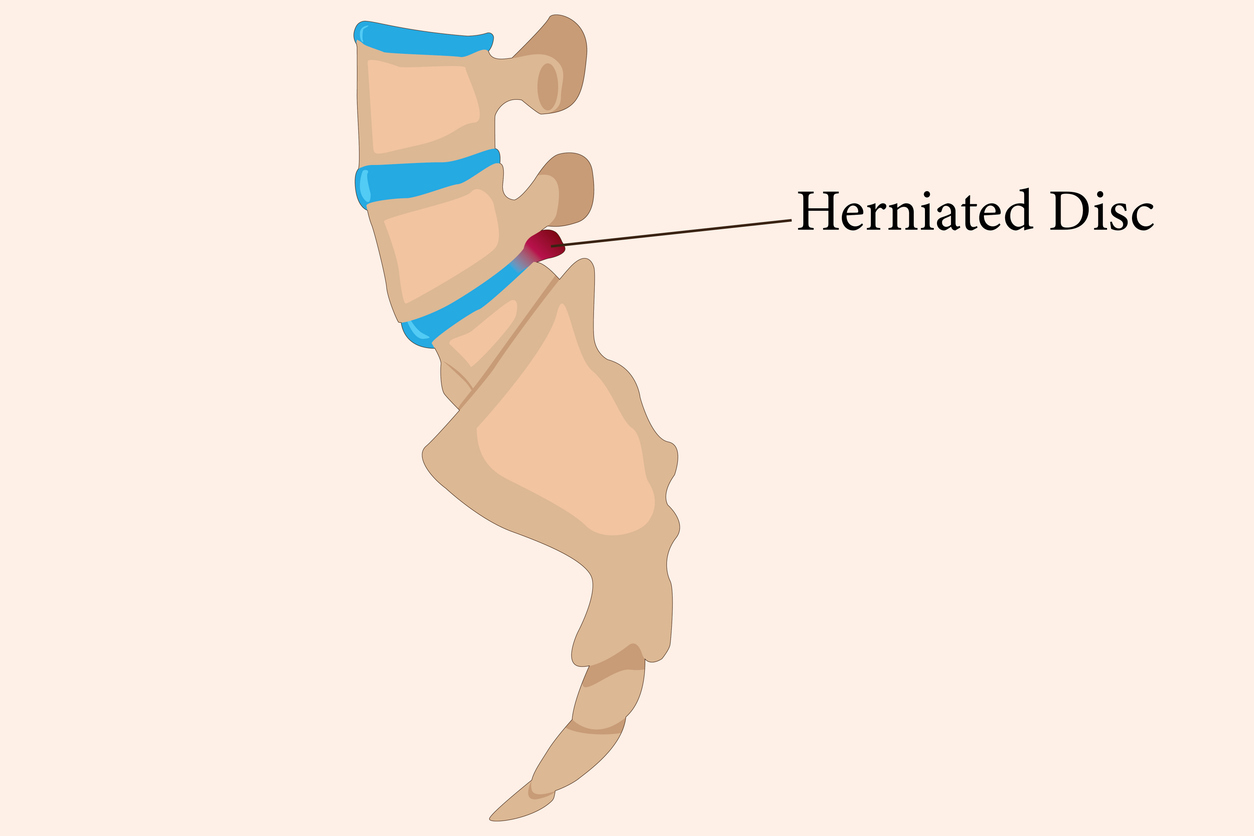 Herniated disc from a car wreck
The Problem: You see wildly different settlement numbers online. Insurers want you focused on "just the bills so far" or "policy limits." If you didn't have surgery yet, they say it's not worth much.
How Lawyers Fight Back: We look at ALL the factors — severity of the herniation, symptoms (pain level, numbness, weakness), treatment (PT, meds, injections, surgery), and long-term impact (future procedures, restrictions at work, limits on daily life). There is no "standard" disc herniation settlement. There is your case with your facts, and our job is to make sure every part of your spinal injury story is on the table.
Pro Tip from Tall Chuck If an adjuster says "We're just paying for the bills you've had so far," that's a tell. Serious neck and back injuries aren't a two-month problem. Don't settle before you understand what your future looks like — medically and financially.
10. "You Look Fine" — Surveillance and Social Media
The Problem: Neck, back, and disc injuries are often invisible. The defense may hire investigators to film you doing normal tasks or stalk your social media for photos that "prove" you're fine.
How Lawyers Fight Back: We warn you early about surveillance and social media. A 10-second clip of you carrying groceries doesn't show the hour of pain afterward. People with chronic pain still try to live life — trying doesn't mean you're not injured. It means you're human.
11. Not Having a Lawyer Who Understands Spine Cases
The Problem: Neck, back, and disc cases are some of the most attacked injuries in car wreck litigation. If your lawyer doesn't know how to read imaging reports or understand the difference between a bulge and a herniation, the defense will eat that case alive.
How Lawyers Like Bennett Legal Make a Difference: We dig into the medical details — not just the billing codes. We work with your doctors to get clear, strong opinions on causation, prognosis, and necessity of treatment. We know how to push back on "degenerative changes" spin, IME reports, and "minor impact" arguments. We build a narrative that's not just "my client hurts" but: "Here is exactly how this wreck damaged their neck and back and rewrote their life."
How Bennett Legal Helps With Neck, Back, and Disc Injury Cases
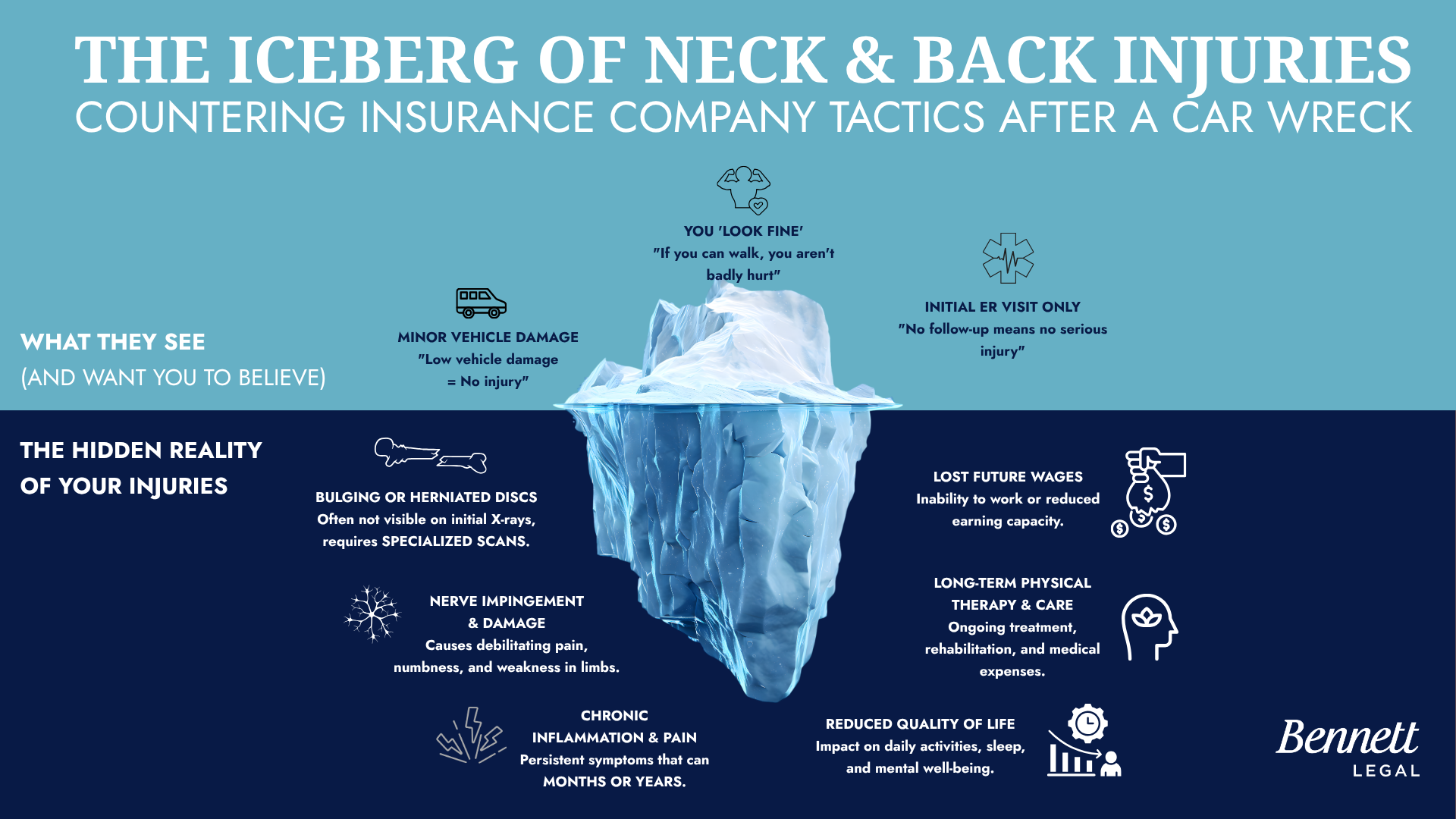 The Iceberg of Neck and Back Injuries — what insurance companies see vs. what you live with
When someone calls and says: "I've got neck and back pain after a car wreck. The MRI shows 'degeneration' and the adjuster says this is all old. What do I do now?" — here's how my team and I step in:
1. Review the Medical Story — ER and first-visit records, imaging, specialist notes and treatment history. We look for what changed after the wreck and what the doctors are — and aren't — saying yet.
2. Fill in the Gaps and Strengthen Proof — We help get clarifying statements from your doctors, encourage thorough documentation of your symptoms and limits, and suggest pain diaries and functional examples you might be missing.
3. Strategize Around Pre-Existing Degeneration — We don't run from your history. We own it, show how the wreck aggravated it, and use the law to argue the other driver is still fully responsible for the worsening.
4. Push for Full, Fair Compensation — We factor in past and future medical bills, lost wages and loss of earning capacity, pain, limitations, and loss of quality of life. Then we fight — with demands, negotiations, and trial if we have to — to get a number that actually reflects what you're going through.
For more on how these cases get proven, see our full guide: Proving Injuries After a Car Wreck: 11 Key Types of Evidence.
You're Not Broken for Asking to Be Made Whole
You're not weak because your neck or back is still screaming months after the wreck. You're not greedy for wanting more than "here's a little something for your trouble." You're not wrong to push back when they blame age instead of the impact that changed everything.
At Bennett Legal, our mission is protecting families after serious car wrecks, fighting insurance tactics around "degeneration" and "pre-existing conditions," and turning your neck, back, and disc injury story into a clear, powerful legal case.
Your Next Step If You Have Neck or Back Injuries After a Wreck
If you're dealing with neck and back pain after a car wreck, MRI findings of bulging or herniated discs, insurers saying it's all just "degenerative changes," or questions about disc herniation car accident settlements and what's fair — reach out to Bennett Legal for a free case evaluation.
Tell us what your wreck was like, what your imaging and doctors have said, how your life is different now, and what the insurance company is trying to argue. We'll help you understand your medical proof problems, build the legal strategies to counter them, and decide whether you want Tall Chuck and the team in your corner.
Contact Bennett Legal today | Free consultation, no fees unless we win
Keep standing tall, folks. Chuck's got your back.
Related Articles:
Free consultation
Neck or back pain after a car wreck?
Insurance companies have a playbook for disc and spine injuries. Bennett Legal knows every play. Free consultation — no fees unless we win.