Hey folks, Tall Chuck here.
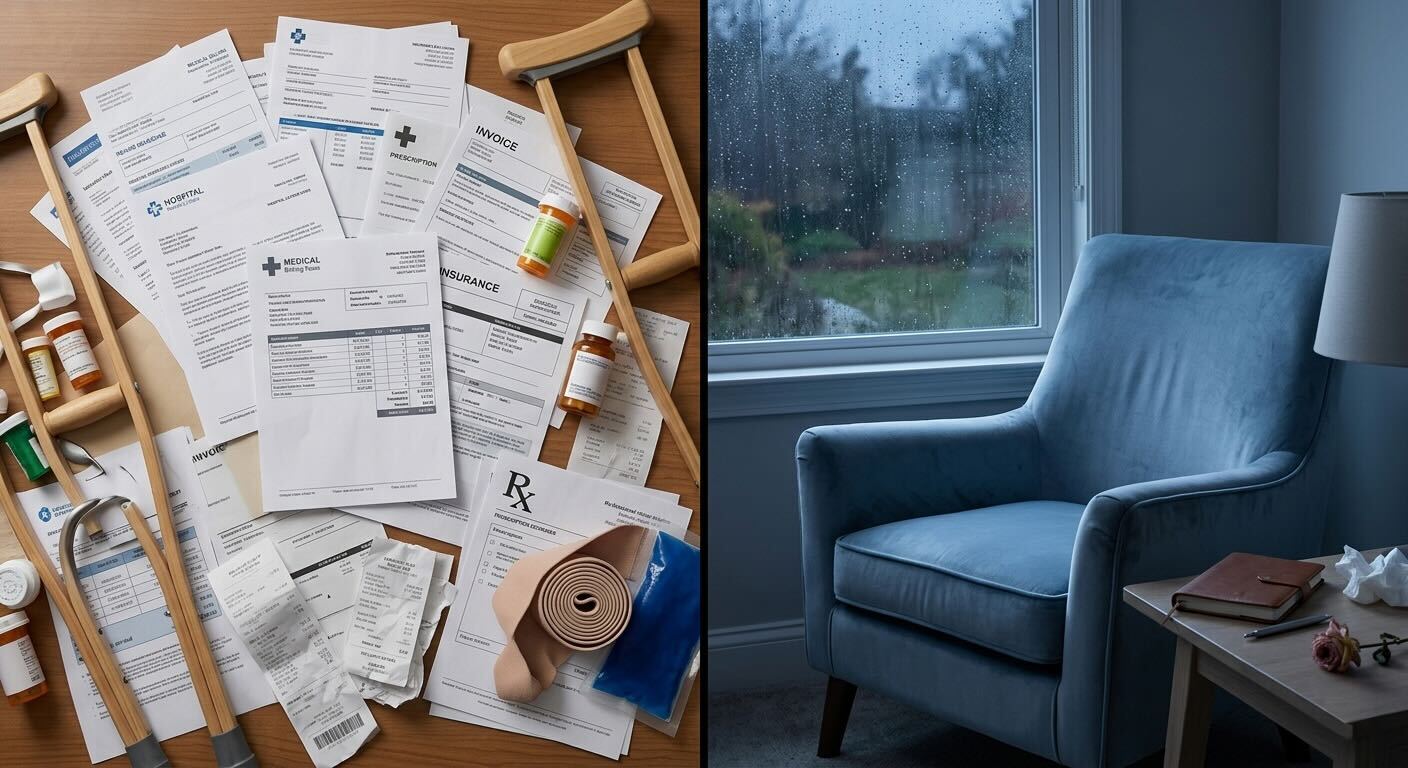
If you're reading this, something big has already happened — a wreck, a fall, a worksite mishap, or a medical event — any of the common causes of catastrophic injuries — that flipped your life upside down. You might be sitting there thinking: "Sure, I've got medical bills and missed work... but what about everything else I've lost? The life I used to have?"
That right there — the hobbies you can't enjoy, the family moments you can't participate in, the dreams that now feel out of reach — is called loss of enjoyment of life.
And in catastrophic injury cases, it's one of the most important types of non-economic damages you can claim.
But most people don't even know it exists.
And the insurance companies sure aren't going to tell you.
Let's break it down Tall-Chuck style — plain English, real talk, and a tall view of the tricks companies try to pull.
Free consultation
Injured? Find Out What Your Case Is Worth
Loss of enjoyment of life can be the largest part of your claim. Get a free consultation with Bennett Legal — no fees unless we win.
What "Loss of Enjoyment of Life" Really Means
Loss of enjoyment of life simply means: You can no longer do the things that made your life meaningful, joyful, or "normal" before the injury.
Under Texas law, loss of enjoyment of life is specifically recognized as a category of non-economic damages — defined in Section 41.001(12) of the Texas Civil Practice and Remedies Code as damages for nonpecuniary losses including physical pain, emotional anguish, loss of companionship, disfigurement, and loss of enjoyment of life.
This could be:
- Playing with your kids
- Going fishing or working out
- Gardening, traveling, or walking without pain
- Attending church or driving
- Cooking, dancing, or enjoying intimacy
- Participating in hobbies
- Taking care of yourself independently
Insurance companies love to act like these things don't matter.
But here's the truth: Losing the ability to enjoy your life is as real as losing a paycheck — and the law recognizes it.
How Loss of Enjoyment Fits Into Non-Economic Damages
Loss of enjoyment of life is a subcategory of non-economic damages — the human losses that don't come with receipts but hit the hardest. Understanding how economic and non-economic damages work differently is key to knowing what your case is really worth.
Non-economic damages in catastrophic injury cases often include:
- Pain and suffering — physical and emotional
- Mental anguish and emotional distress
- Disability and trauma
- Loss of mobility and disfigurement
- Loss of companionship and loss of independence
- Loss of enjoyment of life — often the largest single component
These non-economic damages exist because catastrophic injuries don't just break bones — they break routines, identities, and the simple pleasures that hold families together.
One important note for Texas residents: unlike medical malpractice cases, there is no cap on non-economic damages in most personal injury claims in Texas. That means your loss of enjoyment of life compensation is limited only by the evidence — not an arbitrary number.
Dealing with a catastrophic injury and wondering what your non-economic damages are worth? Loss of enjoyment of life compensation can be a significant part of your case — but only if it's documented and proven the right way. Bennett Legal offers a free case review. Call (972) 972-4969 or contact us online to get answers today.
Why Loss of Enjoyment Is So Big in Catastrophic Injury Cases
Here's why this category matters so much:
- The injuries are permanent or long-term. When a catastrophic injury leads to permanent disability, the loss of enjoyment extends across your entire future. Your daily life changes forever.
- You're not "inconvenienced" — you're transformed. You lose hobbies, independence, and relationships. And those losses ripple out into every part of life.
- It affects your mental health. Depression, frustration, fear, and isolation matter. According to the American Psychological Association, chronic pain from catastrophic injuries is closely linked to depression, anxiety, and reduced quality of life — all of which support a loss of enjoyment claim.
- It's often the largest part of the compensation. In many catastrophic injury cases, the non-economic damages outweigh the economic ones.
Think of it like this: A hospital bill might cost $150,000 — but losing the ability to throw a baseball to your child? That weighs far heavier.
When it comes to catastrophic injury damages, loss of enjoyment of life is often what separates a lowball settlement from one that actually reflects the truth of what you've lost.
Examples of Loss of Enjoyment of Life (Real-World, Not Legalese)
A catastrophic injury might take away:
- Your ability to run, hike, or work out
- Your long-planned family vacations
- Your sense of independence
- Your ability to work the job you loved
- The hobbies that made you feel alive
- Evening walks with your spouse
- Your social life and your confidence
- The ability to cook, garden, or do home projects
- Your role in your household
- Your ability to play sports with your kids
- Your ability to sleep through the night
- Your ability to have a normal relationship
Loss of enjoyment is not about being dramatic. It's about acknowledging the full human cost of someone else's negligence. And knowing who you can actually hold accountable is the first step toward getting the compensation you deserve.
How to Prove Loss of Enjoyment of Life
1. Your Own Testimony
Simple statements like:
- "I can't lift my child anymore."
- "I haven't slept through the night in months."
- "I used to run every day. Now I can't walk without pain."
Your words matter.
2. Statements from Family and Friends
They see the changes up close — pain, frustration, sadness, limitations.
3. Medical Evidence
Doctors document mobility limits, chronic pain, neurological effects, behavioral changes, and sensory impairment. Expert witnesses like neuropsychologists and life-care planners can quantify how the injury affects your daily functioning for years or decades to come.
4. Photographs and Videos
Before-and-after images tell the story better than any document.
5. Hobbies and Lifestyle Records
Gym memberships, travel receipts, event photos — they paint a picture of the life you had.
6. Daily Journals
This is a big one. Write down what hurts, what you can't do, how the injury impacts your day, moments you missed, and things your family now helps you with.
This turns your struggle into real, legal evidence.
And whatever you do, avoid the common mistakes that quietly destroy catastrophic injury claims — like waiting too long to document or giving recorded statements without an attorney.
Your non-economic damages deserve to be taken seriously. If you've suffered a catastrophic injury and you're not sure what your loss of enjoyment of life claim is worth, talk to someone who handles these cases every day. Bennett Legal offers a free, no-pressure case review. Call (972) 972-4969 or reach out online.
Tall Chuck's Story Time
We once represented a man who lived for his weekends — fishing, coaching Little League, and doing carpentry projects around his house. After a catastrophic crash, he couldn't cast a rod, lift tools, or walk the fields with his son's team.
When we asked him what hurt the most, he didn't say "my back" or "the medical bills."
He said: "I feel like I lost the best parts of being me."
That, right there, is loss of enjoyment of life — plain and simple. And the law compensates for it because it's real, deep, and life-altering.
How Courts Calculate Loss of Enjoyment of Life
There is no single formula, but courts look at:
- The severity of the injury
- The permanency
- Your age and life expectancy
- Your lifestyle before the injury
- The activities you can no longer do
- Emotional and psychological impact
- The degree of independence lost
Sometimes insurers try a "multiplier method" (like 2x or 5x economic damages).
But for catastrophic injuries? That usually undervalues the truth. Your life isn't a math equation — and Tall Chuck won't let anyone treat it like one.
The National Institutes of Health has published extensive research showing that catastrophic injuries result in measurably lower quality of life scores — evidence that attorneys can use to put real numbers behind what insurers want to dismiss as "subjective."
Pro Tip from Tall Chuck
Create a "Life Before and After" list. Two columns:
- Column 1: What you could do before
- Column 2: What you can't do now
It's simple. It's honest. And it's powerful evidence that stops adjusters from pretending your loss isn't real.
How Bennett Legal Proves Loss of Enjoyment of Life — and Turns It Into Real Compensation
Here's where most cases fall short.
Insurance companies don't fight medical bills the hardest. They fight the human side. They try to shrink your non-economic damages down to numbers on a page and ignore everything that actually changed.
At Bennett Legal, we don't let that happen.
We Build Your "Before and After" Story the Right Way
This isn't just about saying your life changed. It's about proving it clearly and convincingly.
We document what your daily life looked like before, what you can no longer do now, and how your routines, relationships, and independence changed.
Because loss of enjoyment is not abstract. It is specific, personal, and provable.
We Turn Your Experience Into Evidence That Carries Weight
We use your own testimony, statements from family and friends, medical records that show functional limits, photos and videos that capture your lifestyle before and after, and journals that track your day-to-day reality.
This is what forces insurers and juries to see the full picture — not just the paperwork.
We Connect the Injury to the Life Impact
Insurance companies love to separate the two. They'll say: "Sure, you were hurt. But your life is mostly the same."
We close that gap by showing how your physical limitations affect daily life, how pain interferes with sleep, work, and relationships, and how independence and identity have been altered.
Because the injury is not just a diagnosis. It is a change in how you live. Injuries like traumatic brain injuries can alter every aspect of who you are — and the law accounts for that.
We Push Back When They Try to Undervalue Non-Economic Damages
Adjusters often try to reduce non-economic damages like loss of enjoyment to a simple multiplier. That might work for minor cases. It does not work for catastrophic injuries.
We build the case around long-term impact, permanency, lifestyle disruption, and emotional and psychological effects — so the value reflects your real life, not a formula.
We Present It in a Way That Makes It Real
This part matters more than people think. Numbers don't tell your story. People do.
We present your case so that insurers cannot ignore it, defense arguments fall apart, and juries understand exactly what was taken from you.
Because when this is done right, loss of enjoyment of life becomes one of the most powerful parts of your case.
Real Results: Bennett Legal vs. Amazon — $2.51 Million Regina, a warehouse employee at an Amazon Fresh facility in Fort Worth, was struck twice in the back by industrial carts on the job — resulting in spinal injuries that required surgery and forced her out of the workforce entirely. Amazon pushed her into mandatory arbitration, then fought the result for over three years when it lost. The arbitrator found Amazon responsible for failing to maintain a safe workplace and awarded Regina $2.51 million — noting she "could work without limitation before these incidents and has been unable to work since." Regina's case is a textbook example of catastrophic injury damages that include loss of enjoyment of life: she lost her ability to work, her physical independence, and the daily life she knew. Read the full story of Bennett Legal vs. Amazon
You're Not Wrong for Wanting Compensation for This
Some folks feel guilty claiming loss-of-enjoyment damages. They shouldn't.
Here's the truth I'd tell you on the back porch over a glass of sweet tea:
You didn't choose this injury. You didn't choose the life changes. You didn't choose the pain, the limits, or the things you've lost.
You're not asking for luxury. You're asking to be made whole — or as close to it as the law can get you.
And that's exactly what Bennett Legal fights for. If you're ready to take the next step, understanding the steps in a catastrophic injury claim can help you know what to expect.
Ready to find out what your loss of enjoyment of life case is worth? Bennett Legal handles catastrophic injury cases start to finish — from building the evidence to holding corporations accountable. We've recovered millions for injury victims, including a $2.2 million settlement for a traumatic brain injury and a $2.51 million award against Amazon for a workplace injury. Call (972) 972-4969 for a free, no-pressure case review, or schedule your free consultation online. We don't get paid unless you do.
People Also Ask
Is loss of enjoyment of life the same as pain and suffering?
No. Pain and suffering covers physical pain and emotional distress you experience. Loss of enjoyment of life is a separate category of non-economic damages that specifically addresses the activities, hobbies, relationships, and experiences you can no longer participate in due to your injury. Both are compensable, and both matter — but they're distinct under the law.
Are there caps on non-economic damages in Texas?
In most personal injury cases in Texas, there is no cap on non-economic damages — including loss of enjoyment of life. The exception is medical malpractice, where non-economic damages are capped at $250,000 per defendant under Texas Civil Practice and Remedies Code Chapter 74. For auto accidents, workplace injuries, and most other catastrophic injury cases, your non-economic damages are limited only by the evidence.
Can I claim loss of enjoyment of life for a workplace injury?
Yes. If your workplace injury was caused by someone else's negligence — whether that's your employer (in non-subscriber cases like the Amazon case Bennett Legal handled), a contractor, or a third party — you can claim non-economic damages including loss of enjoyment of life. Texas non-subscriber employers are especially vulnerable to these claims because they've opted out of workers' compensation protections.
How much is a loss of enjoyment of life claim worth?
There's no fixed formula. The value depends on the severity and permanency of your injury, your age, the activities you've lost, and the emotional impact. In catastrophic injury cases, non-economic damages like loss of enjoyment often make up the majority of the total award. An experienced attorney can help you understand what your specific case is worth based on similar outcomes.
What's the difference between catastrophic and serious injuries?
Catastrophic injuries are permanent or life-altering injuries that affect core functions like mobility, memory, or independence — with no realistic full recovery. They include traumatic brain injuries, spinal cord damage, amputation, and severe burns. These carry higher claim values and more extensive non-economic damages than serious but non-permanent injuries.
Contact Bennett Legal today for a free, no-pressure consultation. We don't get paid unless you win.
Free consultation
Injured? Find Out What Your Case Is Worth
Loss of enjoyment of life can be the largest part of your claim. Get a free consultation with Bennett Legal — no fees unless we win.